
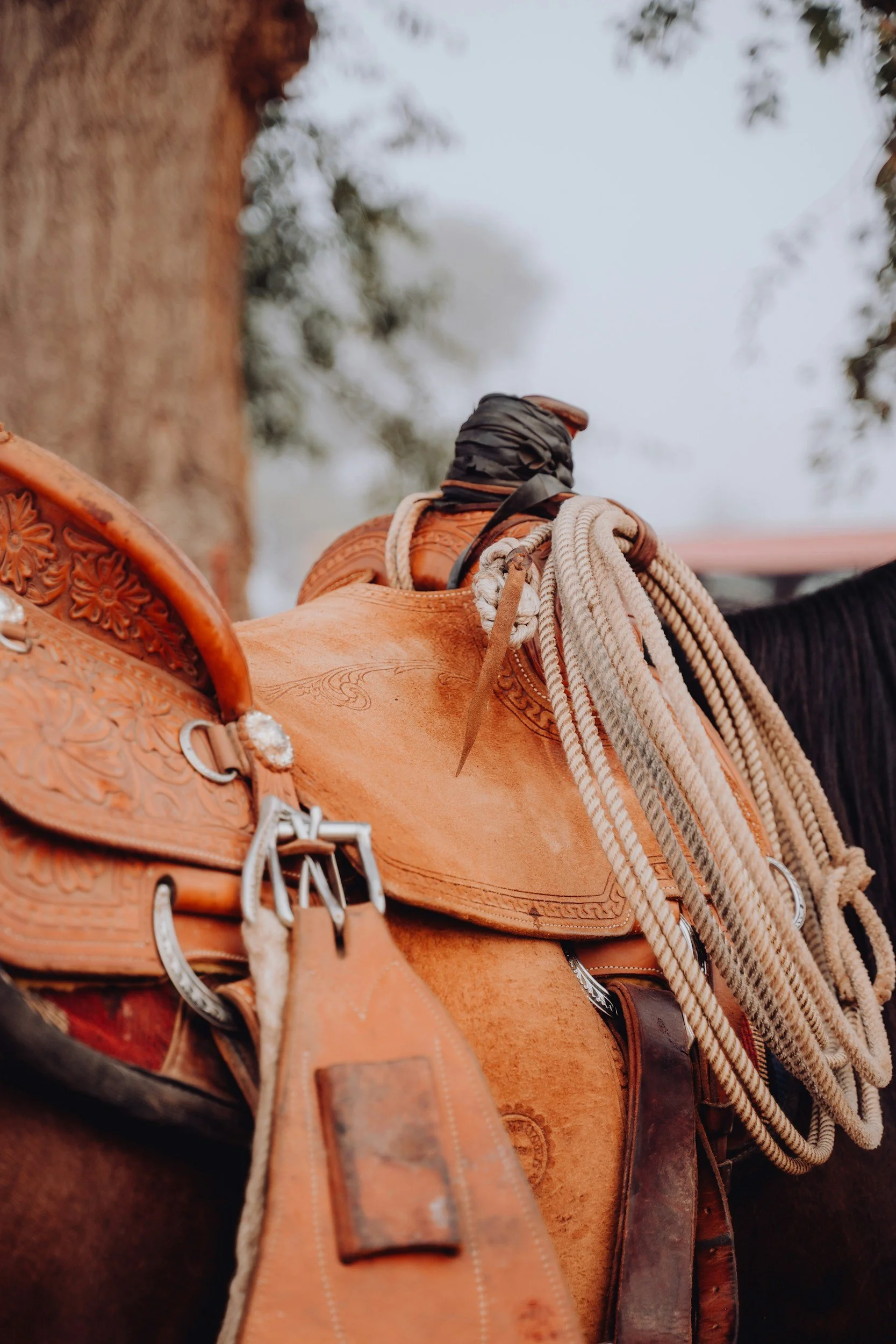
Why Rodeo Queens & Western Representatives Should Understand Policy
Rodeo queens and Western representatives do more than celebrate a way of life—they help the public understand it. Learning the basics of agricultural policy, from public-land grazing and water rights to animal welfare and the Farm Bill, prepares emerging leaders to answer difficult questions, advocate responsibly and help shape the future of the Western industry.
Policy Shapes the Western Way of Life
Agricultural policy is not limited to lawmakers or professional lobbyists. It influences how farmers and ranchers manage their land, care for livestock, access resources, respond to environmental challenges and plan for the future.
A Western representative does not need to become an expert in every issue. However, understanding the fundamentals provides valuable context for conversations about:
-
This sweeping package of federal legislation influences crop insurance, conservation programs, agricultural research, rural development, nutrition assistance and financial risk management. Understanding its basic structure helps representatives explain why the Farm Bill matters even to producers who do not grow traditional commodity crops.
-
Many Western ranching operations depend on grazing permits administered by agencies such as the Bureau of Land Management and U.S. Forest Service. Representatives should understand how grazing allotments, permit requirements, land-use decisions, drought conditions and environmental reviews can affect a ranch’s ability to operate.
-
Western water systems determine who can use water, how much may be used and for what purpose. Water availability affects livestock, crops, irrigation, fisheries and growing
-
Animal-welfare policies can influence livestock transportation, veterinary care, rodeo rules, housing standards and acceptable animal-handling practices. Representatives should understand the difference between animal welfare, which focuses on responsible care, and animal-rights philosophies that may oppose the use of animals for agriculture or sport.
-
Weather, labor shortages, transportation disruptions, processing capacity, production costs and government regulations all affect the food supply. Understanding the journey from farm or ranch to consumer helps representatives explain why food prices and availability cannot be separated from agricultural policy.
-
The Endangered Species Act can affect grazing, predator management, water use and land-development decisions. Species recovery is important, but the policies used to achieve it can create practical challenges for landowners and agricultural producers who manage habitat alongside working operations.
-
The U.S. Department of Agriculture oversees programs related to disaster assistance, conservation, loans, research, food safety and rural development. Programs administered through agencies such as the Farm Service Agency and Natural Resources Conservation Service can provide important resources for producers.
-
State agriculture departments oversee issues such as animal health, invasive species, pesticide regulation, food safety, market development and agricultural promotion. They can also serve as a bridge between producers, consumers and state government.
-
Working ranches can protect open space, wildlife habitat, watersheds and migration corridors. Representatives should be prepared to explain that agricultural production and environmental stewardship are not always opposing goals and often occur on the same land.
-
Agricultural communities depend on more than farms and ranches alone. Processing facilities, veterinarians, equipment dealers, feed stores, transportation companies and other small businesses contribute to a rural economy’s ability to remain viable.
-
Rodeos generate business for hotels, restaurants, retailers, fairgrounds, contractors and livestock providers. They also introduce audiences to agricultural traditions, livestock and rural communities, giving rodeo both economic and educational value.
Understanding these subjects helps representatives explain not only what agricultural producers do, but why certain decisions and policies affect their land, animals and livelihoods.
Practical Ways Young Western Leaders Can Get Involved
Getting involved does not necessarily require running for office or becoming a professional policy adviser. It can begin with attending a county meeting, joining an agricultural organization, submitting public comments or contacting an elected representative.
Technology has made meaningful participation more accessible than ever. Young leaders can:
-
University Extension offices, breed associations and commodity organizations regularly distribute information about research, regulations, production challenges and educational opportunities. These updates are an approachable way to begin following issues relevant to a particular region or agricultural sector.
-
State legislative websites and Congress.gov allow the public to search for bills, monitor their progress and read the proposed language. Agricultural associations often provide summaries that explain how a complicated proposal could affect producers in practice.
-
Land-grant institutions conduct research on livestock health, crops, water, soil, economics and rural communities. Their publications can help Western representatives separate evidence-based information from opinions or claims circulating online.
-
Constituents can email, call or request meetings with elected officials and their staff. A short message explaining how a proposed policy may affect a real ranch, agricultural business, rodeo or rural community can help lawmakers understand its practical consequences.
-
County commissions, water districts, grazing boards and agricultural organizations often provide opportunities for public participation. Attending—even before feeling ready to speak—helps young leaders learn how decisions are made and who influences them.
-
Farm bureaus, cattlemen’s associations, commodity groups, young-farmer organizations and other industry groups offer education, leadership development and advocacy opportunities. Membership can also help young people build relationships with experienced producers and policy professionals.
-
Policy is easiest to understand when connected to real experiences. Speaking directly with farmers, ranchers, veterinarians, rodeo contractors and rural business owners can reveal consequences that may not be obvious from a legislative summary.
Small actions can become the foundation of informed, long-term leadership. The goal is not to know everything immediately, but to build the habit of paying attention, asking better questions and showing up when decisions are being made.
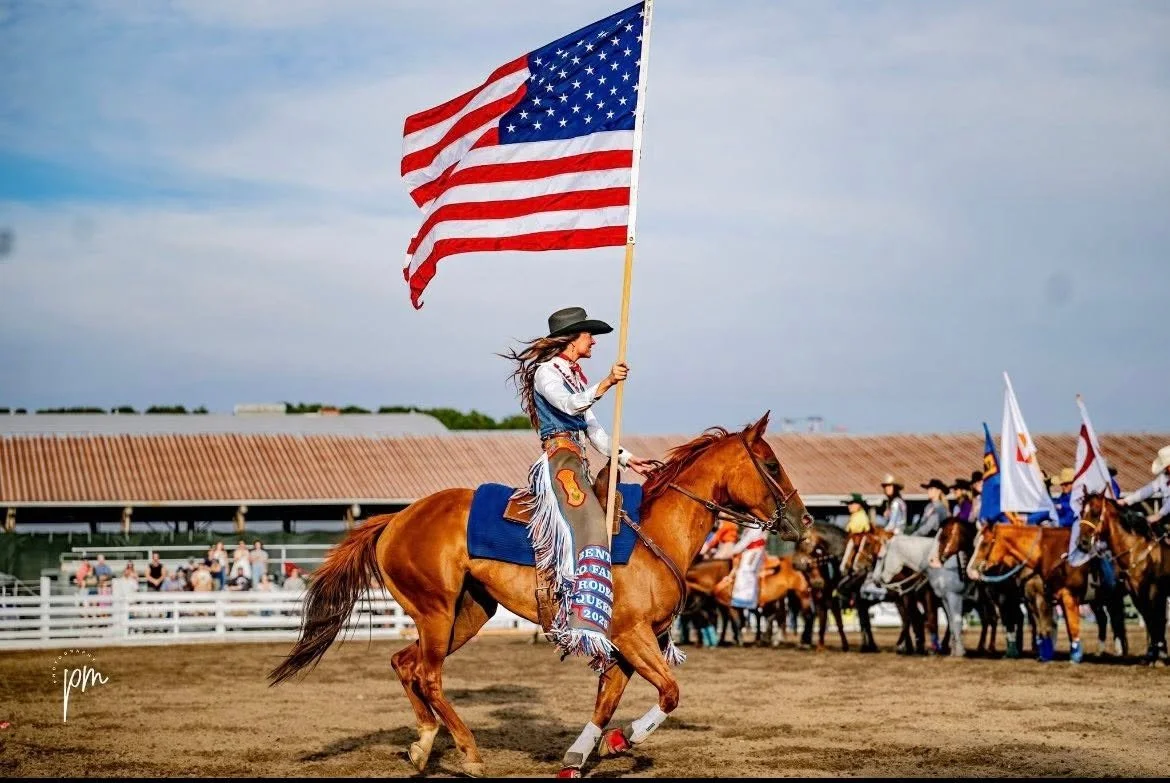
Beyond the Crown: How 25 Years of Rodeo Royalty Became a Leadership Pipeline
As the Benton County Fair and Rodeo queen program prepares to celebrate its 25th anniversary in 2026, its legacy reaches far beyond crowns, sashes, and public appearances. The program has become a leadership pipeline for young women in rodeo, agriculture, and the Western industry, developing skills in public speaking, horsemanship, sponsor relations, advocacy, and community representation.
Alumnae including Nicole Schrock, Rylee Henderer, and Morgan Young show how rodeo royalty can evolve into real industry leadership, especially through their work building the Larry Bell Memorial All Girls Rodeo and expanding opportunities for women in rodeo. Guided for more than 20 years by Kristi Schrock, the program’s impact is measured not just by titles earned, but by the women who return to lead, build, and create opportunity for the next generation.
The Benton County Fair and Rodeo queen program is celebrating its 25th anniversary in 2026. Its real legacy is not measured in crowns or appearances, but in the women who leave prepared to lead within agriculture, rodeo, and their communities.
A rodeo queen’s role is often underestimated.
From the outside, it can look like tradition—crowns, sashes and appearances. But at Benton County, it has always been something far more powerful: a proving ground where young women learn to lead, advocate and take ownership of the future of rodeo.
This isn’t about pageantry.
It’s about presence, influence and impact.
As the program celebrates its 25th anniversary in 2026, its legacy is unmistakable—not just in who wore the crown, but in how those women now show up as leaders shaping the Western industry.
More than a title—it’s a transformation
The Benton County queen program builds leaders from the inside out.
Participants don’t just learn how to present themselves—they learn how to command a room, represent an industry, and carry responsibility with confidence. They develop skills in public speaking, sponsor relations, horsemanship, and agricultural advocacy, all while navigating high-pressure, highly visible environments.
They learn how to speak with authority.
How to lead with purpose.
How to stand tall in spaces where their voice matters.
And when the crown comes off, those skills don’t fade—they ignite.
Where leadership becomes action
The true power of the program is revealed in its alumnae—especially in the former rodeo queens who are now actively reshaping the rodeo industry.
Nicole Schrock, a former Benton County rodeo queen, stepped onto the national stage as a Miss Rodeo America runner-up. Her success proved that women from this program can compete—and lead—at the highest levels of Western representation.
Rylee Henderer, also a former queen, carried that leadership forward, representing other local titles and moving forward behind the scenes through both rodeo and fair committee ranks, respectively. She took the discipline, organization, and communication skills developed during her reign and applied them directly to building and managing a competitive rodeo environment.
And then there is Morgan Young. Last year’s Benton County Fair & Rodeo queen, Morgan represents the next evolution of leadership—one that doesn’t wait for experience to accumulate before stepping forward. She recognized a gap in opportunity for women in the Northwest and helped drive the effort to connect the Larry Bell Memorial All Girls Rodeo to the Premier Women’s Rodeo pathway.
Together, their leadership is not theoretical. It’s proactive, strategic, and industry-changing. These women don’t just represent rodeo; they are redefining it.
Where queens become builders
Nowhere is that leadership more visible than in the Larry Bell Memorial All Girls Rodeo.
This event exists because former rodeo queens chose to lead.
Nicole, Rylee and Morgan—each shaped by the Benton County queen program—didn’t just support an idea. They built it. They organized it. They elevated it.
They took everything they learned as rodeo queens—confidence, communication, grit—and turned it into action that is now impacting competitors across the region.
The result is a growing, competitive platform that is expanding opportunities for female athletes across multiple events and connecting them to the Premier Women’s Rodeo pathway.
This is what leadership looks like in motion. Not waiting for opportunity—but creating it.
Leadership that comes full circle—and pushes forward
What sets Benton County apart is not just that it develops leaders—it empowers them to return and raise the bar. These women don’t fade into the background after their year. They come back stronger, more experienced, and more determined to make an impact—not just for themselves, but for the next generation.
The system is powerful because it’s continuous:
Learn to represent with confidence
Step into leadership with purpose
Build opportunities that didn’t exist before
Each generation doesn’t just follow the last—they elevate it.
And increasingly, they are doing so as former rodeo queens who understand both the responsibility and the potential of the role.
A 25-year legacy of bold leadership
For 25 years, the Benton County queen program has done more than crown ambassadors. It has built women who lead with conviction, speak with authority and act with intention.
Women who aren’t afraid to take up space.
Women who don’t wait for permission.
Women who understand that leadership isn’t given—it’s claimed.
And behind that legacy stands Kristi Schrock.
For more than 20 years as queen advisor, Kristi has not simply guided contestants—she has shaped leaders of leaders. Her influence extends far beyond a single reign or a single year. She has built a culture of expectation, accountability and belief that continues to produce women capable of stepping into meaningful roles across the Western industry.
Her leadership is measured not just in crowns awarded, but in the caliber of women who leave the program—and return to lead.
The crown may last a year.
But the confidence, the voice and the impact lasts a lifetime.
And today, that impact—driven by former rodeo queens like Nicole Schrock, Rylee Henderer and Morgan Young—is reshaping women’s rodeo in real, measurable ways.
About the Benton County Fair and Rodeo Queen Program
The Benton County Fair and Rodeo queen program celebrates its 25th anniversary in 2026. Guided by longtime advisor and fair chair Kristi Schrock, the program develops young women through horsemanship, public speaking, community service and leadership training.
Its alumnae continue to shape the Western industry—and are now playing a key role in building the Larry Bell Memorial All Girls Rodeo into a major opportunity for women in rodeo.
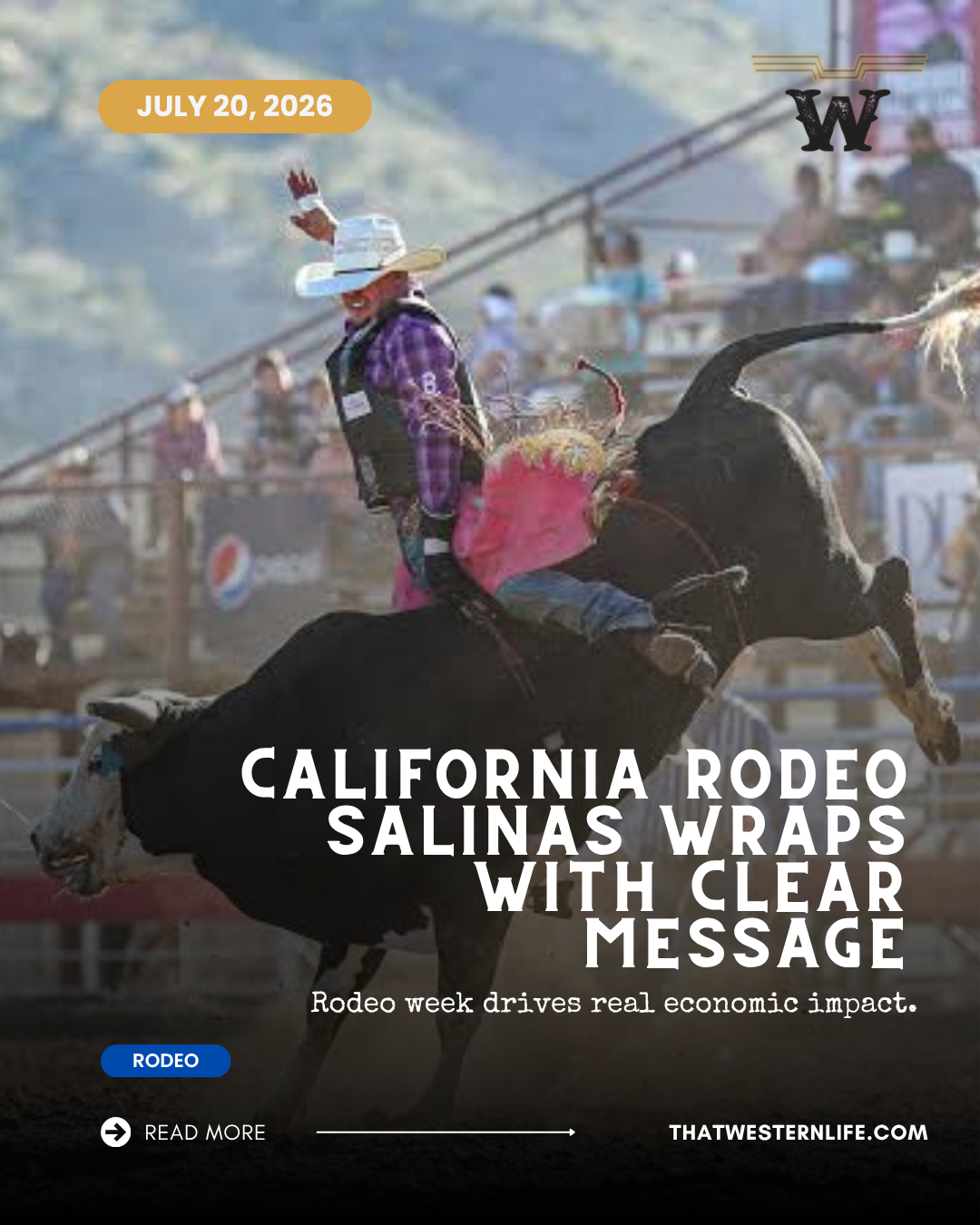
California Rodeo Salinas Wraps With a Clear Message: Rodeo Week Drives Real Economic Impact
The 116th California Rodeo Salinas wrapped with a clear reminder that major rodeo events are no longer just four days of competition — they are full-scale economic engines. Through Big Week Bull Riding, themed performances, concerts, carnival programming, community events, and agricultural recognition, Salinas created a weeklong event model that drove tourism, hotel stays, restaurant traffic, vendor sales, seasonal employment, and regional visibility. The rodeo’s continued connection to Salinas Valley agriculture also reinforces why western events matter beyond entertainment: they support local economies, preserve cultural identity, and showcase the industries that sustain their communities.
The 116th California Rodeo Salinas has officially conclused, wrapping up four performances at the Salinas Sports Complex and closing out what has become one of the most economically influential western events in the country. While the competition delivered as expected, the larger takeaway is how effectively Salinas has transformed rodeo into a full-week economic enginge for the region.
The week began with Big Week Bull Riding, part of the PRCA’s Xtreme Bulls Tour, and carried through themed rodeo performances including Bucking Cancer Night and Ag Appreciation Night. By the weekend, afternoon perforamnces allowed for broader attendance, giving families and visitors multiple entry points into the event.
But the rodeo itself was only one piece of a much larger system.
Concerts, including a Big Week Kick Off headlined by Miranda Lambert alongside Dylan Scott and Ashley Cooke, drew crowds early in the week. The carnival, community events and surrounding attractions extended engagement well beyond the arena gates in what can only be measured in a socioeconomic study.
Hotels filled across Salinas and surrounding communities. Restaurants, bars and retail businesses saw increased traffic throughout the week. Temporary and seasonal employment opportunities expanded, from event staffing to hospitality services. Local vendors and small businesses benefited from sustained foot traffic rather than a single-night surge.
This is where the modern rodeo model becomes significant.
Events like Salinas are no longer just sporting competitions. They function as regional economic drivers that support tourism, agriculture, small business growth and community identity. A visitor may attend one rodeo performance, but their spending often stretches across lodging, dining, entertainment and retail over multiple days.
That extended engagement creates a ripple effect.
Revenue generated during rodeo week circulates through the local economy, supporting jobs, infrastructure and future investment. Sponsorship dollars increase as brands recognize the broader audience reach. Media exposure expands beyond rodeo coverage into lifestyle, tourism and regional promotion.
At the same time, Salinas maintained a strong connection to its agricultural roots.
Ag Appreciation Night reinforced the role of farming and ranching in the Salinas Valley, where agriculture is not symbolic—it is foundational to the local economy. By highlighting that connection, the rodeo strengthens public awareness of the industries that sustain the region while reinforcing cultural identity.
The result is a layered socioeconomic impact.
Rodeo provides the anchor, but the surrounding programming builds accessibility, inclusivity and economic opportunity. Families, tourists, industry professionals and first-time attendees all find different reasons to participate, broadening the event’s reach across income levels and demographics.
The 2025 California Rodeo Salinas did more than deliver four days of competition.
It demonstrated how a well-structured rodeo week can generate sustained economic activity, support local communities and reinforce the cultural and financial relevance of the western industry in a modern economy.
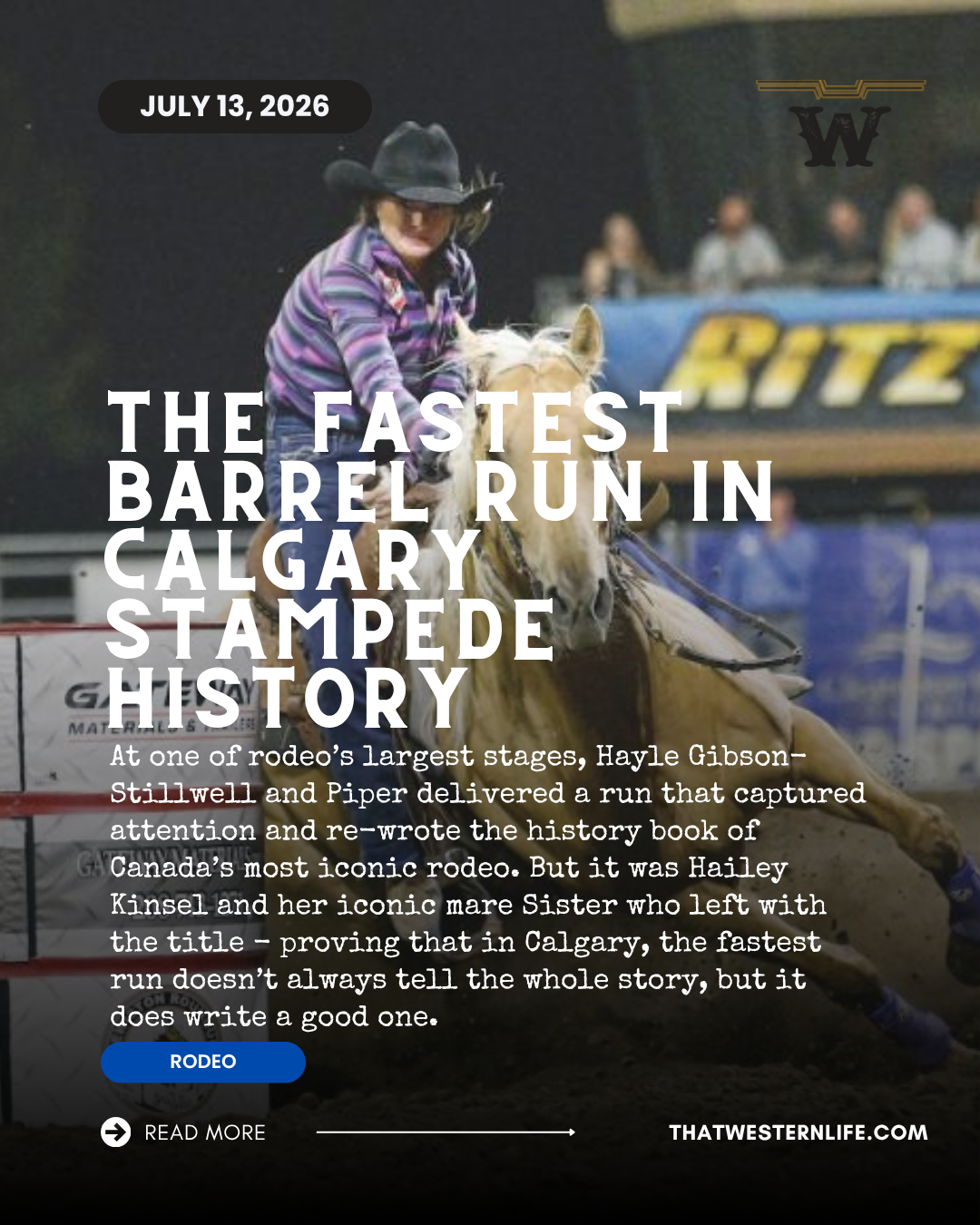
Hayle Gibson-Stillwell and Piper Rewrite the Calgary Stampede Record Book
At one of rodeo’s largest stages, Hayle Gibson-Stillwell and Piper delivered a run that captured attention and re-wrote the history book of Canada’s most iconic rodeo. But it was Hailey Kinsel and her iconic mare Sister who left with the title - proving that in Calgary, the fastest run doesn’t always tell the whole story, but it does write a good one.
Hayle Gibson-Stillwell delivered one of the defining performances of the 2026 Calgary Stampede on Sunday.
Gibson-Stillwell and her mare, Buncha Dinero (aka Piper) completed the barrel pattern in 16.56 seconds during te July 12 semifinals, producing the fastest run of the week and one of the quickest times ever seen in Calgary.
The run did more than move Gibson-Stillwell forward in the competition.
It quickened a standard that had already been challenged earlier in the week, illustrating the extraordinary level of horsepower and precision on desplay at this year’s Stampede. At this level, records are not falling becuase riders are taking reckless chances. They are falling because small improvements in a horse’s stride, footing, positioning, and responsiveness can separate an excellent run from a historic one.
However, despite posting the fast time, Gibson-Stillwell did not officially leave Calgary with the 2026 Calgary Stampede Barrel Racing Champion title.
That distinction still belongs to Hailey Kinsel, who ultimately secured the Stampede title. Calgary’s format, built around qualifying rounds, seminfinals, and a winner-takes-all final, means that times from earlier rounds don’t always carry the same weight as performances in the championship round. Kinsel’s consistency across te entire structure, combined with a clutch performance wen it mattered most, allowed her to claim the title even without the single fastest run of the week.
It is a reminder that Calgary is not simply about speed.
It is about timing, consistency, and delivering under the highest pressure moment of the rodeo.
The Stampede places competitors in front of a large international audience, significant prize money and one of the most recognizable crowds in western sports. Horses must manage the noise, travel ground conditions and repeated high-pressure runs while remaining physically and mentally sharp.
That makes Piper’s performance particularly significant, even without the official championship title record atached.
Successful barrel racing is often discussed as though the rider simply chooses the fastest horse. In reality, elite runs depend on a partnership built through conditioning, veterinary and farrier care, hauling strategy, confidence and thousands of decisions made before the horse enters the arena.
A 16.56 second result represents years of preparation compressed into less than 17 seconds on an international stage.
Adding another layer to the story, Piper and Kinsel’s legendary mare, Sister, share bloodlines. The connection highlights how breeding proframs continue to shape the upper tier of barrel racing, where elite genetics, careful development and experienced riders combine to produce horses capable of competing at the highest level.
That conversation around bloodlines naturall leads to some of the most respected names in the industry: Sherry Cervi & Mel Potter. Their breeding program has beome synonymous with producing elite barrel horses that consistently perform at the highest levels of the sport. Cervi, a multi-time world chhampion, and Potter have built their program on a deep understanding of what it takes to win - not just in terms of speed, but in durability, mindset, and consistency under pressure.
Thier horses are not accidental standouts. They are the result of intentional crosses, careful selection and years of experience competing at the very top. When you see horses like Piper and Sister sharing lineage and rising to the biggest stages, it reinforces what programs like Cervi and Potter’s have proven for years: great horses are built long before they ever enter the arena.
The performance also creates a strong promotioanl opportunity for women’s rodeo.
Barrel racing consistently produces some of rodeo’s most recognizable athletes and most shareable moments. A visibly fast run, whetehr or not it becomes the official arena record or championship title earner, gives broadcasters, events, and sponsors content that can travel well beyond established rodeo audiences.
The Calgary Stampede is formatted to reward complete performances and championship formats for major rodeos shape outcomes and how the next generation of elite horses, often connected by bloodlines, contine to push the limits of what is possible.
At one of rodeo’s largest stages, Hayle Gibson-Stillwell and Piper delivered a run that captured attention and re-wrote the history book of Canada’s most iconic rodeo. But it was Hailey Kinsel and her iconic mare Sister who left with the title - proving that in Calgary, the fastest run doesn’t always tell the whole story, but it does write a good one.
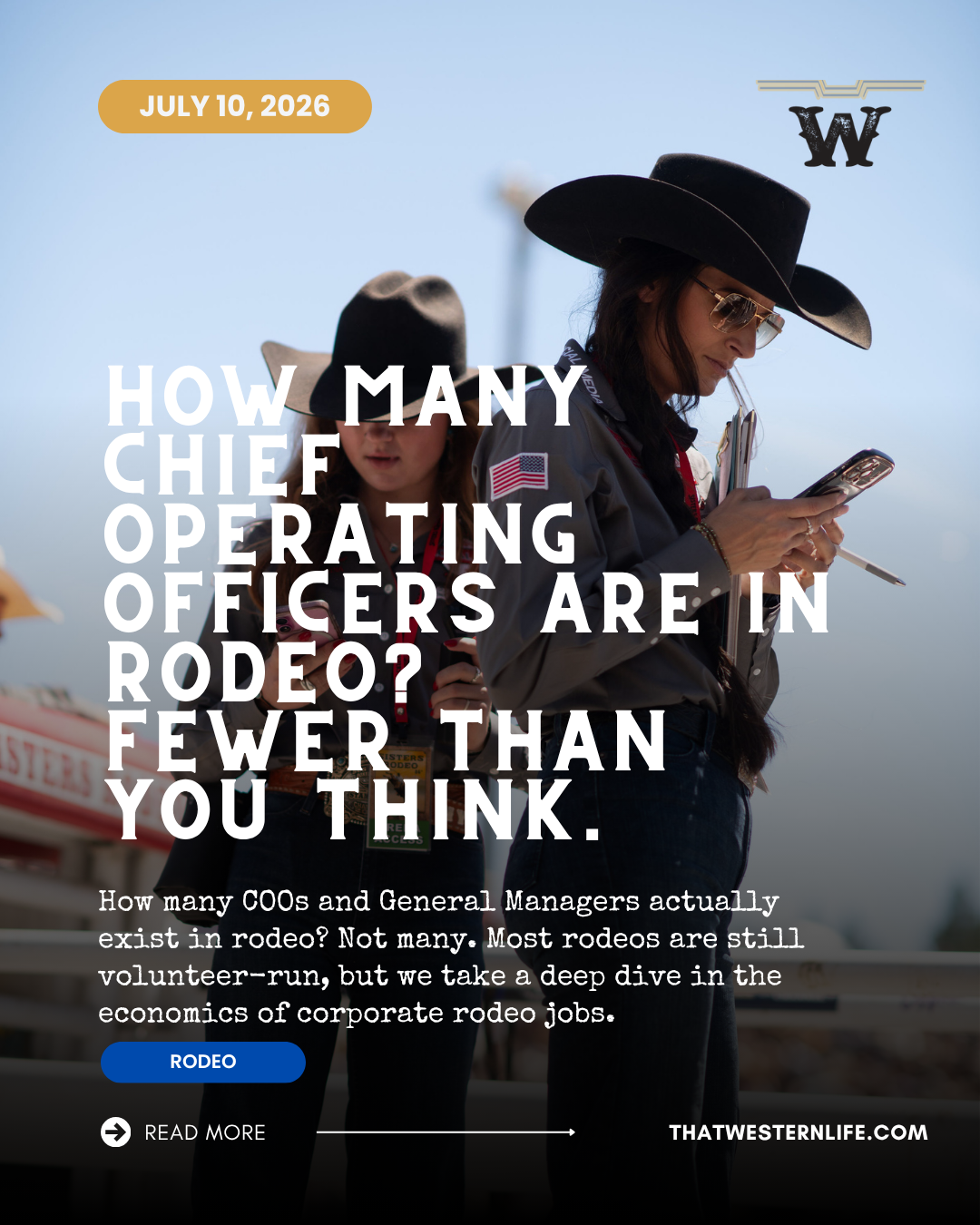
What Rodeo Job Titles Actually Mean ... And How Many Exist Across the Industry
How many COOs and General Managers actually exist in rodeo? Not many. Most rodeos are still volunteer-run, but the biggest events are starting to look more like full-scale businesses. Here’s a breakdown of what these titles mean and how common they really are across the country.
The Houston LIvestock Show & Rodeo creating a Chief Operating Officer/ General Manager role is a big signal, but it also raises a bigger question: What do these titles actually mean in rodeo, and how common are they across the country?
How Rodeo Leadership Is Structured
Unlike traditional corporations, professional rodeo is not one unified company. It is a mix of:
Nonprofit rodeo committees
Fair & livestock show organizations
City or county-run events
Private stock contractor businesses
Sanctioning bodies like the PRCA
Because of that, job titles vary widely depending on the size and structure of the rodeo leadership roles tyupically break down.
Executive director/ceo
This is the most common top leadership role in rodeo.
Oversees the entire organization
Reports to a board of directors
Responsible for long-term strategy, finances, and mission
Common in nonprofit rodeos and livestock shows
Examples: Houston Rodeo (CEO), San Antonio Rodeo (CEO), Fort Worth Stock Show (President/GM Hybrid)
Estimated across the U.S.: Roughly 150-250 rodeos and livestock shows have a full-time Executive Director or CEO-type role.
General Manager (GM)
This role focuses more on operations and execution.
Runs day-to-day event logistics
Oversees staff, vendors, and production
Often reports to the CEO or board
Common in mid-size to large rodeos
In some organizations, the GM is the top leader. In others, they are second-in-command.
Estimated across the U.S.: Approximately 75-100 rodeos have a formal General Manager role.
chief operating officer (CO)
This is still relatively rare in rodeo.
Oversees operations across multiple departments
Aligns logistics, production, and execution
Usually exists only in very large, complex organizations
Often paired with a CEO or President
Houston creating a COO role is notable because it reflects a more corporate-style structure.
Estimated across the U.S.: Likely fewer than 10-20 rodeos have a true COO position.
Combined coo / general manager roles
Some large rodeos combine these responsibilities into one position, like Houston just did.
Oversees both the strategy execution and daily operations
Acts as the bridge between leadership vision and event delivery
Requires experience in sponsorship, ticketing, operations, and production
Estimated across the U.S.: Probably fewer than 10 organizations operate with this combined structure.
Why Most Rodeos Do Not Have These Roles
Tha majority of rodeos in the U.S. are smaller, volunteer-driven events.
Many rely on committees instead of full-time executives
Leadership is often part-time or seasonal
Budgets do not support multiple C-level positions
Out of the 600+ PRCA-sanctioned rodeos and hundreds more independent events:
Only a small percentage operate like full-scale businesses
Even fewer have corporate-style leadership structures
What’s Houston’s Recent Move Really Signals
Houston is not the norm - it’s top tier.
Events like Houston, San Antonio, Fort Worth, Denver, and Calgary operate more like major entertainment companies than traditional rodeos. They manage:
Multi-week events
Millions of attendees
Large sponsorship portfolios
Concert series
Year-round programming
At that scale, having a COO or GM is not optional - it is necessary.
The Big Picture
Across the entire professional rodeo lanscape in the United States:
Executive Director / CEO Roles: ~ 150-250
General Manager roles: ~ 75-150
COO roles: ~10-20
Combined COO/GM roles: fewer than 10
That means true corporate-style leadership exists in only a small fraction of rodeo organizations.
The Significance of These Numbers
Rodeo is evolving.
The biggest events are becoming complex business operations that require leadership with experience in:
Spnosorship and partnerships
Ticketing and revenue strategy
Event production
Guest experience
Operations management
Houston’s new role is not just about one hire, though. It signifies that the top end of rodeo is moving toward a more structured, professional business model, while the majority of rodeos still operate on tradition, volunteers, and community leadership.
Both models matter.
But understanding the difference is key to understanding where the industry is headed.
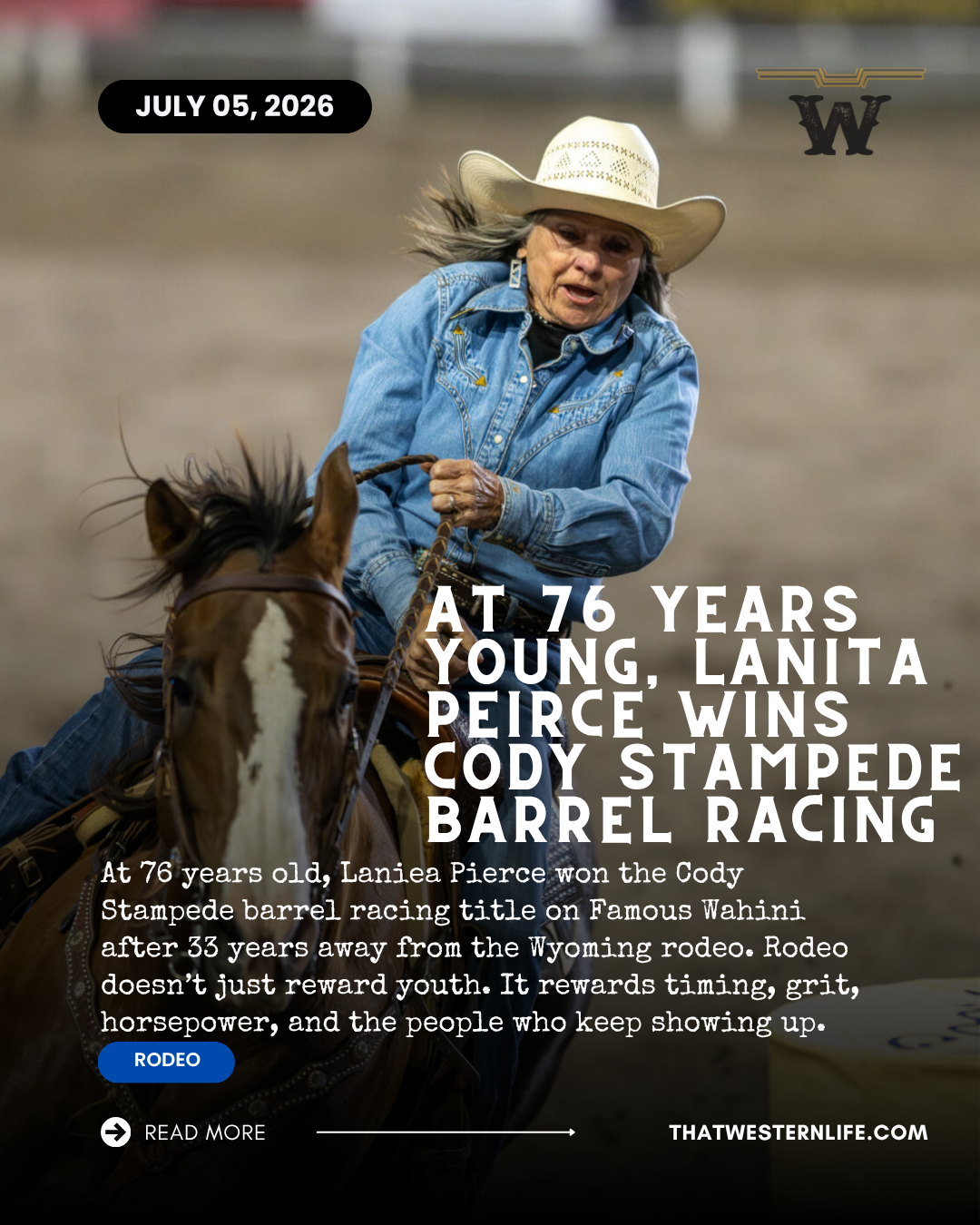
Lanita Peirce Just Gave Rodeo the Kind of Story Sports Fans Remember
At 76 years old, Lanita Peirce won the Cody Stampede barrel racing title on Famous Wahini after 33 years away from the Wyoming rodeo. Rodeo does not just reward youth. It rewards timing, grit, horse power, and the people who keep showing up.
Lanita Peirce winning the 2026 Cody Stampede barrel racing title at 76 years yooung is the kind of rodeo story that should travel far beyond the arena.
Peirce won Cody on Famous Wahini with a 17.06-second run and earned $11,308. Even more remarkable, BarrelRacing.com reported that it had been 33 years since she last made a run at the Wyoming rodeo.
This isn’t just a good run, this is a full-circle western sports moment.
Rodeo often talks about grit, longevity, toughness, and staying power. Peirce’s win puts all of those words into one clean example. At an age when most athletes in most sports are decades removed from serious competition, she entered one of the most recognizable rodeos in the country and won.
Barrel racing is not a ceremonial event. It is fast, technical, physically demanding, and brutally unforgiving. The ride has to make decisions in fractions of a second. The horse has to stay honest, explosive, balanced, and locked in. One tipped barrel, one wide turn, one bad approach, and the run is gone.
This win also reminds people that the horse industry isn’t built only around youth and novelty. Experience matters. Timing matters. Horse sense matters. The relationship between rider and horse matters. A story like this gives rodeo fans something deeper than a result sheet. It gives them a champion to cheer for.
While on paper this might be a competitive rodeo result, it is also a story about horsemanship, patience, and what it means to keep showing up. It also gives marketing value to the sport. Rodeo needs stories that casual fans can understand quickly. “A 76 year-old barrel racer wins Cody Stampede” is immediately compelling. You don’t need to know the standings, bloodlines, or qualifying systems to recognize that this is special.
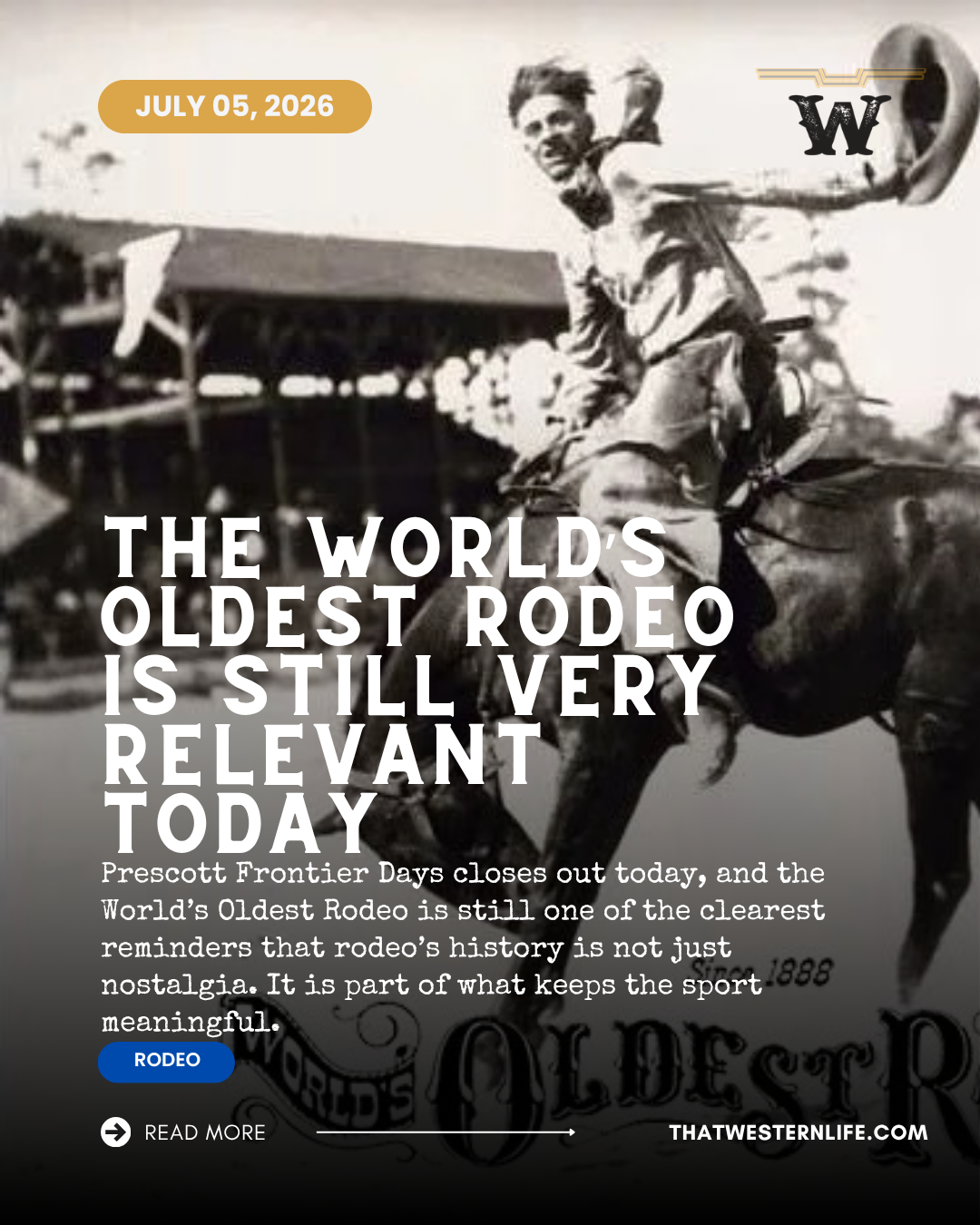
Why Prescott Still Matters in Modern Rodeo
Prescott Frontier Days closes out today, and the World’s Oldest Rodeo is still one of the clearest reminders that rodeo’s history is not just nostalgia. It is part of what keeps the sport meaningful.
Prescott Frontier Days wraps today, and its closing performance deserves attention for more than nostalgia.
Known as the World’s Oldest Rodeo, Prescott sits in a rare position in the western world. It is both a professional rodeo and a heritage institution. Rodeo is a sport that is constantly trying to balance two things at once: honoring where it came from and proving it still belongs in the modern entertainment conversation.
Prescott helps do both.
The 2026 rodeo runs June 29 through July 5, placing it directly inside one of the busiest and most meaningful stretches of the summer season. While many fans are tracking Cowboy Christmas earnings and standings movement, Prescott also gives the industry something deeper to talk about: continuity.
Rodeo did not become a national sport by accident. It grew out of working traditions, local celebrations, stock-handling skills, horsemanship, ranch communities, and people gathering to test themselves in front of their neighbors. Historic rodeos like Prescott keep that origin story visible.
That does not mean the event is stuck in the past. Like every major rodeo, Prescott has to operate in today’s world of ticketing, sponsorships, fan experience, safety, entertainment, media, and tourism. But its value comes from the fact that it can modernize without losing its identity.
That is the real lesson.
The strongest rodeos are not the ones that abandon tradition to chase trends. They are the ones who understand which traditions still mean something and build around them with better production, stronger marketing, and clearer storytelling.
That is where event production and marketing begin to overlap in a meaningful way. It is not just about putting on a clean show or selling tickets. It is about shaping how the audience experiences the story of the rodeo from the moment they see a social post to the moment they leave the grandstands. Every detail, from the opening ceremony to the music cues, announcer tone, sponsor integration, and visual branding, either reinforces the identity of the event or dilutes it.
Katie Schrock of Western Insights Media often frames this as a storytelling problem, not just a marketing one. Rodeos already have powerful stories built into them: heritage, grit, competition, family, and place. The challenge is making sure those stories are communicated clearly and consistently across every touchpoint. When production and marketing teams are aligned, the rodeo becomes more than a series of events. It becomes a narrative that fans can follow, connect with, and return to year after year.
That approach also changes how success is measured. It is not only about attendance numbers or ticket revenue. It is about whether fans understand what makes that rodeo different. It is about whether they remember it, talk about it, and feel connected to it after they leave. Strong storytelling creates loyalty, and loyalty is what sustains historic rodeos like Prescott in a crowded entertainment landscape.
Prescott is a useful reminder that rodeo’s history is not just background information. It is a competitive advantage. Fans want excitement, but they also want a reason to care. Heritage gives them that reason.
As Prescott closes out its 2026 run, the story is not simply that another rodeo week is ending.
The story is that one of rodeo’s oldest stages is still relevant.
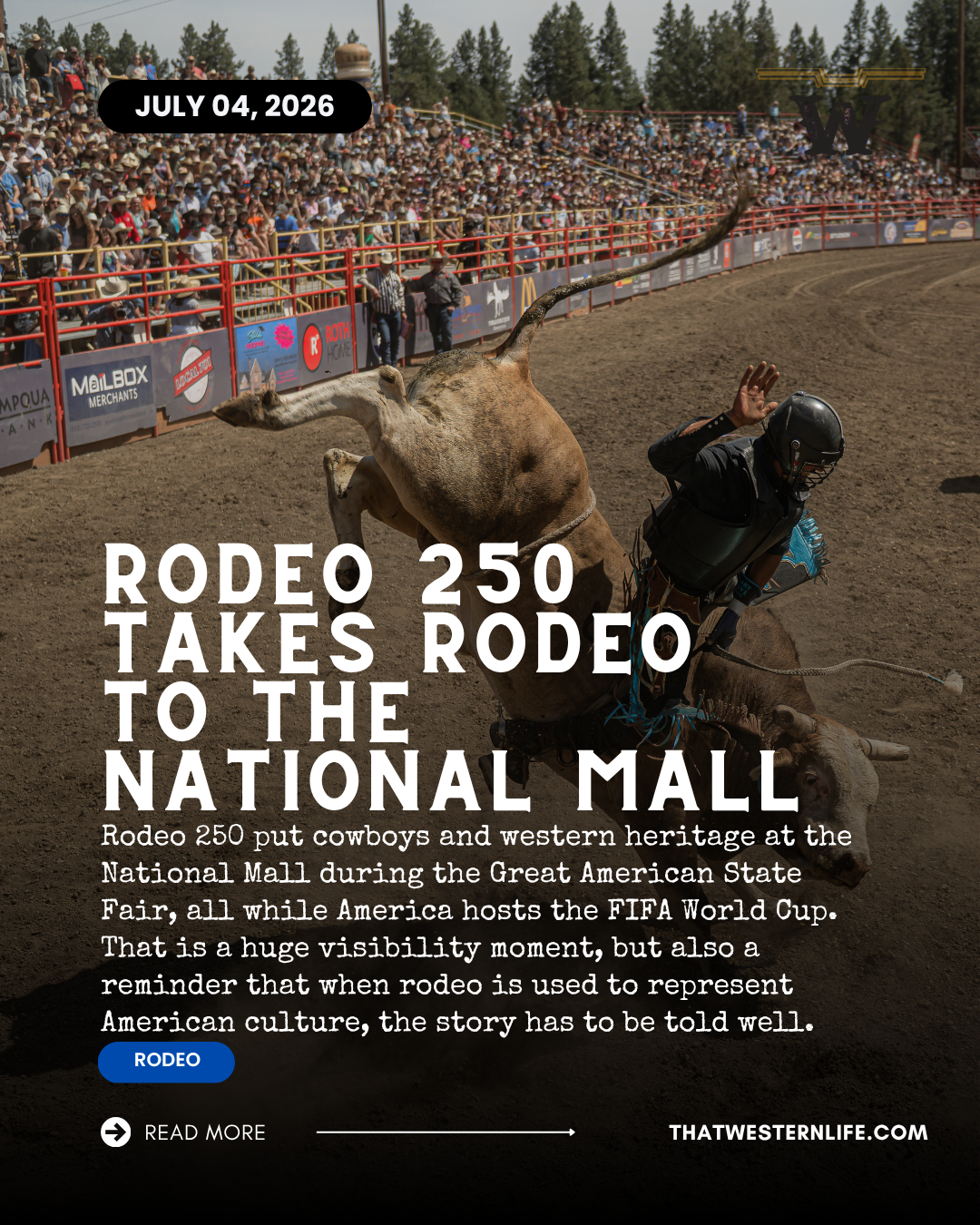
Rodeo 250 Shows the Opportunity (and Risk) of Putting Western Culture on a National Stage
Rodeo 250 put cowboys and western heritage at the National Mall during the Great American State Fair. That is a huge visibility moment - but also a reminder that when rodeo is used to represent American culture, the story has to be told well.
The Great American State Fair has brought rodeo and western heritage to one of the most visible public spaces in the country: the National Mall.
As part of the fair, Rodeo 250 has featured cowboys, performers, and wetsern demonstrations intended to introduce visitors to the evolution of the American cowboy. That is a major domestic and international visibility moment. Most rodeo events happen in arenas, fairgrounds, rural communities, and western towns. This one is happening in the symbolic center of the country.
Rodeo has always been more than sport. It is tied to agriculture, livestock handling, horsemanship, ranch work, western misgration, rural communities, the development of American entertainment, as well as Native, Hispanic, African American, and Hawaiian cowboy traditions. When rodeo is presented to a national audience, it has the chance to explain all of that.
But national visibility also comes with risk.
The Great American State Fair has drawn mixed coverage, including reports about heat, sparse crowds, weather disruptions, state participation issues, and political controversy. That matters because rodeo and western culture can become part of the public reaction to the larger event, even when the rodeo portion itself is only one piece of the programming.
For the western industry, this is a useful case study.
Rodeo belong on big stages. It should be part of national conversations about American culture, agriculture, history, and regional identity. But when rodeo is broughtt into unfamiliar settings, the execution has to be strong. The audience may not know what they are seeing. The event has to make the connection clear; this is not just flags, hats, and a show. This is a culture with roots.
Rodeo 250 is worth conversation because it asks an important question: how do we present western culture to people who did not grow up inside it?
If done well, these moments can create new rodeo fans, new agriculture advocates, and new respect for the communities that built the western way of life.
If done poorly, they risk turning western culture into scenery. The opportunity is still there. Rodeo at the National Mall is a big idea. Now the western world should pay attention to how that idea is being perceived.
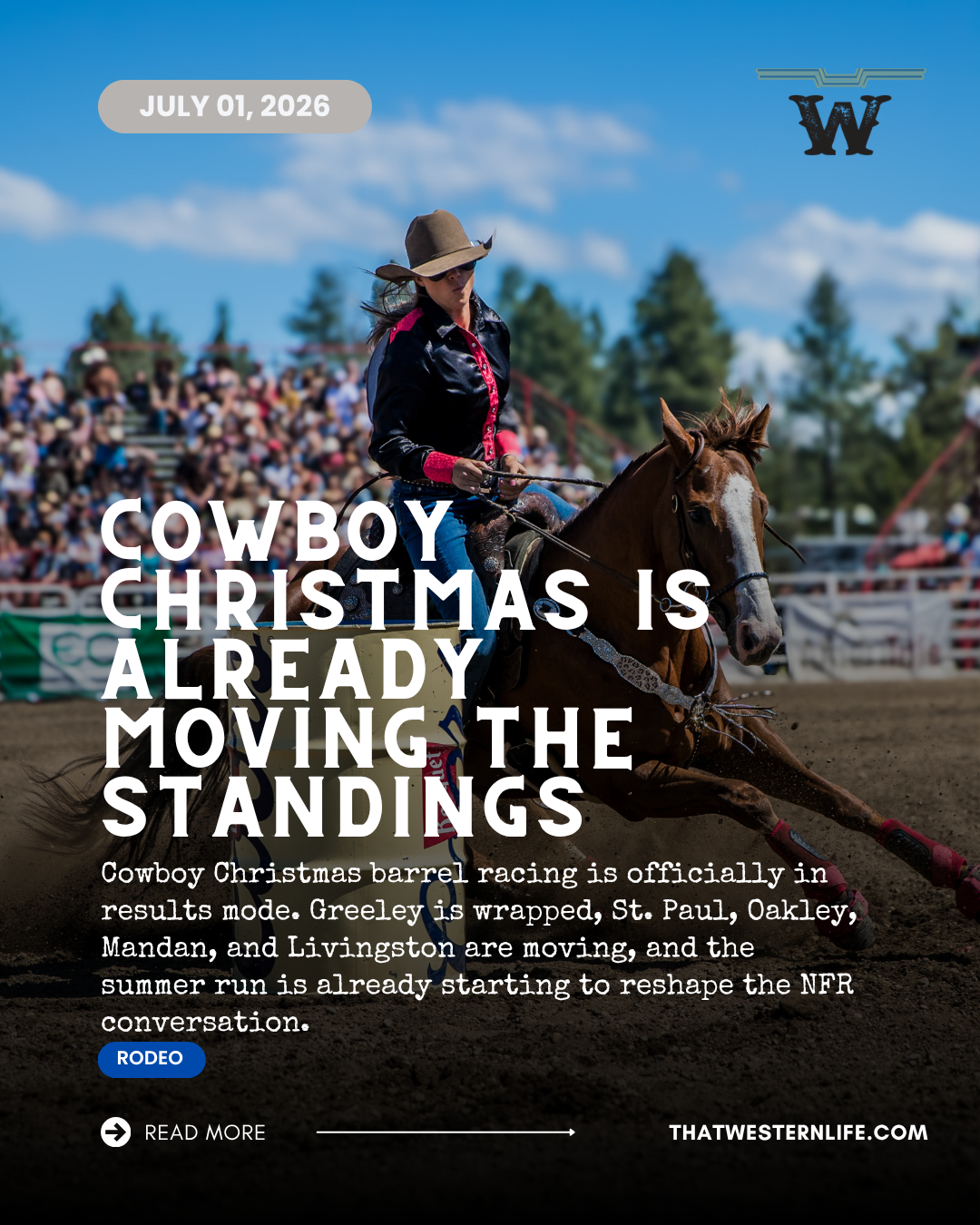
Cowboy Christmas is Already Changing the Barrel Racing Conversation
Cowboy Christmas barrel racing is officially in results mode. Greeley is wrapped, St. Paul, Oakley, Mandan, and Livingston are moving, and the summer run is already starting to reshape the NFR conversation.
Cowboy Christmas is officially moving from preview mode into results mode, and the barrel racing race is already getting sharper.
At Greeley Stampede, Ceily Simpton won the finals with a 17.13-second run, while Raelin Jurgens won the average with 51.93 seconds on three head. Greeley is one of the early tone-setters of the Fourth of July run. A strong finish there can give a cowgirl more than money. It can give her confidence, momentum, and a stronger position heading into one of the most demanding weeks of the season.
But Greeley is only one piece of the map.
Early Cowboy Christmas results also show Hayle Gibson-Stillwell leading at St. Paul, BryAnna Haluptzok leading at Oakley, Hailey Kinsel leading at Mandan, and Kellie Jorgensen leading at Livingston. Those names are spread across several rodeos, but together they tell the real story: the summer run is happening now.
For barrel racers, this week is brutal and valuable at the same time. The schedule is packed, the hauling is intense, and horses have to stay sharp through different ground conditions, arena setups, and travel demands. A fast time is never just a fast time. It is the result of horse management, timing, confidence, and decision-making under pressure.
That is why Cowboy Christmas is one of the most important stretches in professional rodeo. It can push someone closer to the National Finals Rodeo conversation or make the rest of the summer feel much more urgent.
For That Western Life, this is the kind of rodeo story worth covering closely because it helps fans understand how the season is built. The NFR field does not appear out of nowhere in the fall. It is shaped through weeks like this, where every run, every check, and every horse decision matters.
The headline is simple: barrel racing’s summer run is already moving.
And the cowgirls who capitalize now may be the ones we are still talking about in December.
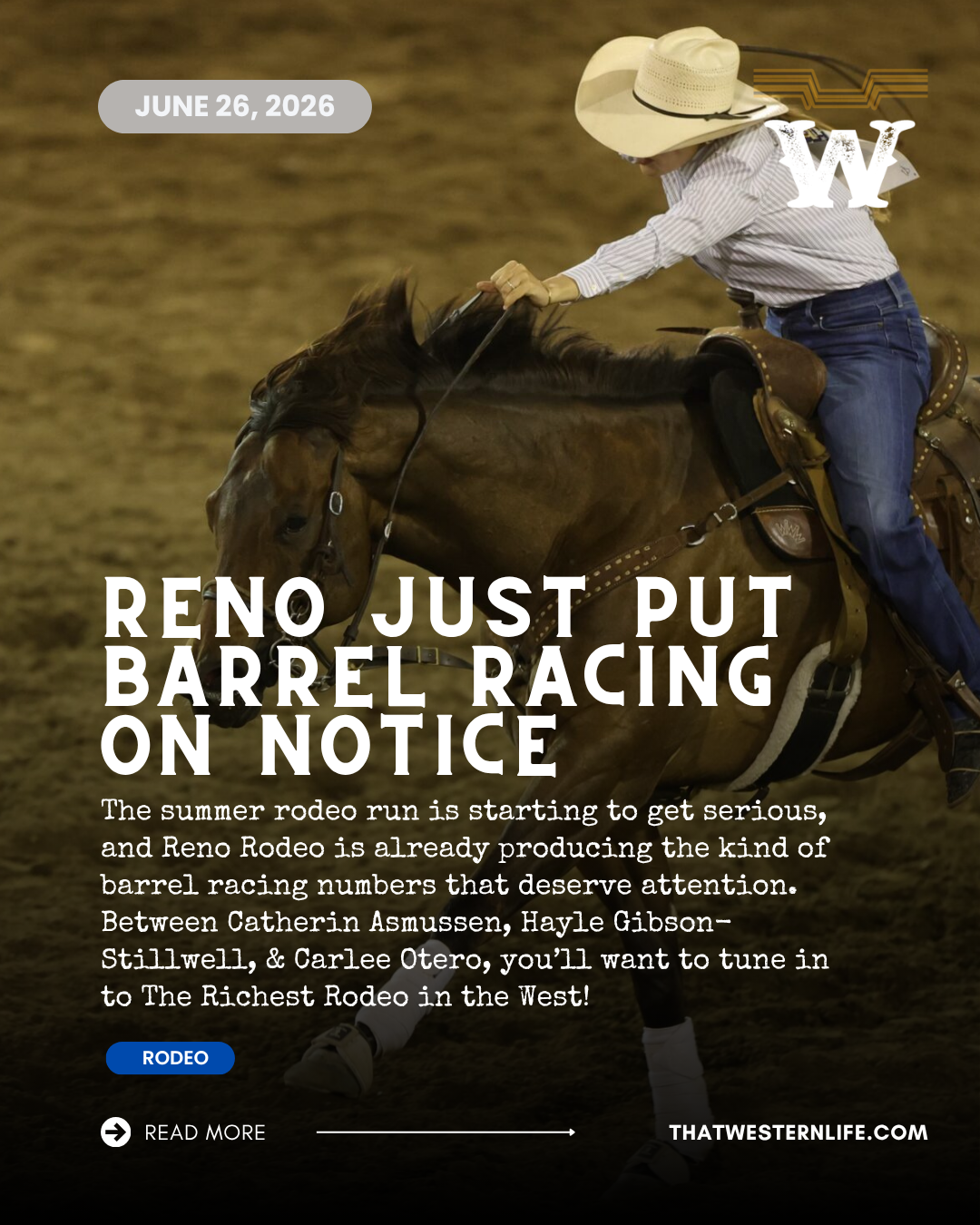
Reno Rodeo is Giving Barrel Racing Fans a Reason to Pay Attention
Reno Rodeo is already giving barrel racing fans something to watch. Catherine Asmussen’s 16.76 in Round 2 put her at the top of a fast field, and with the summer run heating up, every hundredth of a second matters. This is where momentum starts getting real.
The summer rodeo run is starting to get serious, and Reno Rodeo is already producing the kind of barrel racing numbers that deserve attention. The Reno Rodeo is one of the richest rodeos in the west and a must-enter rodeo for many contestants attempting to make the National Finals Rodeo - evident by the emphasis World Champion Tie-Down Roper Shad Mayfield put into using the Reno Rodeo as a launch of his debut back to competitive rodeo post hip surgery.
In the second round of Reno, Catherine Asmussen clocked a 16.76-second run to take control of the field, followed by Hayle Gibson-Stillwell with a 16.88 and Carlee Otero with a 16.94. In a sport where hundredths of a second can separate a check from a missed opportunity, those numbers matter. In fact, the first round leader, Jodee Miller Pedone, sits with a 16.98-second run that is nearly a quarter of a second slower than the round two leaders. Otero currently sits first in the Reno average by 0.12 seconds.
Gibson-Stillwell currently sits number 4 in the WPRA world standings, with Carlee Otero at 6th.
Asmussen will be another one to watch as she seems to heat up in the northwest, placing 8th at Eagle Rodeo (Idaho) and 5th at the Silver State Stampede (Nevada). Regardless, she’s setting herself up well if she is a Wilderness Circuit competitor. Learn more about the PRCA & WPRA Circuits HERE.
Reno is one of the major summer rodeos that can help shape confidence, standings movement, and public awareness before the Fourth of July run hits full speed. For barrel racers, a strong performance in Reno can create momentum at exactly the right time.
Barrel racing is also one of the easiest rodeo events for newer fans to understand. The clock does not leave much room for debate. Fast is fast. Clean is clean. And when the times get tight, every turn becomes part of the story.
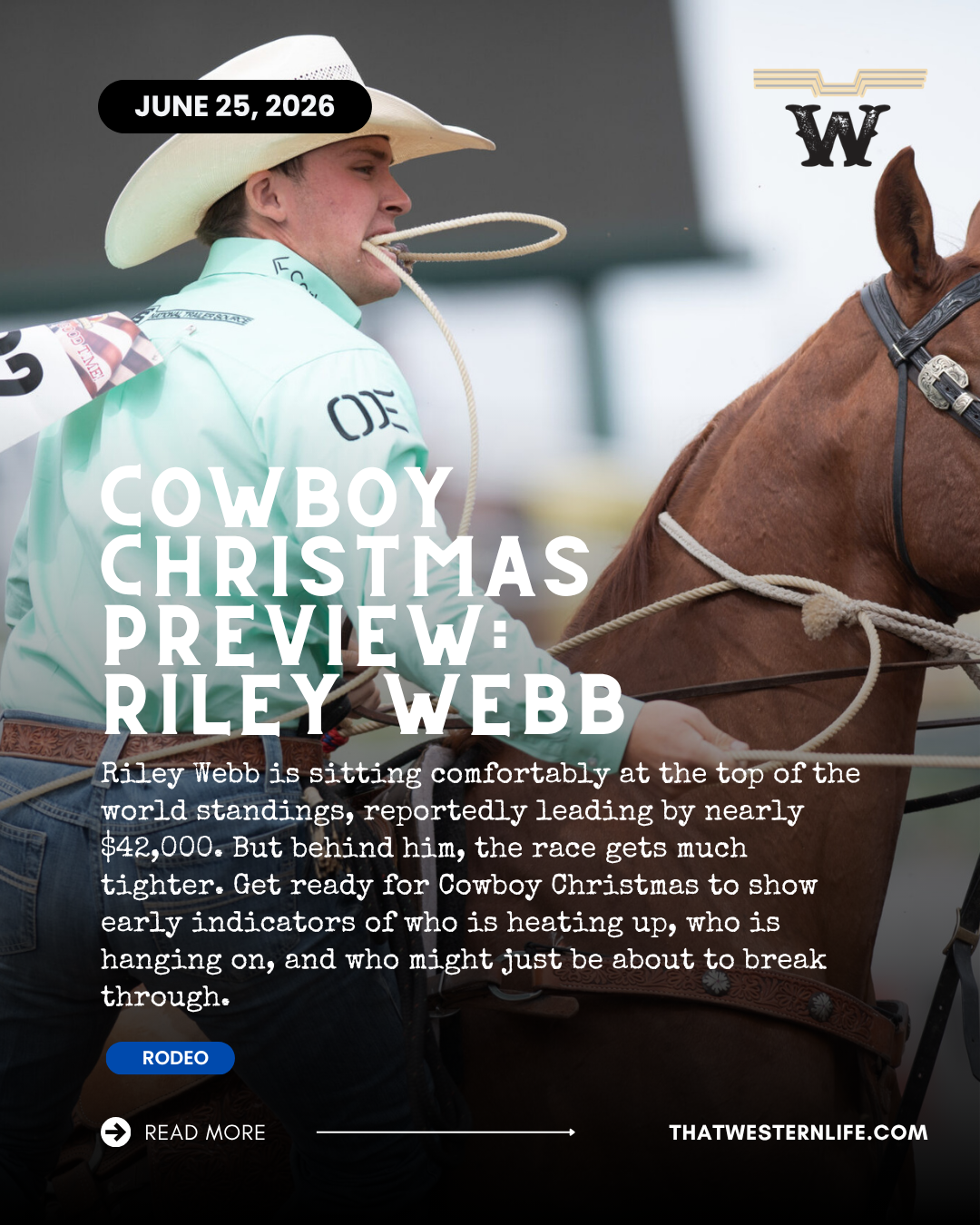
Cowboy Christmas 2026 Preview: Riley Webb
Riley Webb is sitting comfortably at the top of the world standings, reportedly leading by nearly $42,000. But behind him, the race gets much tighter. Get ready for Cowboy Christmas to show early indicators of who is heating up, who is hanging on, and who might just be about to break through.
Cowboy Christmas Is Where The NFR Race Starts Getting Real
Riley Webb is sitting comfortably at the top of the world standings, reportedly leading by nearly $42,000. But behind him, the race gets much tighter. Ty Harris is holding the No. 15 position by less than $700, and several ropers are close enough to change the picture with one strong weekend.
That is what makes Cowboy Christmas one of the most important stretches in professional rodeo.
For casual fans, it can look like a busy run of rodeos around the Fourth of July. For contestants, it is something very different. It is a high-pressure, high-mileage, high-opportunity sprint where every run can shift the standings. A cowboy sitting outside the Top 15 can suddenly become part of the National Finals Rodeo conversation. A veteran can protect his position. A rookie can make a name for himself. A leader can stretch the gap.
This is also when rodeo storytelling gets sharper.
By the time December arrives in Las Vegas, fans know the names that made the NFR. But the stories that get them there often begin right now. Cowboy Christmas is where momentum becomes measurable. It is where consistency gets rewarded. It is where one missed calf, one barrier, one fast time, or one big check can change the season.
For media, sponsors, and rodeo fans, this is the stretch to watch closely. The standings are not just numbers. They are early indicators of who is heating up, who is hanging on, and who may be about to break through.
Tie-down roping is a strong example because the bubble is so tight. When the difference between No. 15 and the next group is measured in hundreds or a few thousand dollars, every rodeo matters. That creates urgency, tension, and a reason for fans to pay attention before the NFR field is set.
The next two weeks will not decide everything. But they will shape a lot.
Cowboy Christmas has always been one of rodeo’s defining runs. This year, the tie-down roping race is giving fans a clean reason to start watching now.
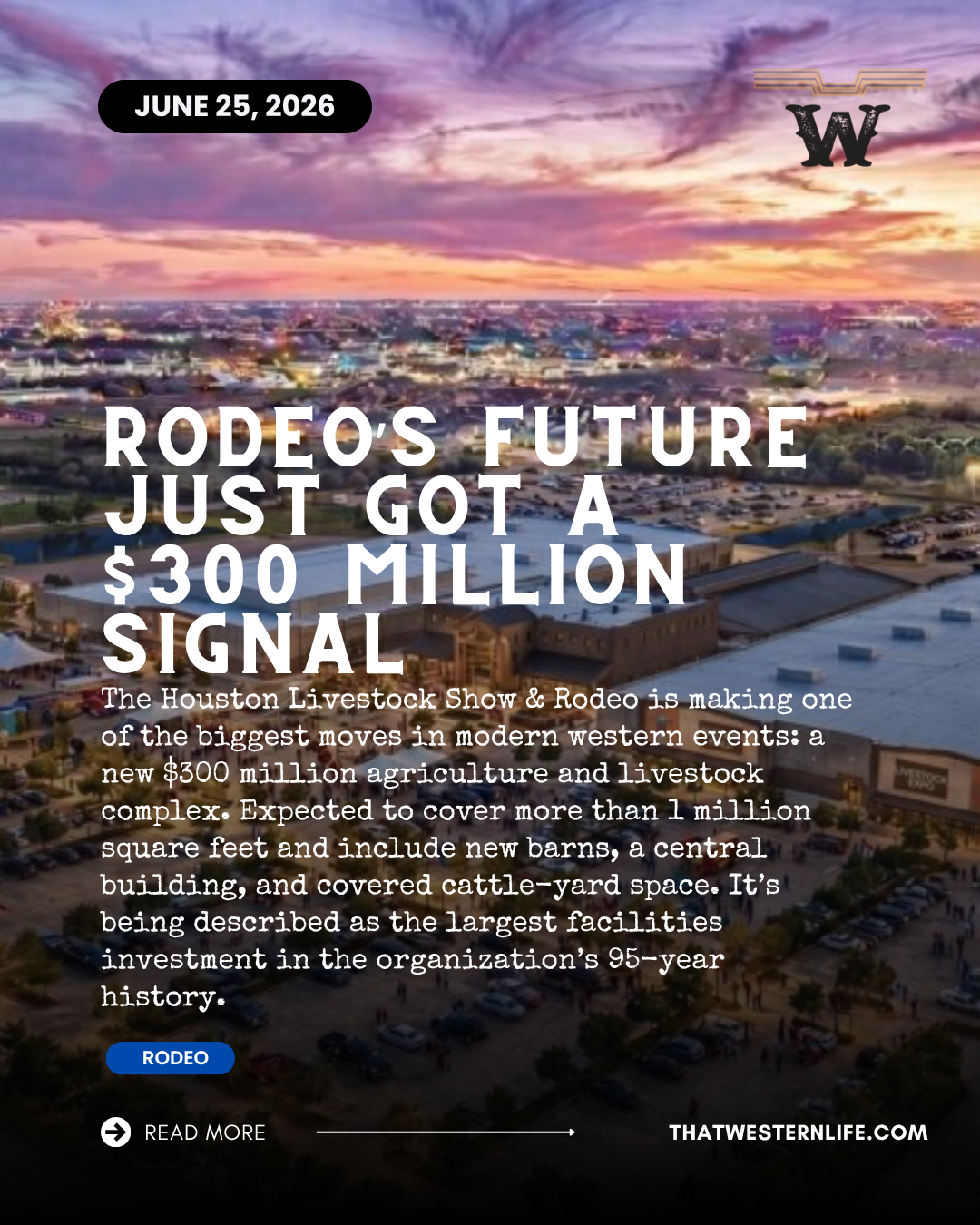
Houston Rodeo's $300 Million Ag Complex is Bigger Than a Building Project
Houston Rodeo just announced a $300 million agricultural complex, and this is more than a facilities upgrade. It is a major reminder that rodeo’s future is tied to livestock, youth programs, ag education, and year-round western impact. The arena matters. But the roots matter just as much.
The Houston Livestock Show and Rodeo is making one of the biggest moves in modern western events: a new $300 million agricultural and livestock complex.
The project is expected to cover more than 1 million square feet and include new barns, a central building, and covered cattle-yard space. It is being described as the largest facilities investment in the organization’s 95-year history, with a target opening ahead of the 2029 rodeo season.
But this story is bigger than square footage.
For the western world, Houston’s investment is a clear signal that rodeo’s future is not only in the arena. It is in livestock education, youth programs, horse shows, auctions, ag events, and year-round community use. The biggest rodeo organizations in the country are no longer treating agriculture as a side piece of the event. They are building infrastructure around it.
That matters because the livestock and agriculture side of rodeo is often what gives the sport its deepest roots. The concerts may bring in casual fans. The rodeo performances may sell the tickets. But livestock shows, FFA and 4-H participation, scholarships, breeding programs, youth exhibitors, and agricultural education are what connect rodeo to the next generation.
This new complex also points to a bigger trend across western events: rodeos are becoming full-scale western lifestyle platforms. The strongest events are not just producing one week of entertainment. They are creating economic engines, educational hubs, tourism drivers, and community gathering places.
For Houston, this investment strengthens its position as one of the most influential western events in the country. For the rest of the industry, it raises the bar.
Not every rodeo can build a $300 million complex. Most cannot. But every rodeo can look at this move and ask the same strategic question: are we only selling tickets, or are we building something that serves agriculture, youth, sponsors, and western culture year-round?
That is the real takeaway.
Houston is not just expanding facilities. It is reinforcing the idea that rodeo’s future depends on keeping agriculture visible, valuable, and central to the story.
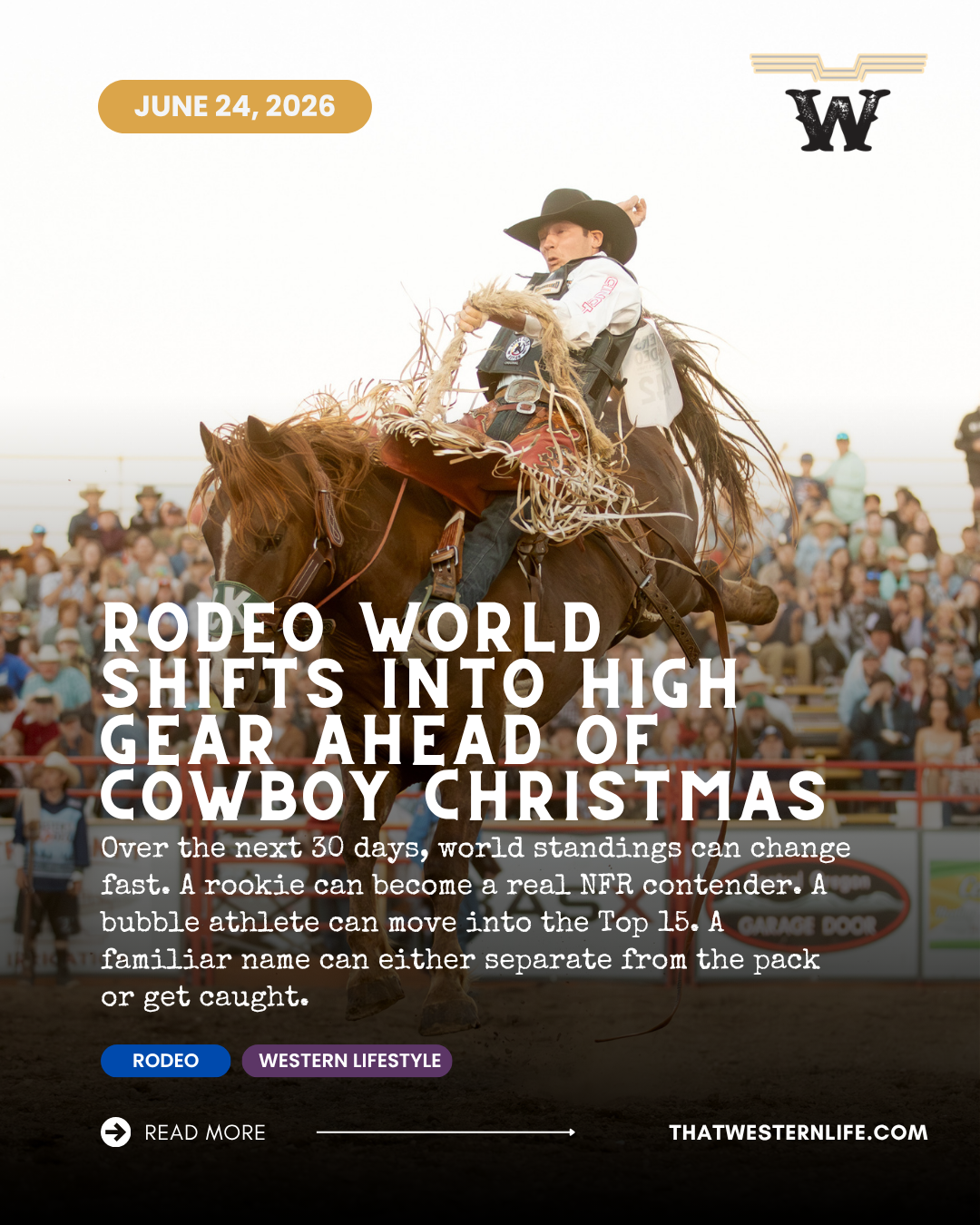
Cowboy Christmas Is Where the NFR Race Starts to Get Expensive
Cowboy Christmas is almost here, and the rodeo world is about to hit one of the most important stretches of the season.
Over the next 30 days, world standings can change fast. A rookie can become a real NFR contender. A bubble athlete can move into the Top 15. A familiar name can either separate from the pack or get caught.
This is the part of the summer where rodeo storylines get made.
As major PRCA rodeos open across the country, all eyes are on who is heating up, who is holding steady, and who is about to make the kind of run that changes their season.
That Western Life will be watching the names moving up, the rodeos that matter, and the stories behind the standings.
Because in rodeo, July does not just pay well.
It decides a lot.
That point usually arrives somewhere between late June and the Fourth of July.
In rodeo, they call it Cowboy Christmas. The name sounds charming, almost quaint, like a dusty holiday built around truck stop coffee, fireworks, and a stack of entry confirmations. In reality, it is one of the most economically consequential stretches of the professional rodeo season.
For roughly ten days, contestants can run at a concentration of high-paying rodeos that rarely exists anywhere else on the calendar. Greeley. Ponoka. St. Paul. Cody. Prescott. Livingston. Red Lodge. Oakley City. Molalla. Belle Fourche. Basin City. Benalto. And a long list of smaller but strategically useful rodeos that can turn one good week into a season-altering swing.
This is not just the busy part of the year.
This is the part where the math starts to get serious.
The NFR Cutline is not a feeling. It is a number.
The National Finals Rodeo takes the Top 15 in each event at the end of the regular season. That phrase, “Top 15,” gets used so often t can lose its weight. But the number required to get there is substantial.
Heading into the 2025 National Finals Rodeo, the No. 15 cutoff in major PRCA/WPRA events generally landed between about $100,000 and $145,000 in regular-season earnings. The low end was breakaway roping, where No. 15 Macy Young entered with $100,028. Steer wrestling’s No. 15, Gavin Soileau, entered with $105,899. Team roping headers and heelers were just above that, at $114,736 and $111,672, respectively. Tie-down roping required $126,957. Bareback riding required $129,951. Bull riding required $138,918. Saddle bronc riding was the highest of this group, with No. 15 Lefty Holman entering at $144,872. Barrel racing’s published 2025 field showed Katelyn Scott in the No. 15 position with $130,763.
Put another way: across those nine NFR event categories, the 2025 average No. 15 threshold was roughly $122,644.
That is the number Cowboy Christmas begins to chase.
A contestant who wins $25,000 to $35,000 over the Fourth of July run has not merely had a good week. They may have banked 20% to 30% of what it took, on average, to make the NFR in 2025.
That is why this stretch matters.
Why the Fourth of July pays differently
The rodeo economy is not evenly distributed.
There are rodeos that matter because of prestige. There are rodeos that matter because of history. There are rodeos that matter because of geography - don’t forget, contestants are still battling for year-end circuit finals as well. And then there are rodeos that matter because the checks are large enough to alter a contestant’s season in one trip.
Cowboy Christmas is where all of those things stack.
St. Paul Rodeo in Oregon says contestants compete for nearly $500,000 in prize money, with top competitors taking home individual winnings as large as $10,000. Cody Stampede, according to the ProRodeo Hall of Fame, draws 800-900 contestants and has a payout of more than $400,000, while also being a one-header rodeo, which means contestants can compete once and keep moving. Greeley Stampede has recently been reported as paying more than $400,000 as well. Ponoka Stampede’s format can produce large individual outcomes, especially through its finals and showdown structure.
That structure is why Cowboy Christmas is not only about talent. It is about logistics.
A contestant has to draw well, compete well, drive all night, manage horses, manage injuries, hit the right set of rodeos, and make the kind of decisions that do not show up in a results sheet. Do you chase the biggest check? Do you take the rodeo that fits your horse? Do you skip a rodeo to keep one fresh? Do you enter a smaller stop because it is on the route and the odds are better?
The standings reward money. But Cowboy Christmas tests judgment.
The case studies
Halyn Lide
In 2024, barrel racer Halyn Lide became a clean example of what this stretch can do.
Lide was the highest-earning barrel racer over Cowboy Christmas, with reported earnings of roughly $32,550 across the Fourth of July run. Her money came from major stops including Ponoka, Greeley, and Oakley, Utah. She won Greeley and Oakley, and also picked up a go-round win at Ponoka.
The result was not just a good week. It changed the way people talked about her season.
By late November, The Cowboy Channel framed Lide as a first-time NFR qualifier and pointed back to her Cowboy Christmas earnings as a major piece of that climb. That is the function of this run: it turns “watch her” into “she is in the race.”
For fans, that is the moment to pay attention. Not in December, when the back numbers are already assigned. In July, when a contestant starts putting pressure on the bubble.
Emily Beisel
Emily Beisel offers the veteran version of the same story.
In 2024, Beisel finished just behind Lide among Cowboy Christmas barrel racing earners, with $30,211. The breakdown is the important part: $17,460 at Ponoka, $11,086 at St. Paul, and $1,665 at Red Lodge.
That kind of week does two things. First, it moves money into the standings quickly. Second, it confirms a competitor’s summer strategy.
Beisel was not an unknown name. She was already one of the sport’s proven winners. But Cowboy Christmas can serve veterans differently than rookies. For a new name, it creates attention. For a veteran, it creates separation.
In a season where the No. 15 barrel racing cutoff was around $130,000 the following year, a $30,000 Fourth of July run represents nearly a quarter of that benchmark.
That is not momentum as a metaphor. That is momentum as arithmetic.
Riley Webb
Tie-down roper Riley Webb delivered the 2025 version.
Webb reportedly won $32,537 during Cowboy Christmas 2025, with checks at Cody, St. Paul, Killdeer, Basin City, Livingston, and Greeley. The largest piece came from St. Paul, where he won $16,235. He also added $5,090 at Basin City, $4,599 at Greeley, and $4,376 at Cody.
Compare that to the 2025 NFR tie-down roping cutoff: Shane Hanchey entered the NFR at No. 15 with $126,957. Webb’s Fourth of July run alone was equal to roughly 25.6% of that threshold.
That is the scale of the opportunity.
A single week cannot make an NFR season by itself. But a week like that can change the pressure of every rodeo that follows. It can move a contestant from chasing the bubble to defending a position. It can make a sponsor notice. It can make media start writing the name differently. It can make every check in August and September feel like a step toward Las Vegas rather than a rescue mission.
What fans should watch
Cowboy Christmas is not only about who wins the famous rodeos. Sometimes the more interesting story is who places everywhere.
A roughstock rider who wins one major rodeo can make a leap. A timed-event contestant who places at five stops may do even more damage. A barrel racer who gets through Ponoka, Greeley, St. Paul, and a smaller rodeo with clean runs can suddenly become impossible to ignore.
The names to watch are not only the world No. 1s. They are the contestants sitting from roughly No. 12 to No. 25 in the standings before the run begins.
That is the volatile zone.
A contestant already inside the Top 10 can use Cowboy Christmas to build distance. A contestant sitting just outside the Top 15 can use it to break in. A rookie can use it to become a storyline. A veteran can use it to remind everyone that summer rodeo is not won by hype, but by cashing checks in places most fans only see as dots on a map.
Why this matters for rodeo media
For That Western Life, Cowboy Christmas is exactly the kind of stretch that deserves more attention.
Rodeo coverage often gets loudest when champions are crowned. But the more interesting story often starts earlier, when the standings are still unsettled and the sport has not yet agreed on who matters.
This is where the NFR race begins to sharpen.
This is where unknown names become dangerous.
This is where good horses become famous.
This is where a contestant can go from “having a decent year” to “we need to talk about them.”
And this is where fans can learn to watch rodeo differently.
The Fourth of July run is not just a holiday tradition. It is a market correction. It rewards the contestants who can win, travel, manage risk, and keep performing when the sport asks the most from them in the shortest window.
By the time December arrives, the NFR field can feel inevitable.
In July, it is still being built.

10 Rodeos For Your Summer 2023 Bucket List
These rodeos offer a great summer experience and a chance to see some of the top cowboys and cowgirls compete. Many of these events also offer additional activities such as concerts, parades, and other festivities that add to the overall experience. Again, it's always a good idea to research the event before attending to ensure that it meets your preferences and interests.
These rodeos offer a great summer experience and a chance to see some of the top cowboys and cowgirls compete. Many of these events also offer additional activities such as concerts, parades, and other festivities that add to the overall experience. Again, it's always a good idea to research the event before attending to ensure that it meets your preferences and interests.
Pendleton Round Up
pendleton, oregon
The Pendleton Round-Up is an annual rodeo event held in Pendleton, Oregon, USA. The event takes place over four days in mid-September and features a range of professional rodeo competitions, including bull riding, bareback riding, steer wrestling, and barrel racing, among others.
Founded in 1910, the Pendleton Round-Up is one of the oldest rodeos in the United States and has a long history of showcasing top rodeo talent and preserving the western way of life. In addition to the rodeo events, the Pendleton Round-Up also features a variety of other activities and entertainment, including live music, a parade, a western-themed art show, and food and drink vendors.
Pendleton, Oregon is located in the heart of the Columbia River Plateau and is known for its western heritage and outdoor recreation opportunities. The Pendleton Round-Up is a major cultural and tourism attraction in Pendleton and is known for its small-town charm and warm hospitality, making it a favorite among locals and visitors alike.
Cheyenne Frontier Days
Cheyenne, Wyoming
Cheyenne Frontier Days Rodeo is an annual rodeo event held in Cheyenne, Wyoming. It is one of the largest and most well-known rodeos in the world, attracting top rodeo athletes and thousands of visitors each year. The event typically takes place over ten days in July and features a variety of rodeo events, including bull riding, steer wrestling, saddle bronc riding, and barrel racing.
In addition to the rodeo events, the Cheyenne Frontier Days also offers a wide range of other activities and entertainment, including concerts, carnival rides, parades, western-themed exhibitions, and food and drink vendors. The event has a rich history dating back to 1897, and it has become a beloved tradition for many rodeo fans and Western enthusiasts.
Calgary Stampede
Calgary, Alberta, canada
The Calgary Stampede is an annual rodeo, exhibition, and festival held in Calgary, Alberta, Canada. The event takes place for ten days in July and features a wide range of activities and attractions, including professional rodeo competitions, live music and entertainment, carnival rides and games, agricultural exhibitions, and a variety of food and drink vendors.
The Stampede is considered one of the largest rodeos in the world, attracting top rodeo athletes from around the globe who compete for a share of a significant prize money purse. The rodeo events include bull riding, steer wrestling, saddle bronc riding, and barrel racing, among others.
Beyond the rodeo events, the Calgary Stampede is also known for its unique western-style experiences, including the daily parade of floats, marching bands, and various performers dressed in cowboy attire. The event is a significant cultural and tourism attraction in Calgary and has become a beloved tradition for many Canadians and visitors from around the world.
Sisters Rodeo
Sisters, oregon
The Sisters Rodeo is an annual rodeo event held in Sisters, Oregon, USA. The event takes place over four days in June and features a range of professional rodeo competitions, including bull riding, barrel racing, steer roping, and team roping, among others.
Founded in 1940, the Sisters Rodeo has a long history of showcasing top rodeo talent and preserving the western way of life. In addition to the rodeo events, the Sisters Rodeo also features a variety of other activities and entertainment, including live music, a parade, a western-themed art show, a kids rodeo, and food and drink vendors.
The Sisters Rodeo prides itself on being a family-friendly event that celebrates the unique heritage and culture of the American West. It is known for its small-town charm and warm hospitality, making it a favorite among locals and visitors alike.
Greeley Stampede
Greeley, Colorado
Greeley, Colorado is a city located in Weld County in northern Colorado, USA. It is known for its rich agricultural history, as well as its vibrant arts and culture scene.
One of Greeley's biggest events is the annual Greeley Stampede, a ten-day festival that takes place in late June and early July. The Greeley Stampede features a range of activities and entertainment, including professional rodeo competitions, live music, carnival rides and games, food and drink vendors, and western-themed exhibitions.
In addition to the Greeley Stampede, the city of Greeley offers a range of other attractions and amenities, including several parks and nature areas, a thriving downtown district, and a variety of museums and cultural institutions. Greeley is also home to the University of Northern Colorado, a public research university that offers a range of undergraduate and graduate programs.
Cody Stampede Rodeo
Cody, Wyoming
The Cody Stampede is an annual rodeo event held in Cody, Wyoming, USA. The event takes place over four days in early July and features a range of professional rodeo competitions, including bull riding, bareback riding, steer wrestling, and barrel racing, among others.
Founded in 1919, the Cody Stampede has a long history of showcasing top rodeo talent and preserving the western way of life. In addition to the rodeo events, the Cody Stampede also features a variety of other activities and entertainment, including live music, a parade, a western-themed art show, and food and drink vendors.
Cody, Wyoming is known as the "Rodeo Capital of the World," and the Cody Stampede is one of the city's biggest events. It is known for its small-town charm and warm hospitality, making it a favorite among locals and visitors alike. In addition to the rodeo, Cody offers a range of other attractions and amenities, including the Buffalo Bill Center of the West museum, the Yellowstone Regional Airport, and access to nearby outdoor recreation areas such as Yellowstone National Park and the Shoshone National Forest.
Snake River Stampede
Nampa, Idaho
The Snake River Stampede is an annual rodeo event held in Nampa, Idaho, USA. The event takes place over five days in mid-July and features a range of professional rodeo competitions, including bull riding, bareback riding, steer wrestling, and barrel racing, among others.
Founded in 1913, the Snake River Stampede is one of the oldest rodeos in the United States and has a long history of showcasing top rodeo talent and preserving the western way of life. In addition to the rodeo events, the Snake River Stampede also features a variety of other activities and entertainment, including live music, a parade, a western-themed art show, and food and drink vendors.
Nampa, Idaho is located in the heart of the Treasure Valley and is known for its rich agricultural history and outdoor recreation opportunities. The Snake River Stampede is a major cultural and tourism attraction in Nampa and is known for its small-town charm and warm hospitality, making it a favorite among locals and visitors alike.
California Rodeo Salinas
Salinas, california
The California Rodeo Salinas is an annual rodeo event held in Salinas, California, USA. The event takes place over four days in mid-July and features a range of professional rodeo competitions, including bull riding, steer wrestling, tie-down roping, and barrel racing, among others.
Founded in 1911, the California Rodeo Salinas is one of the largest rodeos in California and has a long history of showcasing top rodeo talent and preserving the western way of life. In addition to the rodeo events, the California Rodeo Salinas also features a variety of other activities and entertainment, including live music, a parade, a western-themed art show, and food and drink vendors.
Salinas, California is located in the heart of the fertile Salinas Valley and is known for its agricultural heritage and scenic beauty. The California Rodeo Salinas is a major cultural and tourism attraction in Salinas and is known for its small-town charm and warm hospitality, making it a favorite among locals and visitors alike.
Sheridan WYO Rodeo
Sheridan, wyoming
The Sheridan WYO Rodeo is an annual rodeo event held in Sheridan, Wyoming, USA. The event takes place over four days in mid-July and features a range of professional rodeo competitions, including bull riding, bareback riding, steer wrestling, and barrel racing, among others.
Founded in 1931, the Sheridan WYO Rodeo is one of the largest rodeos in Wyoming and has a long history of showcasing top rodeo talent and preserving the western way of life. In addition to the rodeo events, the Sheridan WYO Rodeo also features a variety of other activities and entertainment, including live music, a parade, a western-themed art show, and food and drink vendors.
Sheridan, Wyoming is located in the heart of the scenic Bighorn Mountains and is known for its western heritage and outdoor recreation opportunities. The Sheridan WYO Rodeo is a major cultural and tourism attraction in Sheridan and is known for its small-town charm and warm hospitality, making it a favorite among locals and visitors alike.
Ellensburg Rodeo
Ellensburg, washington
The Ellensburg Rodeo is an annual rodeo event held in Ellensburg, Washington, USA. The event takes place over four days in early September and features a range of professional rodeo competitions, including bull riding, saddle bronc riding, steer wrestling, and barrel racing, among others.
Founded in 1923, the Ellensburg Rodeo is one of the oldest and most historic rodeos in the United States and has a long history of showcasing top rodeo talent and preserving the western way of life. In addition to the rodeo events, the Ellensburg Rodeo also features a variety of other activities and entertainment, including live music, a parade, a western-themed art show, and food and drink vendors.
Ellensburg, Washington is located in the heart of the Kittitas Valley and is known for its western heritage and scenic beauty. The Ellensburg Rodeo is a major cultural and tourism attraction in Ellensburg and is known for its small-town charm and warm hospitality, making it a favorite among locals and visitors alike.

The 2022 National Finals Rodeo by State
The 2022 National Finals Rodeo is quickly approaching and we thought we’d take a dive into where our 2022 Contestants are from state-by-state!
The 2022 National Finals Rodeo is quickly approaching and we thought we’d take a dive into where our 2022 Contestants are from state-by-state!

Texas
Barrel Racing (8): Jordon Briggs (Tolar, TX) | Stevi Hillman (Granbury, TX) | Hailey Kinsel (Cotulla, TX) | Shelley Morgan (Eustace, TX) | Sissy Winn (Chapman Ranch, TX) | Kassie Mowry (Dublin, TX) | Bayleigh Choate (Fort Worth, TX) | Brittany Pozzi Tonozzi (Lampasas, TX)
Tie-Down Roping (7): John Douch (Huntsville, TX) | Caleb Smidt (Bellville, TX) | Tuf Cooper (Decatur, TX) | Cory Solomon (Prairie View, TX) | Marty Yates (Stephenville, TX) | Ty Harris (San Angelo, TX) | Kincade Henry (Mount Pleasant, TX)
Team Roping (6): Tanner Tomlinson (Angleton, TX) | Tyler Wade (Terrell, TX) | Lightning Aguilera (Athens, TX) | Buddy Hawkins (Stephenville, TX) | Patrick Smith (Lipan, TX) | Wesley Thorp (Throckmorton, TX)
Steer Wrestling (1): Hunter Cure (Holliday, TX)
Bull Riding (2): Jeff Askey (Athens, TX) | Maverick Potter (Waxachie, TX)
Saddle Bronc (1): Wyatt Casper (Miami, TX)
Bareback (4): Rocker Steiner (Weatherford, TX) | Leighton Berry (Weatherford, TX) | Cole Franks (Clarendon, TX) | Tilden Hooper (Carthage, TX)
Oklahoma
Barrel Racing (4): Dona Kay Rule (Minco, OK) | Wenda Johnson (Pawhuska, OK) | Emily Beisel (Weatherford, OK) | Leslie Smalygo (Skiatook, OK)
Tie-Down Roping (4): Clay Smith (Broken Bow, OK) | Joseph Harrison (Marietta, OK) | Tyler Milligan (Pawhuska, OK) | Hunter Herrin (Apache, OK)
Team Roping (4): Andrew Ward (Edmond, OK) | Coleman Proctor (Pryor, OK) | Travis Graves (Jay, OK) | Brye Crites (Welch, OK)
Bull Riding (3): Trevor Kastner (Roff, OK) | Trey Kimzey (Strong, OK) | Lukasey Morris (Union City, OK)
Canada
Team Roping (1): Jeremy Buhler (Arrowwood, AB)
Bull Riding (1): Jared Parsonage (Maple Creek, SK)
Saddle Bronc (6): Zeke Thurston (Big Valley, AB) | Logan Hay (Wildwood, AB) | Layton Green (Millarville, AB) | Kolby Wanchuk (Sherwood Park, AB) | Kole Ashbacher (Arrowwood, AB) | Dawson Hay (Wildwood, AB)
Bareback (1): Orin Larsen (Inglis, MB)
Montana
Tie-Down Roping (1): Haven Meged (Miles City, MT)
Team Roping (1): Clay Tryan (Billings, MT)
Steer Wrestling (2): Ty Erickson (Helena, MT) | Timmy Sparing (Helena, MT)
Saddle Bronc (2): Sage Newman (Melston, MT) | Chase Brooks (Deer Lodge, MT)
Bareback (1): Caleb Bennett (Corvallis, MT)
Kansas
Tie-Down Roping (1):
Team Roping (1): Jake Long (Coffeyville, KS)
Steer Wrestling (1): Tanner Brunner (Ramona, KS)
Bull Riding (2): Trey Holston (Fort Scott, KS) | JR Stratford (Byers, KS)
Bareback (1): Jess Pope (Waverly, KS)
Louisiana
Tie-Down Roping (3): Shane Hanchey (Sulphur, LA) | Zack Jongbloed (Iowa, LA) | Macon Murphy (Keatchie, LA)
Steer Wrestling (3): Tyler Waguespack (Gonzales, LA) | Tristan Martin (Sulphur, LA) | Rowdy Parrott (Mamou, LA)
Idaho
Steer Wrestling (2): Stetson Jorgensen (Blackfoot, ID) | Dirk Tavenner (Rigby, ID)
Bull Riding (2): Garrett Smith (Rexburg, ID) | Tristen Hutchings (Monteview, ID)
Saddle Bronc (1): Kade Bruno (Challis, ID)
California
Team Roping (1): Cody Snow (Los Olivios, CA)
Saddle Bronc (1): Lefty Holman (Visalia, CA)
Bareback (2): R.C. Landingham (Hat Creek, CA) | Clayton Biglow (Clements, CA)
South Dakota
Barrel Racing (2): Jessica Routier (Buffalo, SD) | Lisa Lockhart (Oelrichs, SD)
Team Roping (2): Jr. Dees (Aurora, SD) | Levi Lord (Sturgis, SD)
Utah
Team Roping (1): Rhen Richard (Roosevelt, UT)
Bull Riding (2): Stetson Wright (Milford, UT) | Josh Frost (Randlett, UT)
Saddle Bronc (2): Stetson Wright (Milford, UT) | Ryder Wright (Beaver, UT)
Bareback (1): Kaycee Feil (Genola, UT)
Wyoming
Saddle Bronc (2): Brody Cress (Hillsdale, WY) | Tanner Butner (Daniel, WY)
Bareback (1): Cole Reiner (Buffalo, WY)
Minnesota
Steer Wrestling (1): J.D. Struxness (Milan, MN)
Bull Riding (1): Reid Oftedahl (Raymond, MN)
Bareback (1): Tanner Aus (Granite Falls, MN)
Florida
Barrel Racing (1): Margo Crowther (North Fort Myers, FL)
Team Roping (2): Dustin Equsquiza (Marianna, FL) | Jonathan Torres (Ocala, FL)
Mississippi
Team Roping (1): Jake Orman (Prairie, MS)
Steer Wrestling (1): Will Lummus (Byhalia, MS)
Nevada
Team Roping (1): Jade Corkill (Fallon, NV)
Steer Wrestling (1): Dakota Eldridge (Elko, NV)
Washington
Team Roping (2): Riley Minor (Ellensburg, WA) | Brady Minor (Ellensburg, WA)
New Mexico
Tie-Down Roping (1): Shad Mayfield (Clovis, NM)
Team Roping (1): Logan Medlin (Tatum, NM)
North Dakota
Bareback (1): Ty Breuer (Mandan, ND)
Nebraska
Bareback (1): Garrett Shadbolt (Merriman, NE)
Iowa
Bareback (1): Tim O’Connell (Zwingle, IA)
Missouri
Bull Riding (2): Creek Young (Rogersville, MO) | Cole Fischer (Jefferson City, MO)
Australia
Bull Riding (1): Ky Hamilton (Mackay, QL)
Wisconsin
Steer Wrestling (1): Nick Guy (Sparta, WI)
Oregon
Steer Wrestling (1): Jesse Brown (Baker City, OR)
Alabama
Steer Wrestling (1): Kyle Irwin (Roberstdale, AL)
Tennessee
Team Roping (1): Chad Masters (Cedar Hill, TN)
Georgia
Team Roping (1): Kaleb Driggers (Hoboken, GA)
Colorado
Team Roping (1): Trey Yates (Pueblo, CO)
Brazil
Team Roping (1): Junior Nogueira (Presidente Prudente, SP)


Cowgirls Create Their Own Easter on the Road
April 5, 2021 (San Angelo, Texas) - Former That Western Life podcast guest, Jimmie Smith, proved just how important the meaning of community and God is in the western life when this young, dynamic barrel racer, organized a potluck dinner for Easter Sunday at the San Angelo Rodeo. Competitors got together for a wonderful day, using a building thanks to the San Angelo Stock Show & Rodeo Committee, and enjoyed all the festivities almost like they were at home!
April 5, 2021 (San Angelo, Texas) - Former That Western Life podcast guest, Jimmie Smith, proved just how important the meaning of community and God is in the western life when this young, dynamic barrel racer, organized a potluck dinner for Easter Sunday at the San Angelo Rodeo.
Rodeo is one of those unique sports where the camaraderie and family bonds are strong. You’ll often times see competitors helping their competition, offering trades to help their schedules, and assisting each other in any way possible - it’s just the Cowboy Way! This Easter Sunday, after a long year of cancelled rodeos and uncertainty, to come together in this way was a beautiful testament to the world of rodeo!
Here’s some posts from social media!
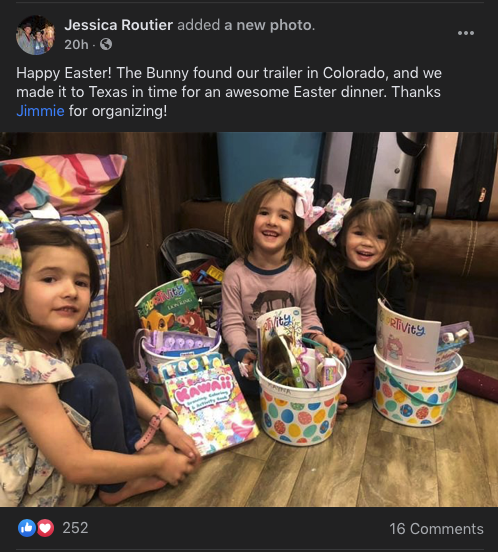
Jessie Routier shared this post on Facebook.

Kelly McGee Kaminski shared this post on Facebook.

Calgary Stampede is ON for 2021!
April 5, 2021 (Alberta, Canada) - The National Post announced last week that not only is the Calgary Stampede back on for 2021, but that a private member’s bill passed unanimously in the Canadian legislature to make rodeo the province’s official sport.

Ivy Conrado-Saebens makes a barrel racing run on her mare, JLo, at the 2019 Calgary Stampede. In Alberta, one of the early, major blows of the COVID-19 pandemic was the cancellation of the Calgary Stampede in 2020. PHOTO BY AZIN GHAFFARI/POSTMEDIA/FILE
April 5, 2021 (Alberta, Canada) - The National Post announced last week that not only is the Calgary Stampede back on for 2021, but that a private member’s bill passed unanimously in the Canadian legislature to make rodeo the province’s official sport. With large agricultural routes, rodeo is thought to have arrived in Calgary via a spillover of the American West.
The Calgary Stampede is one of the five largest rodeos in the world and the province of Alberta was hit hard when they had to cancel in 2020 due to the COVID-19 pandemic. As they move towards the 2021 event, perhaps modified as many other rodeos are forcing to do, it’s a relief to see rodeo return to the rural communities who rely on them economically.

PRCA Cowboys Bring American Bucking Stock to Australia
(March 17, 2021) - St. Patrick’s day may be one of four-leaf clovers and luck, but the birth of a beautiful bucking horse colt in Australia wasn’t a story of luck, it was the story of hard work, passion and dedication to the sport of rodeo. Astro Bells, a bucking horse from Pickett Pro Rodeo, flew to Australia after being bred to a son of 2020 World Champion Top Flight. Astro Bells is also a sister to Top Flight and Uncapped, and is out of a 2020 National Finals Rodeo daughter sired by Night Jacket.
(March 17, 2021) - St. Patrick’s day may be one of four-leaf clovers and luck, but the birth of a beautiful bucking horse colt in Australia wasn’t a story of luck, it was the story of hard work, passion and dedication to the sport of rodeo. Astro Bells, a bucking horse from Pickett Pro Rodeo, flew to Australia after being bred to a son of 2020 World Champion Top Flight. Astro Bells is also a sister to Top Flight and Uncapped, and is out of a 2020 National Finals Rodeo daughter sired by Night Jacket.
Professional Rodeo Cowboy’s Association bronc rider Anthony Thomas long held dreams with good friend Jack Morris to bring the legendary bucking stock of America to their homeland of Australia. Thomas has long been a force in the bronc riding arena.

The birth of a colt is even more exciting for the opportunity to watch as this colt sires offspring to be used in Australian pro rodeo. Thank you to Anthony for sharing on his social media about this great event and an exciting future for rodeo overseas!

First Ever Rodeo Related Club on Clubhouse - That Rodeo Life
Clubhouse’s very first club dedicated solely to rodeo is officially here! Join the That Rodeo Life club today whether you are a competitor, industry professional, event producer, communicator, enthusiast and more!
Saturday, March 6, 2021 - The That Western Life team is so excited to announce that we officially have the FIRST rodeo related club on Clubhouse - That Rodeo Life! While we love our That Western Life name, our blog operated under a variety of different names depending on whether the topics are related to agricultural, ranching, fashion, advocacy, etc. This Club will play host to some amazing rooms dedicated to networking, growing your brand name, marketing your rodeo, and event-specific room breakdowns!
Join us on the app today and shoot us a message either on here or at That Western Life on Instagram, Twitter or Facebook to start a conversation about a room collaboration today!

Dona Kay Rule Test Positive for COVID-19 and is OUT of the 2020 NFR
(December 3, 2020) - Rumors broke early Thursday morning of Round 1 of the National Finals Rodeo. Barrel Racer Dona Kay Rule, who enters the NFR sitting in third place, roughly $19,000 behind leader Britany Pozzi Tonozzi, tested positive for COVID-19 and, per the supposed PRCA restrictions, will not be allowed to compete. The number 16 barrel racer, Jessie Telford, will be stepping up to round out the class.
(December 3, 2020) - Rumors broke early Thursday morning of Round 1 of the National Finals Rodeo. Barrel Racer Dona Kay Rule, who enters the NFR sitting in third place, roughly $19,000 behind leader Britany Pozzi Tonozzi, tested positive for COVID-19 and, per the supposed PRCA restrictions, will not be allowed to compete.

Posted at 10:45 am PST on Dona Kay Rules official instagram. Click to see more comments.
In a post on Instagram, Dona thanks fans for their support and to let us know that she feels healthy with zero symptoms. Called up is Jessie Telford of Idaho who was sitting #16 in the world standings. Here’s a post she made around 8:49 PST on Instagram. Click the link below to see more of the commentary.

Here’s the rumors we know:
All the contestants were required to take a test.
It’s known that if they test positive, they are out for the remainder of the NFR.
Random athletes will be tested each day of the NFR.
This poses a number of questions in regards to what is happening in the WPRA and PRCA for the NFR. An inconsistency across the board and lack of transparency to fans could prove detrimental during an event so many hoped to see happen.

Razieme “Raj” Iborra joins That Western Life for a compelling conversation about Western creative direction, brand identity, horses, Hollywood, rodeo media, and the future of cowboy culture. From rural Ohio to NYU Tisch, national commercial campaigns, documentary filmmaking, and life with horses in Los Angeles, Raj offers a sharp perspective on how Western brands can evolve without losing authenticity. This episode explores why the American West is not just a place, but a feeling—and why the industry’s next era will belong to those who can translate its values with creativity, respect, and precision.