
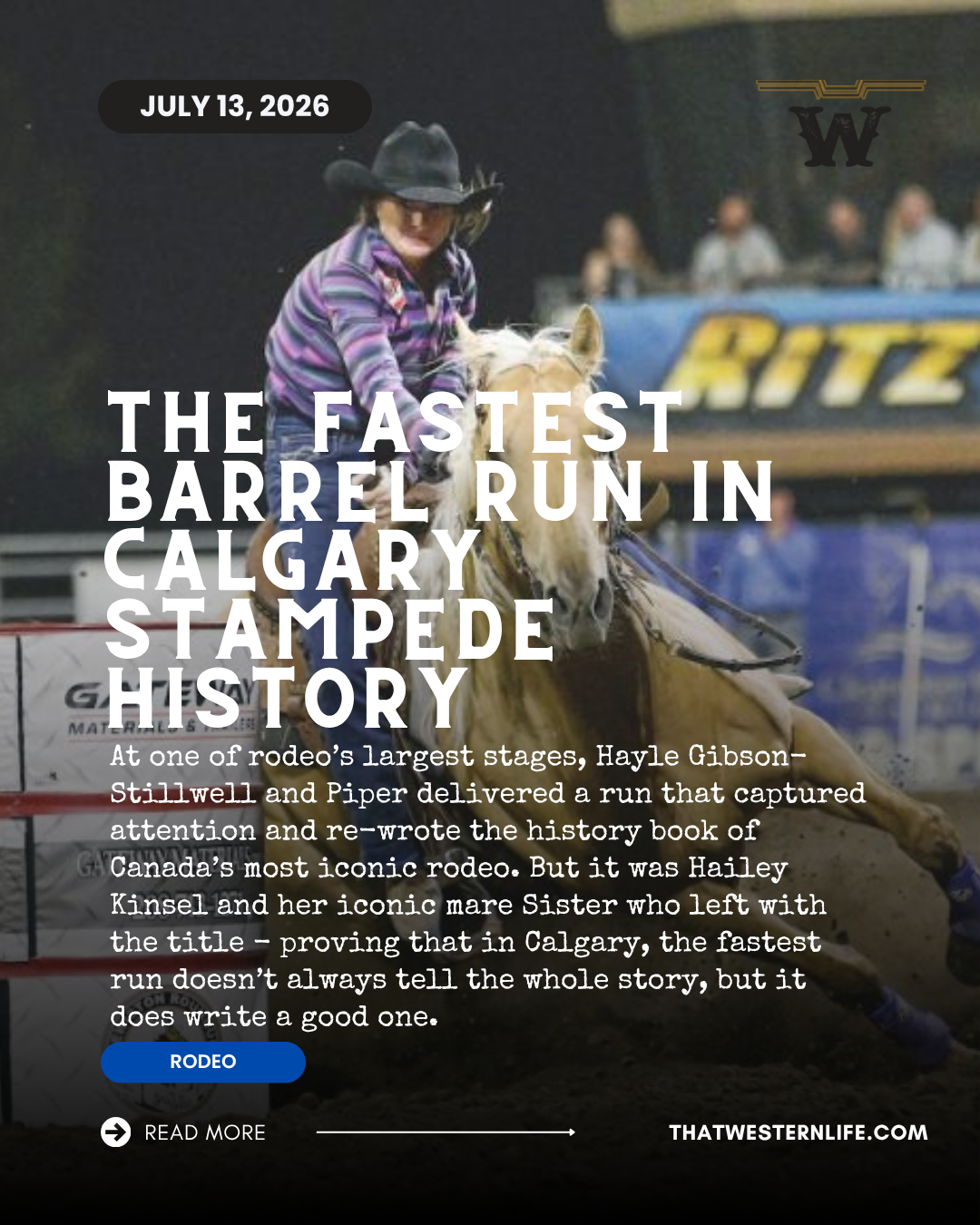
Hayle Gibson-Stillwell and Piper Rewrite the Calgary Stampede Record Book
At one of rodeo’s largest stages, Hayle Gibson-Stillwell and Piper delivered a run that captured attention and re-wrote the history book of Canada’s most iconic rodeo. But it was Hailey Kinsel and her iconic mare Sister who left with the title - proving that in Calgary, the fastest run doesn’t always tell the whole story, but it does write a good one.
Hayle Gibson-Stillwell delivered one of the defining performances of the 2026 Calgary Stampede on Sunday.
Gibson-Stillwell and her mare, Buncha Dinero (aka Piper) completed the barrel pattern in 16.56 seconds during te July 12 semifinals, producing the fastest run of the week and one of the quickest times ever seen in Calgary.
The run did more than move Gibson-Stillwell forward in the competition.
It quickened a standard that had already been challenged earlier in the week, illustrating the extraordinary level of horsepower and precision on desplay at this year’s Stampede. At this level, records are not falling becuase riders are taking reckless chances. They are falling because small improvements in a horse’s stride, footing, positioning, and responsiveness can separate an excellent run from a historic one.
However, despite posting the fast time, Gibson-Stillwell did not officially leave Calgary with the 2026 Calgary Stampede Barrel Racing Champion title.
That distinction still belongs to Hailey Kinsel, who ultimately secured the Stampede title. Calgary’s format, built around qualifying rounds, seminfinals, and a winner-takes-all final, means that times from earlier rounds don’t always carry the same weight as performances in the championship round. Kinsel’s consistency across te entire structure, combined with a clutch performance wen it mattered most, allowed her to claim the title even without the single fastest run of the week.
It is a reminder that Calgary is not simply about speed.
It is about timing, consistency, and delivering under the highest pressure moment of the rodeo.
The Stampede places competitors in front of a large international audience, significant prize money and one of the most recognizable crowds in western sports. Horses must manage the noise, travel ground conditions and repeated high-pressure runs while remaining physically and mentally sharp.
That makes Piper’s performance particularly significant, even without the official championship title record atached.
Successful barrel racing is often discussed as though the rider simply chooses the fastest horse. In reality, elite runs depend on a partnership built through conditioning, veterinary and farrier care, hauling strategy, confidence and thousands of decisions made before the horse enters the arena.
A 16.56 second result represents years of preparation compressed into less than 17 seconds on an international stage.
Adding another layer to the story, Piper and Kinsel’s legendary mare, Sister, share bloodlines. The connection highlights how breeding proframs continue to shape the upper tier of barrel racing, where elite genetics, careful development and experienced riders combine to produce horses capable of competing at the highest level.
That conversation around bloodlines naturall leads to some of the most respected names in the industry: Sherry Cervi & Mel Potter. Their breeding program has beome synonymous with producing elite barrel horses that consistently perform at the highest levels of the sport. Cervi, a multi-time world chhampion, and Potter have built their program on a deep understanding of what it takes to win - not just in terms of speed, but in durability, mindset, and consistency under pressure.
Thier horses are not accidental standouts. They are the result of intentional crosses, careful selection and years of experience competing at the very top. When you see horses like Piper and Sister sharing lineage and rising to the biggest stages, it reinforces what programs like Cervi and Potter’s have proven for years: great horses are built long before they ever enter the arena.
The performance also creates a strong promotioanl opportunity for women’s rodeo.
Barrel racing consistently produces some of rodeo’s most recognizable athletes and most shareable moments. A visibly fast run, whetehr or not it becomes the official arena record or championship title earner, gives broadcasters, events, and sponsors content that can travel well beyond established rodeo audiences.
The Calgary Stampede is formatted to reward complete performances and championship formats for major rodeos shape outcomes and how the next generation of elite horses, often connected by bloodlines, contine to push the limits of what is possible.
At one of rodeo’s largest stages, Hayle Gibson-Stillwell and Piper delivered a run that captured attention and re-wrote the history book of Canada’s most iconic rodeo. But it was Hailey Kinsel and her iconic mare Sister who left with the title - proving that in Calgary, the fastest run doesn’t always tell the whole story, but it does write a good one.
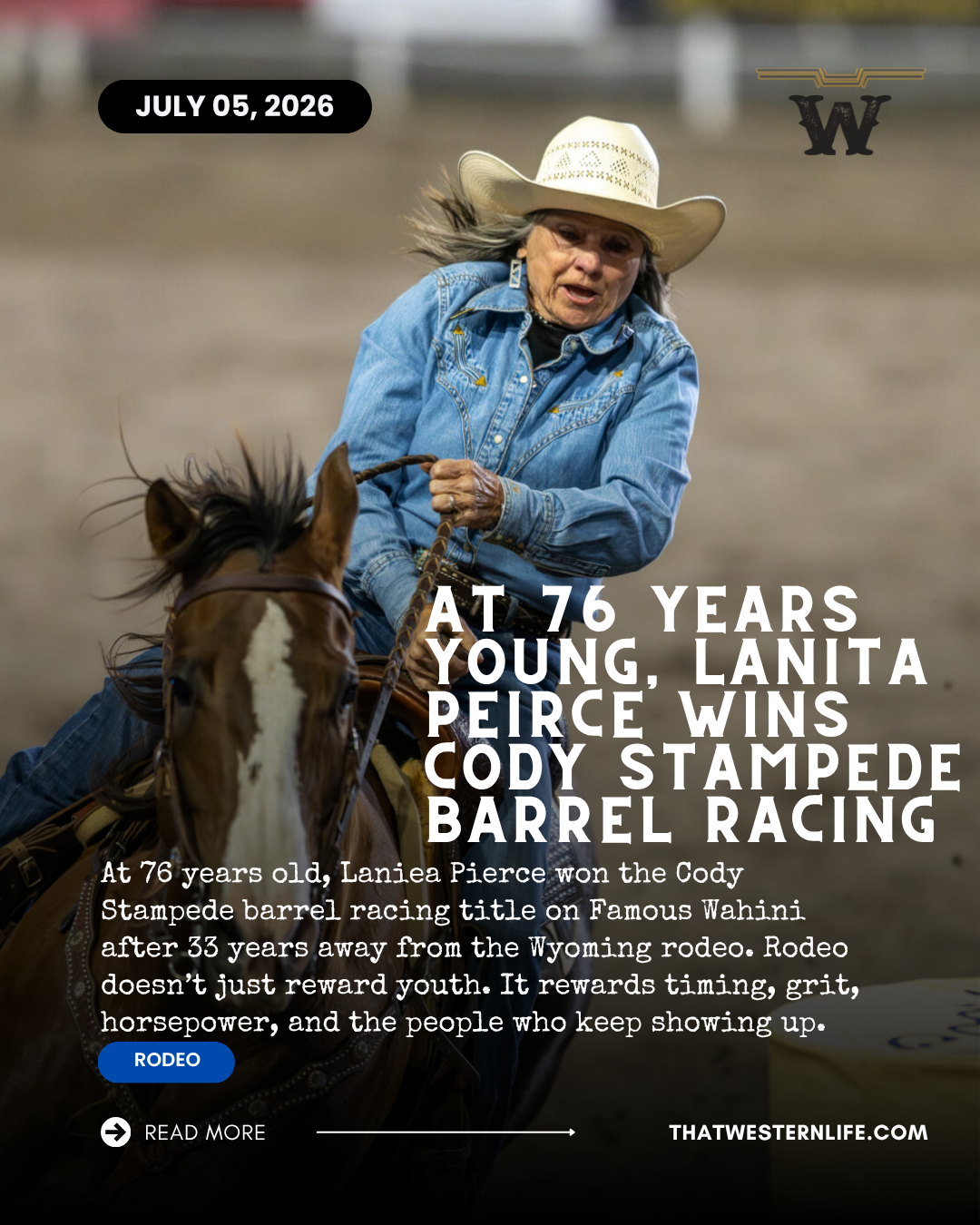
Lanita Peirce Just Gave Rodeo the Kind of Story Sports Fans Remember
At 76 years old, Lanita Peirce won the Cody Stampede barrel racing title on Famous Wahini after 33 years away from the Wyoming rodeo. Rodeo does not just reward youth. It rewards timing, grit, horse power, and the people who keep showing up.
Lanita Peirce winning the 2026 Cody Stampede barrel racing title at 76 years yooung is the kind of rodeo story that should travel far beyond the arena.
Peirce won Cody on Famous Wahini with a 17.06-second run and earned $11,308. Even more remarkable, BarrelRacing.com reported that it had been 33 years since she last made a run at the Wyoming rodeo.
This isn’t just a good run, this is a full-circle western sports moment.
Rodeo often talks about grit, longevity, toughness, and staying power. Peirce’s win puts all of those words into one clean example. At an age when most athletes in most sports are decades removed from serious competition, she entered one of the most recognizable rodeos in the country and won.
Barrel racing is not a ceremonial event. It is fast, technical, physically demanding, and brutally unforgiving. The ride has to make decisions in fractions of a second. The horse has to stay honest, explosive, balanced, and locked in. One tipped barrel, one wide turn, one bad approach, and the run is gone.
This win also reminds people that the horse industry isn’t built only around youth and novelty. Experience matters. Timing matters. Horse sense matters. The relationship between rider and horse matters. A story like this gives rodeo fans something deeper than a result sheet. It gives them a champion to cheer for.
While on paper this might be a competitive rodeo result, it is also a story about horsemanship, patience, and what it means to keep showing up. It also gives marketing value to the sport. Rodeo needs stories that casual fans can understand quickly. “A 76 year-old barrel racer wins Cody Stampede” is immediately compelling. You don’t need to know the standings, bloodlines, or qualifying systems to recognize that this is special.

First Ever Rodeo Related Club on Clubhouse - That Rodeo Life
Clubhouse’s very first club dedicated solely to rodeo is officially here! Join the That Rodeo Life club today whether you are a competitor, industry professional, event producer, communicator, enthusiast and more!
Saturday, March 6, 2021 - The That Western Life team is so excited to announce that we officially have the FIRST rodeo related club on Clubhouse - That Rodeo Life! While we love our That Western Life name, our blog operated under a variety of different names depending on whether the topics are related to agricultural, ranching, fashion, advocacy, etc. This Club will play host to some amazing rooms dedicated to networking, growing your brand name, marketing your rodeo, and event-specific room breakdowns!
Join us on the app today and shoot us a message either on here or at That Western Life on Instagram, Twitter or Facebook to start a conversation about a room collaboration today!

Trippy Dip - Who is the Thoroughbred inducted into the 2018 AQHA Hall of Fame?
The American Quarter Horse Association is the largest nationally recognized breed registry in the world and one of the greatest honors that a member or an animal can receive is induction into their Hall of Fame. In the announcement of the 2018 class of inductees, one name stands out: Trippy Dip. A 1976 Thoroughbred, how did this lone wolf get into the QUARTER HORSE Hall of Fame?
May 31st, 2018 - The American Quarter Horse Association is the largest nationally recognized breed registry in the world and one of the greatest honors that a member or an animal can receive is induction into their Hall of Fame. In the announcement of the 2018 class of inductees, one name stands out: Trippy Dip.
A 1976 Thoroughbred, how did this lone wolf get into the QUARTER HORSE Hall of Fame?
Born in 1976, Trippy Dip was bred by S.F. Henderson of Odessa, Texas and earned $78,169 on the track. Labeled as the "definition of a broodmare," she went on to produce sixteen foals. These foals have had an impact that has trickled down the ranks of not only the racetrack, but also the barrel horse world. Fifteen of Trippy Dip's foals went on to earn a total of $1.757 million dollars on the track. Of those fifteen, seven of them earned "black type," a racing term that means a horse has won or placed in a select race of importance meaning that on their race form or sale catalog, they would be printed in bold black ink in capital letters.
Noteworthy Foals

Calyx
Calyx
The first foal of Trippy Dip's was a stallion named Calyx who was the world champion 1987 distance horse where he set the track record at Los Alamitos for 870 yards at 44.420 seconds. An outlaw through and through, he was dominant on the track and sired foals who grossed over $7 million on the track.
In a story from one of his jockey's, "Diamond Jim" Brooks, he explains how you couldn't touch his mouth, he was his own operator and he knew exactly what to do to win. With a speed index of 117, winning is what Calyx did and he passed that trait down to his offspring. Winning was also something that his sire, Dash for Cash did as well.


Florentine
The 1984 daughter of Trippy Dip was another iconic cross with the legendary stallion Dash for Cash. In her three year stint as a racehorse, Florentine won $1,123,102, and was named the Champion Three-Year-Old Filly in 1987, the Champion Aged Horse and Champion Aged Mare in 1988.
Her contributions to the world of fast sprinting horses didn't stop with her wins, Florentine went on to be named the 1996 Broodmare of the Year and earned a recognition as a dam of distinction.
Owned by Rainbow Glass Ranch, this mare's foals went on to do big things in the arena.
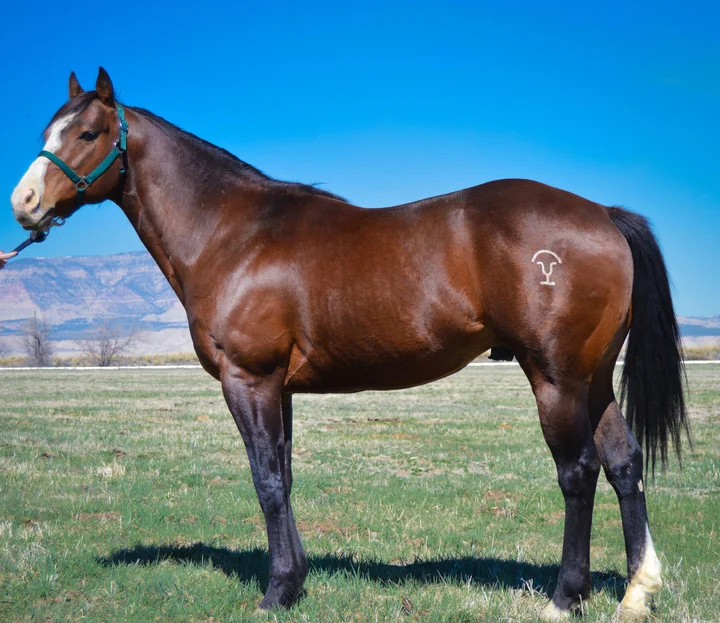
There are numerous other colts and fillies that were produced by this legendary racehorse in her broodmare career, more than we can fill into one short article. Please read more about the other inductees into the 2018 American Quarter Horse Association Hall of Fame here. As well as check out the Rainbow Glass Ranch in Utah who stands numerous offspring at stud still.
Do you ride an offspring of Trippy Dip? If so, comment below and share with us a picture of your running bred horse!