
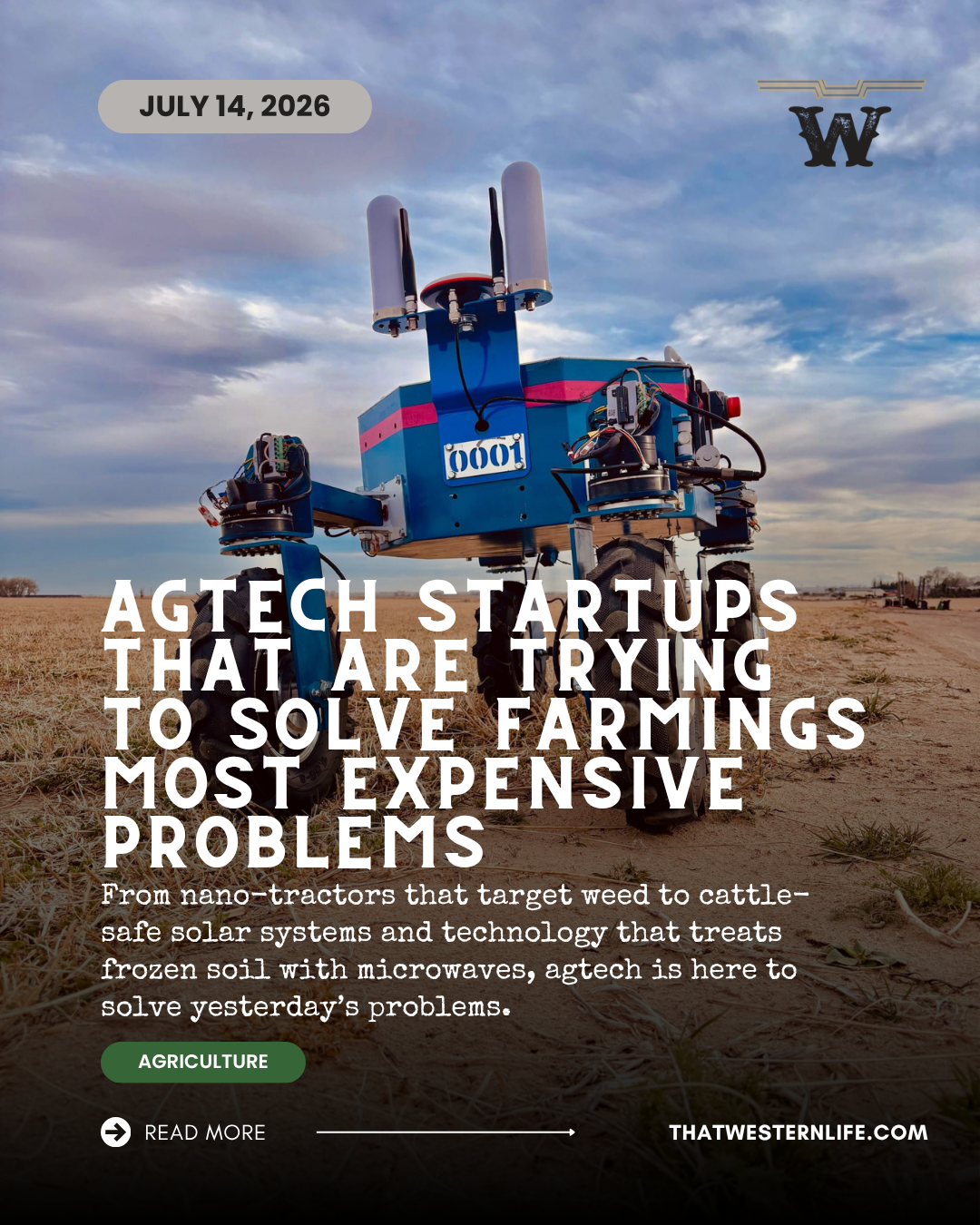
Eight Ag Startups Where Farm Technology Is Actually Headed
Eight emerging ag startups are showing where farm technology may be headed next: toward practical tools that solve specific, costly problems for producers. From autonomous weed-control tractors and edge-of-field solar systems to microwave soil treatment, satellite-based nitrogen recommendations, slow-release fertilizers, hemp genetics, and bio-based rubber research, these innovations are less about flashy disruption and more about real operational value. For agriculture, the next big shift may not come from one all-in-one machine, but from a collection of targeted technologies that reduce labor pressure, protect productive acreage, improve nutrient efficiency, and create new revenue opportunities.
The most useful agricultural innovations are often not the most futurisitc.
They are the technologies that solve specific, expensive problem without requiring a producer to rebuild an entire operation around them.
A July 13 Farm Progress report identified eight startups working on challenges including farm labor, herbicide resistance, energey generation, nutrient efficiency, soil pests and new revenue opportunities. Together, the companies provide a useful snapshot of where practical agricultural techniology is heading.
Barn Owl Precision Agriculture, for example, has developed an autonomous nanotractor designed to travel between crop rows and target weeds. The machine is leased seasonally rather than sold outright, with mapping and programming support included. That model could lower the barrir to testing automation while reducing the need for producer to purchase another major piece of machinery.
Helical Solar addresses a different land-use conflict. Its systems are designed for field edges and feedlot corners rather than removing large blocks of agricultural ground from production. The structures can withstand high winds, generate more power than conventional fixed panels and provide catle shade while being engineered for livestock environments.
For northern producers, WinterLeap is testing microwave technology that treats frozen soil during winter. The process is intended to attack weed-seed banks, nematodes, and soil-boarne pests while biological activity is dormant. After testing in Norway, the company is expanding trials into the United States and Canada.
Other companies are targeting fertilzier and crop value.
Sentinel Ag uses satelite imagery and agronomic data to help producers make nitrogen decisions without installing additional field hardware. Reform Bio is developing a slow-release nitrogen fertilizer using biochar, while Prospect Growth is testing nano-fertilizer intended to improve how long nutrients remain available to plants.
New West Genetics is developing industrial-hemp varieties for grain and biomass production, and Edison Rubber is researching whether sunflower leaves can become an additional source of bio-based rubber without reducing seed production.
Innovation isn’t just a buzzword, it’s an operating tool. Producers don’t necessarily need more dashbaords, they need technologies that reduce passes across a field, preserve productive acerage, create another income stream, lower fertilizer loss, increase animal stewardship, or accomplish work when labor is unavailable.
Many of these products remain in testing or early commercial stages, so cost, reliability, repair access and return on investment will determine whether they earn widespread adoption. The next major agricultural technology may not be one machine that transforms every farm. It may be a collection of narrowly designed tools that each eliminate one costly, persistent problem.
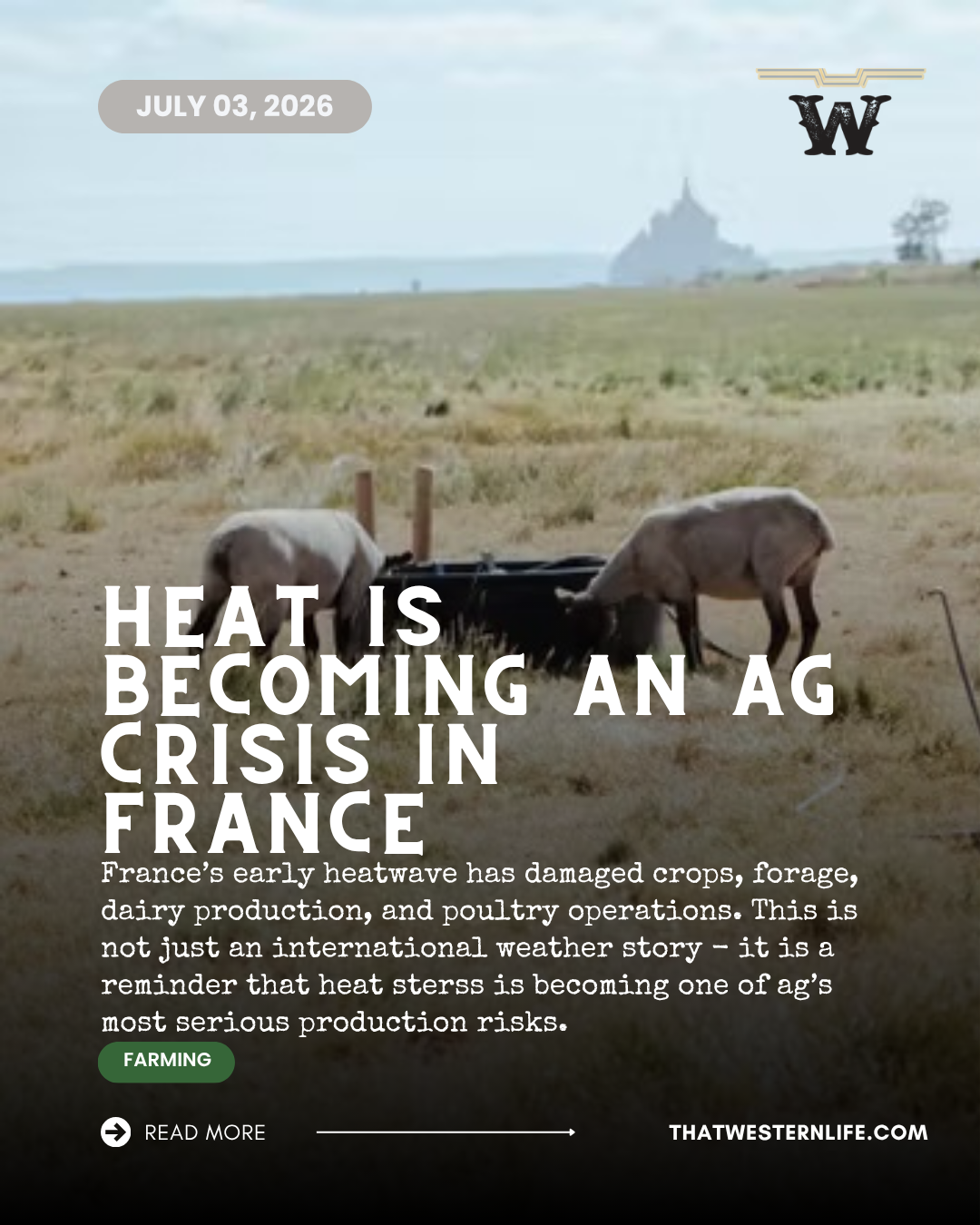
France's Heatwave Is a Warning for Livestock and Crop Producers Everywhere
France’s early heatwave has damaged crops, forage, dairy production, and poultry operations. This is not just an international weather story - it is a reminder that heat stress is becoming one of agriculture’s most serious production risks.
France is facing a severe agricultural crisis after an early heatwave damaged crops, livestock, poultry operations, and farm morale.
The situation is slgnificant because it shows how quickly extreme heat can move from weather headline to food-production emergency. Reports from France describe damage to field crops, vegetables, orchards, forage supplies, dairy production, and poultry barns. Millions of broiler chickens reportedly died, while milk production in some western regions may drop sharply.
For the western world, this is not a distant issue.
Farmers and ranchers in the American West already understand the pressure heat can create. Cattle go off feed. Milk production drops. Pastures dry out. Hay supply tightens. Water demand climbs. Horses and livestock need more careful management. Poultry facilities become vulnerable fast. Crops can lose yield during critical growth windows.
The French situation is a reminder that agriculture is exposed in ways most consumers never see.
A heatwave is not just uncomfortable for people. It can interrupt polliation, burn leaves, reduce milk productions, kill animals, shorten grazing windows, and force producers into emergency decisions. Those losses can affect grocery prices, livestock markets, feed availability, and the long-term viability of farms.
This is also a policy story.
French officials are moving to assess losses and accelerate support, but disaster response is always behind the actual damage. That is true internationally and in the United States. Producers often need help before the paperwork catches up. The challenge for governments is not only compensation after a crisis, but building infrastructure that helps farms and ranches withstand the next one.
That means better water systems, shade, ventilation, crop insurance tools, heat-resilient genetics, forage planning, emergency livestock protocols, and mental-health support for producers who are watching years of work collapse under weather pressure.
The lesson is blunt: food security depends on farm resilience.
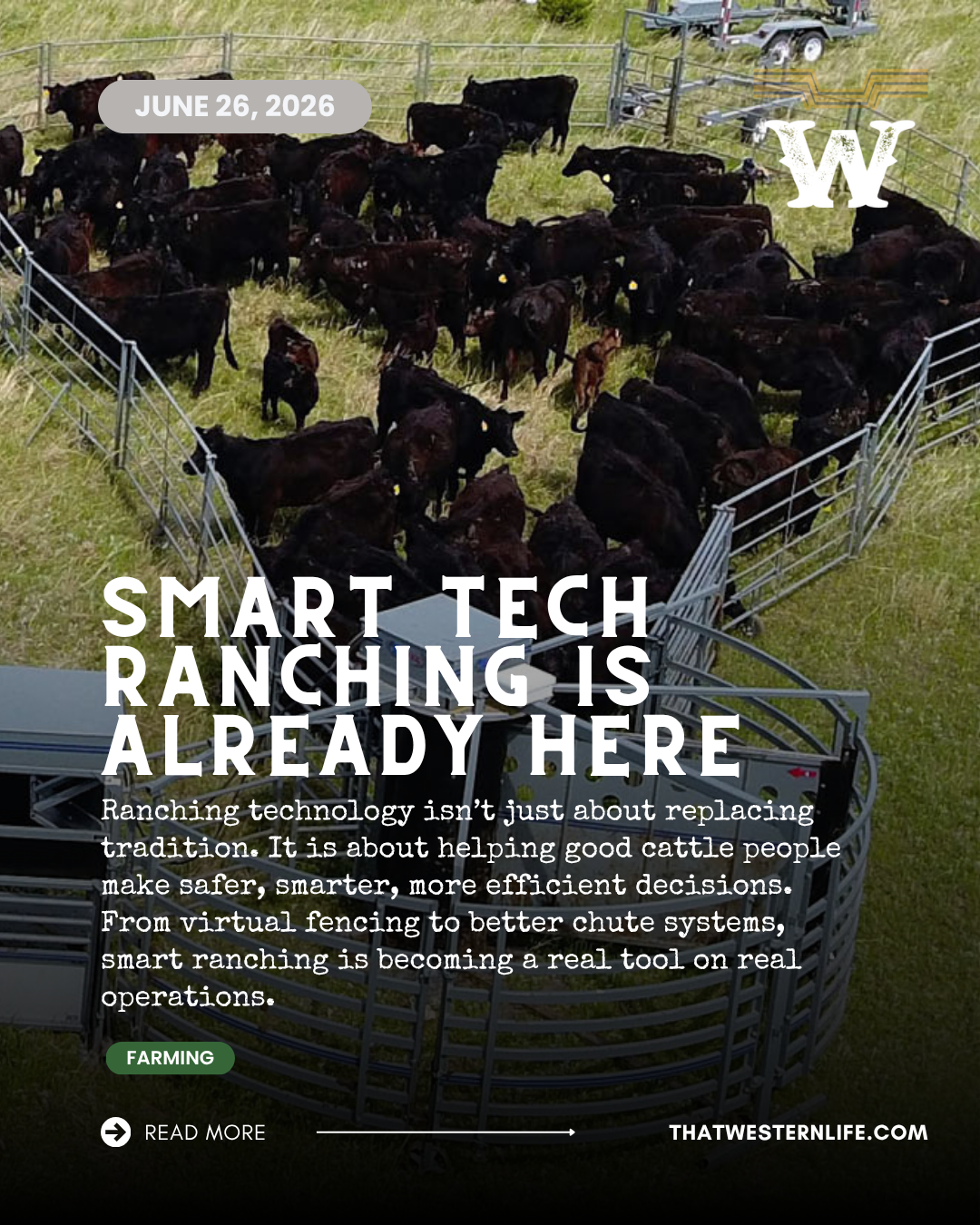
Smart Ranching Technology Is No Longer Just a Future Trend
Ranching technology is not just about replacing tradition. It is about helping good cattle people make safer, smarter, more efficient decisions. From virtual fencing to better chute systems, smart ranching is becoming a real tool on real operations.
For a long time, agriculture technology was mostly talked about through the lens of row crops: tractors, sprayers, drones, sensors, mapping, and precision application.
But ranching is having its own technology moment.
New coverage from Farm Progress highlights how modern cattle operations are using tools like safer handling systems, digital record-keeping, and virtual fencing to manage cattle more efficiently. At The 808 Ranch, technologies such as TurretGate and Silencer Chute systems, Breedr record-keeping, and Halter virtual fencing are being used to improve safety, grazing management, and day-to-day decision-making.
That matters because ranching has always required a rare mix of instinct, experience, and physical labor. Good cattle people know how to read livestock, weather, grass, water, and pressure. Technology does not replace that knowledge. But it can help support it.
A safer chute system can protect both cattle and people. Better records can help ranchers make more informed breeding, health, and marketing decisions. Virtual fencing can open up new options for grazing management without the same level of permanent infrastructure. For operations dealing with labor shortages, rising costs, land pressure, and animal welfare expectations, those tools are not just convenient. They may become a competitive advantage.
This is also where the Western world needs to be careful with the story.
Ranchers are not adopting technology because they want to make cattle production less traditional. In many cases, they are adopting it because they want to preserve the operation. If a tool helps reduce injuries, improve grazing, save time, or make better business decisions, it can help keep ranches viable.

Why Ag Tech Belongs in the Western Lifestyle Conversation
Spotlighting approachable, real-world ag tech brands fit naturally into the western lifestyle, this agtech blogs shocases how innovation is a tool that we can utilize for efficiency and cost-effective practices. This is not a replacement for the way we already live and work, but a tool.
When people think about western lifestyle, they often picture horses, rodeos, and wide-open land. But behind the scenes, a new wave of ag tech brands is helping producers stay efficient, profitable, and sustainable. This summer, a few standout companies are worth keeping an eye on—especially because they’re solving real problems for both ranchers and farmers.
1. Vence (Ranch Tech) | Website
Vence is changing how ranchers manage grazing with virtual fencing technology. Instead of building and maintaining physical fences, producers can use GPS-enabled collars to guide cattle movement. This helps improve pasture management, reduce labor, and protect sensitive land areas. For ranchers dealing with large acreage or difficult terrain, this kind of flexibility is a game changer.
2. Monarch Tractor (Farm Tech) | Website
Monarch is leading the charge in autonomous, electric tractors. Their machines are designed to reduce fuel costs, lower emissions, and operate with minimal labor input. With rising input costs and ongoing labor shortages, Monarch’s technology offers a practical solution for farms looking to modernize without sacrificing productivity.
3. Agtonomy (Farm Tech) | Website
Agtonomy focuses on autonomy for specialty crops, helping farmers automate tasks like mowing, spraying, and hauling. Their platform integrates with existing equipment, making it easier for smaller or mid-sized operations to adopt automation without a full equipment overhaul. It’s a smart approach for producers who want efficiency without massive upfront investment.
The key takeaway isn’t just that these brands are innovative—it’s that they’re practical. Each one is addressing real challenges producers face every day, from labor shortages to land management.

Sourdough Starter
Your sourdough starter is a living breathing thing, think of it as a live active yeast that you can use to make food taste even better! At one point in time, someone created it by mixing flour and water, letting it sit out on a warm counter, splitting it in half, feeding it more flour and water, etc. until a bacteria became alive in it which makes that sour smell of sourdough bread. Sounds gross - tastes great! It’s a great project for kids and adults alike!
So you have a sourdough starter - what do you do not???
Quick notes: Feed every three days if left on the counter or once a week if left in the fridge one part flour and one part water. Add ½ cup of starter mixture to any recipe that calls for yeast. The best recipes to make are pull apart dinner rolls (quick and easy), homemade pizza dough, and sourdough biscuits for breakfast (takes overnight so plan ahead).
What is it?
Your sourdough starter is a living breathing thing, think of it as a live active yeast that you can use to make food taste even better! At one point in time, someone created it by mixing flour and water, letting it sit out on a warm counter, splitting it in half, feeding it more flour and water, etc. until a bacteria became alive in it which makes that sour smell of sourdough bread. Sounds gross - tastes great!
Name it!
Apparently it’s a longstanding tradition of baker’s to name sourdough starters so that they can keep them all apart. Mine is Phoebe from FRIENDS so feel free to give yours a good name - Trouble has already been taken by my grandma! ;)
Maintenance
Food
Mix 1 Part all-purpose flour and 1 Part cool water in a bowl or cup. If your sourdough starter is ½ cup in size, mix between ¼ cup to ½ cup parts water and flour each. You want to make sure there is adequate feed for her.
Storing & Feeding
Fridge - recommend
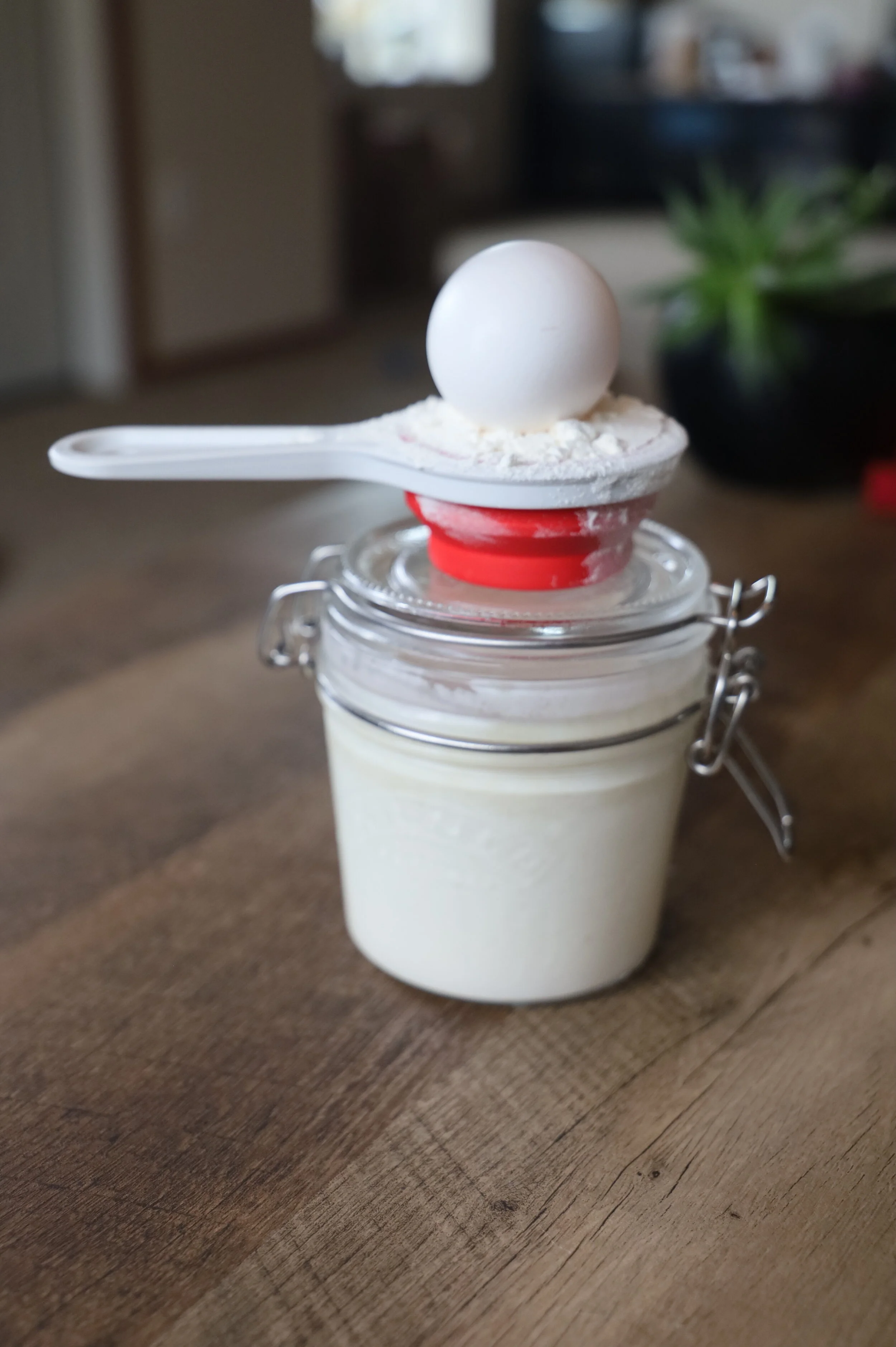
You can keep your sourdough starter in the fridge which I recommend because it won’t overproduce. Feed once a week (I just set a reminder on my phone)/
Counter Top
Feed every three days if left on the counter top.
You’ll know your starter is “hungry” when you see a separation of creamy material on the bottom and a yellowish sour smelling liquid on top. After you feed it, it’ll bubble up a little bit for the next few days.
Travel
If you are leaving for a trip you can freeze up to one week.
Sharing
To share your sourdough starter, simply put a ½ cup or half the mixture into a glass jar or container with a lid. Feed the mixture and then seal and give to your friend! Feel free to make your own notes on this and send this same document to them for care instructions.
Recipes
Quick Pull Apart Rolls Recipe
2 cups water or milk (microwave 2 minutes)
+2 packets of active yeast
½ cup of Phoebe (or insert your starter name here)
½ cup oil (we mix this up with avocado oil, coconut oil, olive oil, etc. depending on our mood or what is available)
½ cup honey (we used the Old Blue Raw Honey that was in the 2018 Winter Ag Mag)Add about 5-6 cups flour until you reach a dough consistency.
Spray a large clean bowl with cooking oil and then place the dough into the bowl. Spray a little more cooking oil on top and cover with a clean towel.
1 teaspoon salt
2 eggs
Mix all the wet ingredients together.
Let rise for about 1-2 hours, depending on how warm the counter top or room is. I like to start the dishwasher and place the bowl on top to allow for faster rising.
Spray a large muffin tin with cooking oil.
Making small ½” to ¾” sized rounds, place 2-4 into each muffin tin, gently pressing them down so that they stick together.
Bake at 425 degrees farenheit for 12-15 minutes.
Allow to cool completely on a rack before storing.
These are absolute great if you serve with brown sugar honey butter; just mix ¼ cup of the same honey with a stick of softened butter, a few tablespoons each of brown sugar and confectioners sugar. Roll up in parchment paper or a mold and place in the refrigerator to chill.


Friday Night Pizza
Friday night, homemade pizza, has long been a family tradition for multiple generations of my family. Phoebe was the perfect addition to these plans as ½ cup of starter to any yeast mixture makes it rise larger and taste better!
6 Tablespoons water
6 Tablespoons olive oil
¾ cup milk
Microwave 90 seconds.Mixture should be warm to the touch, but not hot when placed upon your inside wrist to test temperature. Then add the following ingredients.
1 packet of active yeast
½ cup of Phoebe (or insert starter name here)
2 Tablespoons sugar (optional)
4 cups of all purpose flour or until perfect consistency
Allow to rest and rise; about one hour.

Roll out onto a pizza stone for the oven or a sheet of foil for the barbeque. Dress as you see fit for the perfect pizza pie!
Sunday Morning Sourdough Biscuits
I love some nice warm sourdough biscuits and gravy no matter the day! And, with this recipe starting Saturday night before bed, you know it’s going to be just perfect!
The night before:
1 cup sourdough starter
2 cups milk (I use whole milk)
¼ cup melted butter (cooled)
2 cups all purpose flour
Mix all of these together well and then cover with plastic cling wrap, leaving the sides with small peep holes to breath, overnight or for 8-10 hours.
In a new bowl the next morning:
2 ½ cups all purpose flour
1 tablespoon sugar
2 teaspoons salt
1 tablespoon baking powder
1 teaspoon baking soda
Mix the above ingredients and add to wet mixture from the night before. Add enough flour that you can get it onto a well floured surface to knead it while leaving it a little sticky on the inside.
Roll into a ½ inch thick layer, cut out biscuits (I use the mouth of a cup), and place onto a greased baking sheet. Knead scraps and repeat until you don’t have enough dough for a biscuit.
Bake at 400 degrees for 12-18 minutes depending on how you like them done.
Reheat leftovers for 20 seconds in the microwave.
Featured in the AG Mag and Western Ag Reporter.
Phoebe the Sourdough Starter
Skimming through her recently acquired great grandma’s cookbook, my roommate, Rylee, couldn’t help but excitedly say, “Look what I found!!” On the yellowed pages of the black spiral bound cookbook, handed down from each generation, was the title, “Herbert,” that was followed by a neat cursive hand explaining, “Sourdough Starter.”
We had recently become the proud new owners of a sourdough starter, courtesy of my boyfriend’s mom, and were caught up in the excitement that a new and unusual project can bring. Naming our sourdough starter seemed like the perfect thing to do, and an online search showed that naming your bread starters is a long running tradition for bakers, potentially originating with Amish customs.
With yeast activate inside your starter, it’s not only alive and growing, but requires regular feedings, attention and use - just like a pet! The more likely cause, it’s a great way to differentiate between a variety of bread starters in a bakery.
Our starter caused us some anxiety and calendar appointments were needed to make sure she didn’t miss a feeding and accidentally die on us! Big fans of the television show Friends (1994-2004), we decided to name our sourdough starter after Phoebe Buffay-Hannigan. TV show Phoebe is known for her ability to always surprise her friends with her unique talents, silly wit and guitar playing. While our Phoebe hasn’t started playing the guitar (yet!), she does make us sound silly and we have been impressed with her versatility in the kitchen!
The act of making a sourdough starter may seem unsanitary, but it’s a simple process of mixing together equal parts flour(s) to water (A Couple Cooks food blog recommends a combination of 25g of wheat flour, 25g of all-purpose flour to 50g of water) in a seal-tight jar and then waiting for the bacteria and yeast to do its thing! Cover the jar and set in a warm place (between 68 and 72 degrees).
Discard half the starter daily and then add the same ingredient ratio for the next five to six days. Bubbles may start appearing by Day 3 - this is good! Your starter is coming alive! By Day 5 of 6, the starter should be doubled in size, be very bubbly and have that traditional sour smell! Feed your starter an equal parts flour and water mixture every three days if you leave on your counter top or weekly if you place in your refrigerator.
Bread starters were made for holiday traditions! Simply split the starter in half and feed both the old and new starter! If your starter lives on the countertop, you’ll need to feed it every three days. You can also put the starter in the fridge and feed it weekly and you can also freeze your starter for up to two weeks if you need to leave for a vacation.
You can name your friend or family members new starter for them when you gift them! Let us know what the name of your starter is and if you are going to start one this holiday season!