
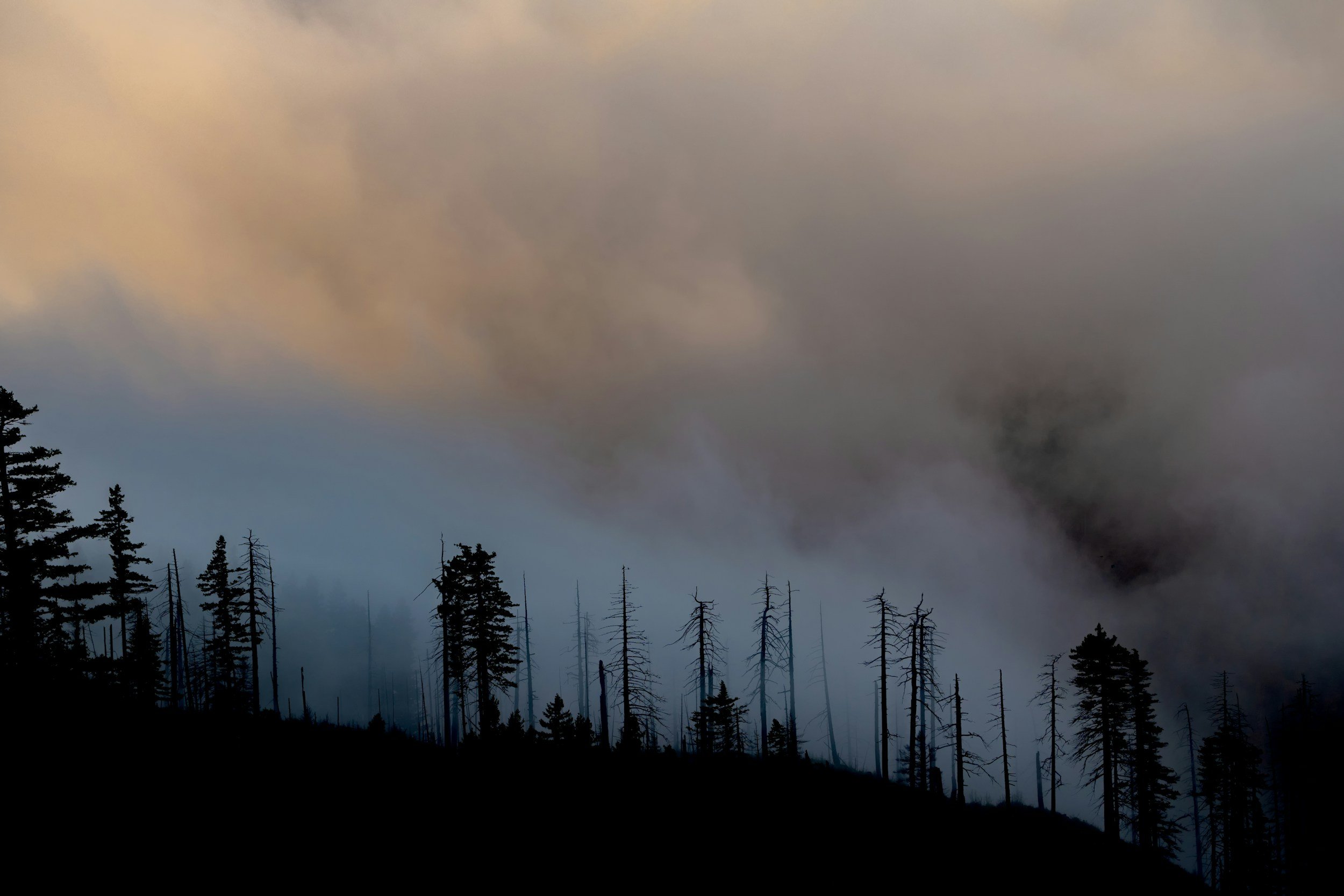
The Akawa Butte Fire is Testing Rural Emergency Capacity in Central Oregon
The Akawa Butte Fire near Sisters is testing Central Oregon’s capacity to evacuate residents and livestock while protecting tourism, agriculture and rural commerce.
The wildfire north of Sisters is not only a public-safety emergency. It is exposing how quickly fire can disrupt agriculture, tourism, transportation and animal welfare—and how much rural communities are expected to coordinate with limited infrastructure.
On July 26, firefighters working north of Sisters, Oregon, were approaching an important operational milestone: control lines were expected to be in place around the entire Akawa Butte Fire.
“This does not mean the fire is fully contained,” the incident management team warned.
Crews still needed to extinguish hot spots and mop up 200 to 300 feet inside the perimeter before those lines could be counted as contained. Meanwhile, a localized Red Flag Warning remained in effect from 11 a.m. to 9 p.m. as hot, dry, and windy weather threatened to test the work firefighters had completed. The fire had burned approximately 27,222 acres and was listed at 5 percent containment. Level 1, Level 2, and Level 3 evacuation zones remained active across portions of Deschutes and Jefferson counties.
The scale of the response reflected the threat: 1,567 personnel, 48 crews, 18 helicopters, 87 engines, 30 water tenders, and 19 bulldozers had been assigned to the incident. Central Oregon Fire Information
Those numbers describe a major firefighting operation, but they don’t fully describe what a fire of this scale asks of a rural community.
Why Akawa Butte became the nation’s highest-priority fire
The Akawa Butte Fire began with lightning on July 16. Within days, it had exhibited extreme behavior, including flames estimated at 200 feet high and a pyrocumulus cloud capable of producing its own lightning.
The fire’s designation as the nation’s highest priority was based not simply on acreage, but on its proximity to people and property. The designation allowed incident commanders to compete more successfully for firefighters, aircraft, and equipment arriving from other states and countries.
Oregon Gov. Tina Kotek described the statewide response as “all-hands-on-deck,” noting that Akawa Butte was only one of dozens of fires placing pressure on Oregon’s firefighting system.
Sisters Mayor Jennifer Letz told the Associated Press that approximately half of the town had been instructed to prepare to leave during the fire’s most dangerous period.
“If we can get through this weekend, we will probably be in a good position moving forward,” Letz said. “But right now, we do have the north half of the city under orders to be prepared, to have a plan, to get their things together.” Associated Press
The danger was immediate. But the emergency also revealed a broader problem: rural communities must execute increasingly complicated evacuations using transportation, shelter, and staffing systems that were not necessarily designed for emergencies of this scale.
The emergency-management perspective: resources must follow risk
From the perspective of incident commanders and public agencies, the immediate objective was straightforward: hold the fire inside established control lines while protecting residents and structures.
The July 26 update reported that firefighters had extinguished new spot fires through the previous night’s high winds. Crews were strengthening lines, preparing backup routes, and using helicopters to support firefighters on the ground.
At the same time, some Oregon State Fire Marshal structure-protection resources were being reassigned from Akawa Butte to the nearby Bench Fire. Officials said the shift could be made without sacrificing the structural protection still required near Sisters.
That reallocation illustrates how wildfire capacity works during a regional outbreak. A fire does not receive a permanently fixed collection of equipment simply because those resources were assigned the previous day. Engines, crews, and aircraft are constantly evaluated against changing fire behavior, threats to communities, and needs elsewhere.
For residents, this can create an uncomfortable gap between visible progress and continued danger. A line around a fire is not the same as containment. Better weather is not the same as control. Fewer engines at one incident do not necessarily mean abandonment—but they do demonstrate that the response system has limits. With more than 30 large fires burning statewide, Akawa Butte was competing within a regional emergency rather than operating as an isolated incident. Oregon Public Broadcasting
The livestock perspective: evacuation requires more than an alert
Human evacuation orders generally assume that residents can gather essential belongings, enter a vehicle, and follow an available route out. That model becomes more complicated when a household is also responsible for horses, cattle, sheep, or other livestock.
A horse owner needs a trailer, a capable tow vehicle, fuel, loading time, and a confirmed destination. A family with multiple horses may require more than one trip. Animals that are frightened, injured, or rarely hauled may not load quickly. Cattle on pasture or range present a different challenge. They may first need to be gathered from a large area, sorted, and loaded into commercial trailers. Gates, fences, and access roads may be inside the threatened zone. Smoke and emergency traffic can make movement more difficult.
Waiting for a Level 3 “Go Now” order may therefore be too late to begin moving a large group of animals safely.
Yet evacuating at Level 1 or Level 2 carries costs of its own. Owners must locate space, transport feed and water, monitor animals in unfamiliar facilities, and potentially move them again if the fire changes direction. Premature evacuation can also put additional trailers onto roads needed by residents and emergency equipment.
This is not a disagreement over whether animal owners should prepare. It is a logistical problem created by the difference between passenger evacuation and livestock evacuation.
Rural emergency planning must answer questions that a standard evacuation map cannot:
How many large animals may need transportation?
How many trailers and qualified drivers are available?
Which routes can accommodate stock trailers alongside emergency equipment?
Which facilities can safely separate horses, cattle, and smaller livestock?
Who provides feed, water, bedding, and veterinary care?
How will owners learn when a facility has reached capacity?
What happens if a shelter facility is later placed under evacuation?
Fairgrounds, rodeo grounds, and private equestrian facilities often become critical emergency infrastructure because they already possess stalls, pens, arenas, trailer access, and water systems. But their usefulness depends on advance agreements, staffing, and communication—not simply the existence of an empty arena.
The tourism perspective: visitors can disappear before the fire arrives
Sisters occupies two identities at once. It is a rural community surrounded by forests, farms, ranches, and equestrian properties. It is also a prominent Central Oregon visitor destination built around recreation, lodging, restaurants, retail, arts, and Western events.
According to Visit Central Oregon, tourism employs more than 10,000 people across the region and generates more than $1 billion in annual economic impact. Sisters’ own economic planning documents describe their job market as heavily influenced by tourism. That dependence makes wildfire disruption economically significant even when flames do not enter the commercial center of town.
The U.S. Forest Service’s Akawa Butte closure included campgrounds, trailheads, Black Butte trails and Green Ridge Lookout. Those closures were necessary for public and firefighter safety, but they also removed reasons visitors travel to the area. Deschutes National Forest
Smoke, uncertain road conditions and evacuation headlines can expand the affected area further. A potential visitor does not need to understand the exact fire perimeter to cancel a hotel room, camping trip, dinner reservation or guided activity. The economic perimeter of a wildfire can therefore become much larger than the burned acreage.
Oregon has seen this effect before. A Travel Oregon study estimated that wildfires cost the state’s tourism industry nearly $51 million in lost visitor spending during 2017. The study found that concern about fire and smoke changed travel behavior even in communities that were not directly burned. Travel Oregon
There is not yet sufficient public evidence to assign a specific economic loss to Sisters from the Akawa Butte Fire. It would be premature to claim that a particular number of businesses, jobs or visitor dollars have been lost. But the mechanism of disruption is already clear: recreation closures reduce activity, smoke affects visitor decisions, evacuation uncertainty discourages travel and emergency traffic complicates access during the heart of the summer season.
The small-business perspective: safety messaging has economic consequences
Local leaders face a difficult communications problem during wildfire emergencies.
They must state the danger clearly enough that residents and visitors act responsibly. At the same time, overly broad or outdated descriptions can imply that an entire region is closed when the actual restrictions apply to a more specific area.
Businesses naturally want accurate geographic distinctions. They need the public to understand the difference between a closed trail, an evacuated neighborhood and a town that may remain open.
Emergency officials, however, cannot allow economic concerns to soften urgent safety instructions.
Both perspectives are legitimate.
The answer is not promotional reassurance during an active emergency. It is precise, frequently updated information that tells people what is closed, what remains accessible and which official source governs each decision.
That requires coordination among incident managers, sheriff’s offices, transportation agencies, tourism organizations and local business groups. Conflicting maps or stale social posts can either send people into danger or unnecessarily suppress economic activity.
The rural-policy perspective: capacity is more than equipment
The enormous response at Akawa Butte might appear to contradict the idea that the incident is testing rural capacity. More than 1,500 personnel and dozens of aircraft and engines hardly constitute a small operation.
But federal and interstate resources arriving at a fire do not erase the local capacity problem.
County officials still issue evacuation notices. Local roads still carry the traffic. Nearby facilities still shelter people and animals. Local businesses still answer visitors’ questions. Residents still depend on local communication systems. After federal teams depart, local governments, landowners and nonprofits remain responsible for much of the recovery.
Rural capacity also includes the staff and technical expertise needed to secure grants, complete hazard planning and manage infrastructure projects before a disaster occurs. Research from Headwaters Economics describes this capacity as a community’s ability to plan, fund and administer long-term resilience work—not simply its ability to purchase equipment. U.S. Climate Resilience Toolkit
That distinction matters because many rural jurisdictions cover immense geographic areas with relatively small tax bases and limited administrative staffs.
They may understand exactly what needs to be built—a second evacuation route, a hardened water system, better emergency communications or a regional livestock shelter—yet still lack the personnel to assemble funding applications, conduct engineering reviews and administer the resulting projects.
The agricultural costs can continue long after containment
The agricultural consequences of fire cannot be assessed only by counting livestock deaths.
A fire may burn forage, destroy hay, damage corrals, compromise wells and leave miles of fencing to be rebuilt. Producers may need to lease replacement pasture, purchase additional feed or reduce their herds because the land can no longer support the same number of animals.
Federal assistance does not cover every kind of loss equally. USDA’s Livestock Forage Disaster Program, for example, can assist eligible producers with qualifying grazing losses caused by fire on federally managed land. That distinction matters in a landscape where livestock operations may rely on a mixture of federal allotments, leased ground and private property. USDA Farm Service Agency
Recovery also moves on a different timetable than suppression.
A fire can be contained in weeks while pasture rehabilitation, fencing replacement and watershed recovery take months or years. Tourism may rebound when smoke clears. A rancher cannot restore a burned grazing season simply because a road has reopened.
What each group needs from the response
The interests surrounding Akawa Butte are not fundamentally in opposition, but they do emphasize different risks.
Incident commanders need clear roads, compliance with closures and the flexibility to move resources as fire priorities change.
Sheriff’s offices and emergency managers need residents to understand evacuation levels and leave early enough to prevent congestion.
Horse and livestock owners need destinations, trailers, drivers and animal-specific information before a Level 3 evacuation.
Businesses and tourism organizations need precise geographic communication so the public does not confuse a targeted closure with a regionwide shutdown.
Public-land managers need to keep visitors away from dangerous areas while preserving access for firefighters and landowners.
Ranchers and agricultural agencies need a recovery system that recognizes lost forage, fencing, water infrastructure and animal-care costs.
Rural communities need investments they can use before the next fire—not only emergency resources once flames are already moving.
The lesson of Akawa Butte
The Akawa Butte Fire is first and foremost an active public-safety emergency. Containment, evacuation compliance and firefighter safety take precedence over every economic consideration.
But treating it only as a forestry event would miss the larger lesson.
A major wildfire near a Western community affects agriculture, tourism, transportation, animal welfare and local commerce simultaneously. It can force a rancher to move cattle, a horse owner to search for stalls, a visitor to cancel a trip, a restaurant to lose its most valuable weekend and a county government to coordinate all of those consequences while managing an evacuation.
The fire response demonstrates what national mobilization can accomplish. More than 1,500 people, supported by aircraft and heavy equipment, were working to prevent further loss.
The policy test begins where the fire line ends.
Can rural communities build livestock-evacuation networks before they are needed? Can fairgrounds and equestrian facilities be formally integrated into emergency plans? Can road systems carry residents, stock trailers and fire engines at the same time? Can small governments access resilience funding without being overwhelmed by its administration? Can economic recovery programs recognize that the loss of a pasture, trail season or tourism weekend may never appear in a structure-damage count?
Akawa Butte may eventually be remembered by its acreage and containment date.
Its more important legacy should be a clearer understanding of rural emergency capacity: not simply how many firefighters can be mobilized, but whether the community surrounding them has the infrastructure to move people, protect animals, sustain local businesses and recover when the smoke clears.

DOJ Egg Price Case Raises Bigger Questions About Food System Trust
The DOJ says major egg producers coordinated to manipulate egg-price benchmarks that influence grocery and restaurant prices nationwide. The companies deny wrongdoing, but proposed settlements include $3.3 million in payments, 53 million eggs donated to food banks, and new antitrust compliance requirements. This is bigger than eggs. It is about food affordability, market concentration, and whether consumers can trust the pricing systems behind everyday groceries.
The Department of Justice’s egg-price case is one of the most important food-supply-chain stories to watch right now.
The DOJ and 17 state attorneys general filed a civil lawsuit against Cal-Maine Foods, Hickman’s Egg Ranch, and Versova, alleging the companies coordinated to manipulate egg-price benchmarks that influence what grocery stores, restaurants, and consumers pay across the country. At the same time, proposed settlements were filed that would require the companies to stop coordinated benchmark manipulation, adopt antitrust compliance programs, submit to oversight, pay $3.3 million, and donate 53 million eggs to food banks and nonprofit organizations.
The companies deny wrongdoing, and the settlement still requires court approval.
The core allegation is specific: DOJ says the companies coordinated bidding activity tied to Urner Barry Publications, a market reporting company whose egg-price quotations are used across the industry. According to DOJ, billions of eggs are sold each year using prices based on those quotations. The complaint alleges the companies submitted bids and trades in ways designed to signal stronger demand and inflate the benchmark.
That matters because eggs are one of the clearest grocery-store indicators of food affordability.
When egg prices spiked, consumers were told the story was mainly about avian flu, supply disruptions, and production costs. Those factors were real. Avian flu did disrupt poultry flocks, and supply pressure did affect prices. But DOJ’s case argues that alleged coordinated market behavior also contributed to inflated prices.
For agriculture, this is where the story gets uncomfortable.
Farmers and ranchers already face public skepticism when food prices rise, even when producers are not the ones capturing the largest margins. Cases like this make that trust problem harder. When a few major companies are accused of manipulating a benchmark price, the public may start questioning the entire food system — including producers who had nothing to do with the alleged conduct.
This is also a market-concentration story.
The more concentrated a food sector becomes, the more important transparency and enforcement become. Benchmark pricing only works if the market believes the data reflects legitimate supply and demand. If those numbers can be influenced by coordinated behavior, the ripple effects reach far beyond one company or one commodity.
The lesson is not that every high food price is fake.
The lesson is that when food markets are opaque, concentrated, and hard for consumers to understand, trust can collapse quickly.
And once trust is gone, the entire agriculture industry pays for it.
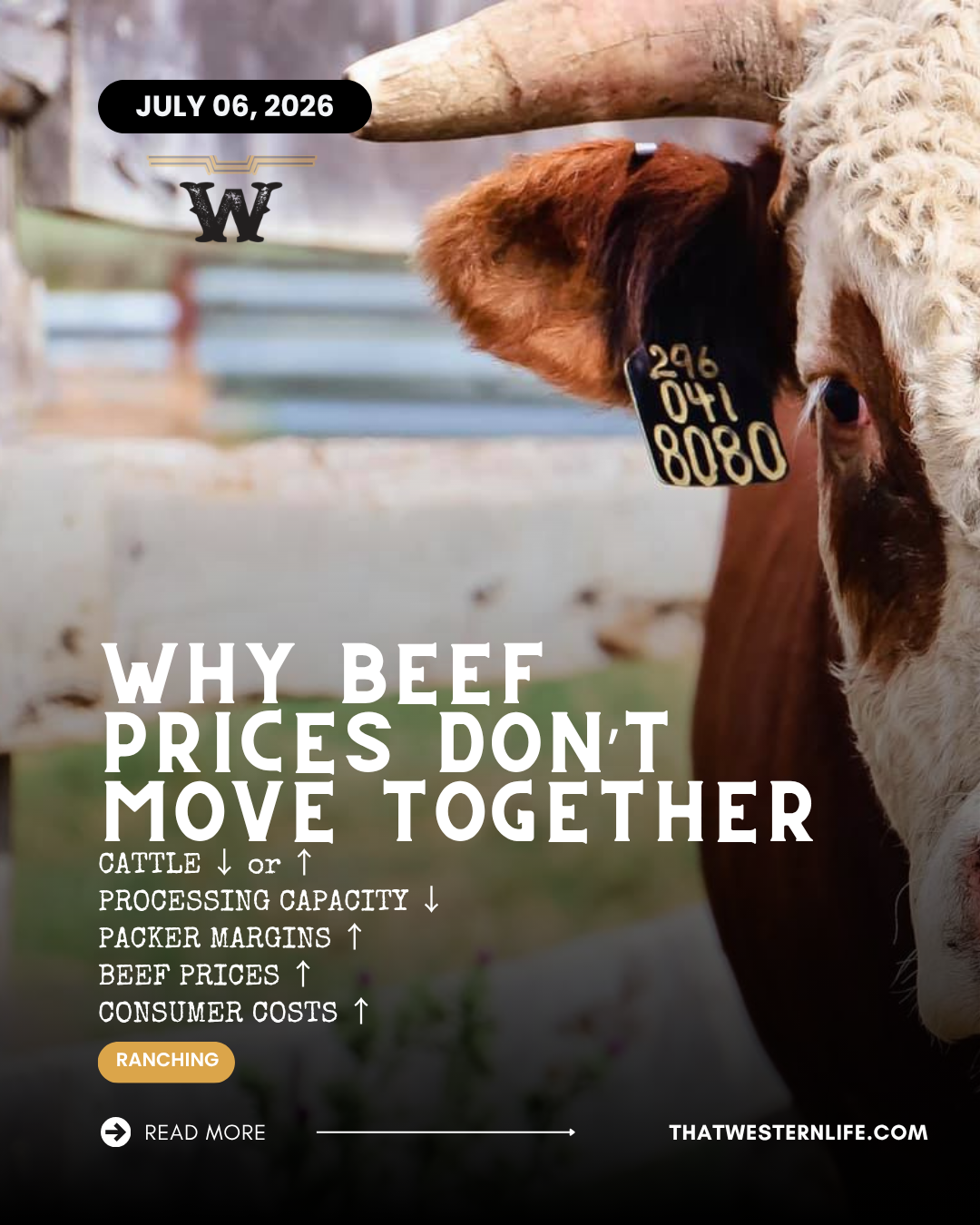
Why USDA's SPUR Program Matters to Ranchers
USDA’s new SPUR program will provide up to $500 million to eligible beef processors. With the top 4 packers controlling over 80% of processing, this matters because capacity directly impacts cattle prices, beef prices, and what consumers pay at the store.
USDA’s new SPUR program is one of the more important livestock-policy stories to watch right now.
The Strengthening Processing for U.S. Ranchers Program will provide up to $500 million in payments to eligible beef processors. USDA says the program is meant to preserve independent processing capacity, strengthen competition across the beef supply chain, and support rural communities.
That may sound like a processing story, but it’s also a rancher story.
The cattle business does not end when an animal leaves the ranch. If independent and regional processors disappear, ranchers have fewer places to sell, fewer options for marketing cattle, and less leverage in a supply chain that is already highly concentrated. Today, the four largest beef packers control roughly 80-85% of fed cattle processing in the U.S., which means smaller plants play a critical role in maintaining competition and regional access.
Processing capacity is one of the unglamorous pieces of the beef industry that determines whether local and regional cattle systems can actually function.
This is especially important during a period of tight cattle supplies. The U.S. cattle herd is currently near mult-decade lows, down roughly 2-3% year-over-year in recent cycles, while beef demand has remained relatively strong. When cattle numbers are low and input costs are high, small and mid-size processors can get squeezed hard. They still have labor, inspection, facility, transportation, and operating costs, but they may not have enough cattle moving through the plan to keep margins stable.
For example, a small processor might need to run at 70-80% capacity to stay profitable. If cattle availability drops and they fall to 50-60% utilization, fixed costs per head increase sharply, cutting into already thin margins. Meanwhile, labor costs in meat processing have risen significantly over the past several years, adding additional pressure.
That pressure matters to producers.
Ranchers often talk about wanting more competition, more local processing, more regional market access, and more resilience in the beef supply chain. But those goals require actual infrastructure to be possible. They require plants that can stay open, meet food safety requirements, retain workers, and operate through volatile cattle cycles.
This is where we see policy connecting directly to real-world ranch economics.
When processing capacity tightens, cattle prices at the ranch level can weaken even if beef prices at the grocery store remain high. For example, during past supply disruptions, boxed beef prices have surged while fed cattle prices lagged, creating a widening spread between what consumers pay and what producers receive. That spread is often referred to as the packer margin.
Here is why prices do not move in a straight line:
Cattle Prices (Ranch Level): Driven by the supply of live cattle, feed costs, and regional demand.
Processing Margins: Influenced by plant capacity, labor costs, throughput, and boxed beef demand.
Beef Prices (Wholesale/Retail): Affected by consumer demand, retail markups, transportation, and inventory levels.
Consumer Costs: Include not just beef prices, but packaging, distribution, and retail overhead.
When processing capacity is constrained:
The Packers may bid less aggressively for cattle, softening ranch-level prices.
At the same time, limited processing throughput can push wholesale beef prices higher.
Retail prices may stay elevated due to demand and supply bottlenecks.
That is how you can end up with a situation where:
Ranchers feel price pressure
Processors face margin volatility
Consumers still pay high prices at the store
The SPUR program is designed to stabilize one of those pressure points: processing capacity. By helping independent processors stay operational, the program aims to reduce bottlenecks, improve competition, and create a more balanced flow between cattle supply and beef demand.
This shows how a $500 million federal program can influence everything from local sale barn prices to grocery store beef costs. A strong cattle market for ranchers does not automatically mean every part of the beef system is healthy. If processors are struggling, the entire chain feels it eventually.
The SPUR program will not solve every issue in the beef industry. But it does show federal attention on a key pressure point: keeping independent beef processing alive while the cattle herd and broader market work through a tight cycle.
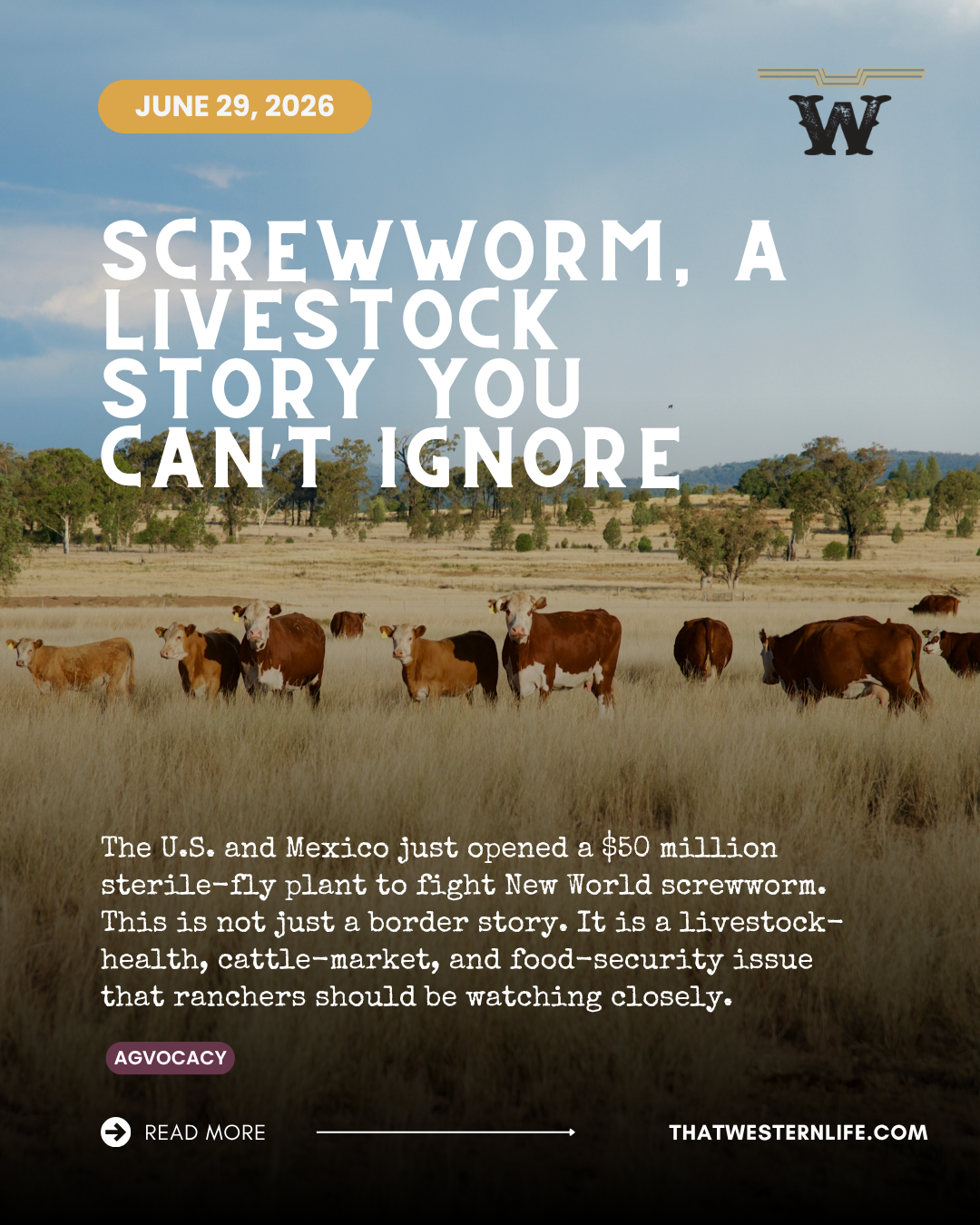
Screwworm Is Becoming a LIvestock Story the Western World Cannot Ignore
The U.S. and Mexico just opened a $50 million sterile-fly plant to fight New World screwworm. This is not just a border story. It is a livestock-health, cattle-market, and food-security issue that ranchers should be watching closely.
The U.S. and Mexico just opened a $50 million sterile-fly plant in Chiapas to fight New World screwworm, and this is one of the most important livestock stories for the western world right now.
Screwworm is not just another animal-health issue. It is a parasite that can burrow into living tissue and kill livestock if untreated. For cattle producers, horse owners, wildlife managers, and anyone connected to animal agriculture, that makes it serious fast.
The new plant is expected to produce up to 100 million sterile flies per week. The concept is simple but powerful: release sterile flies into affected regions so wild populations cannot reproduce effectively. It is one of the major tools used to suppress and eventually push back outbreaks.
For ranchers, the stakes are not theoretical. Historically, before eradication efforts in the mid-1900s, screwworm cost the U.S. livestock industry hundreds of millions of dollars annually in animal loss, treatment, and labor. Today, even a limited outbreak can trigger quarantines, mandatory inspections, and increased veterinary costs. Ranchers in affected regions may have to check cattle daily for wounds, treat infestations immediately, and absorb losses when calves, cows, or horses are weakened or killed. A single untreated case can spread quickly, and in severe situations, mortality rates can climb fast in young or injured animals.
That pressure also shows up in cattle movement and markets. When screwworm risk increases, border restrictions and transport inspections tighten. That slows down cattle shipments, adds cost to producers, and can disrupt supply chains from pasture to feedyard. For ranchers already operating on tight margins, added labor, medicine, and delayed sales can make a real financial difference.
The impact does not stop at the ranch gate. Screwworm also affects rodeo, especially events that rely on roping cattle like team roping and tie-down roping. These cattle are athletes in their own right, and they are handled frequently, hauled long distances, and occasionally sustain minor cuts or abrasions. Those small wounds are exactly what screwworm flies target.
Because of that, rodeo producers and contractors in risk areas have to increase animal checks, wound care, and biosecurity protocols. In some cases, cattle movement between regions can be restricted, which affects where stock contractors can source roping cattle. That can tighten supply, increase costs, and potentially impact the number of events or the quality of cattle available for competition.
There is also a welfare and perception component. Rodeo already operates under public scrutiny, and any animal-health issue raises the stakes. Preventing screwworm infestations is not just about protecting livestock—it is about maintaining trust that rodeo animals are being cared for at the highest level.
This is also an ag communication story. Most consumers do not know what New World screwworm is. They may only hear about cattle-import restrictions, beef prices, or animal-health warnings. Western media has an opportunity to explain the issue clearly before fear or misinformation fills the gap.
The important message is this: livestock health is food security.
The people managing this outbreak are not just protecting cattle. They are protecting ranch livelihoods, animal welfare, and the stability of the food system.
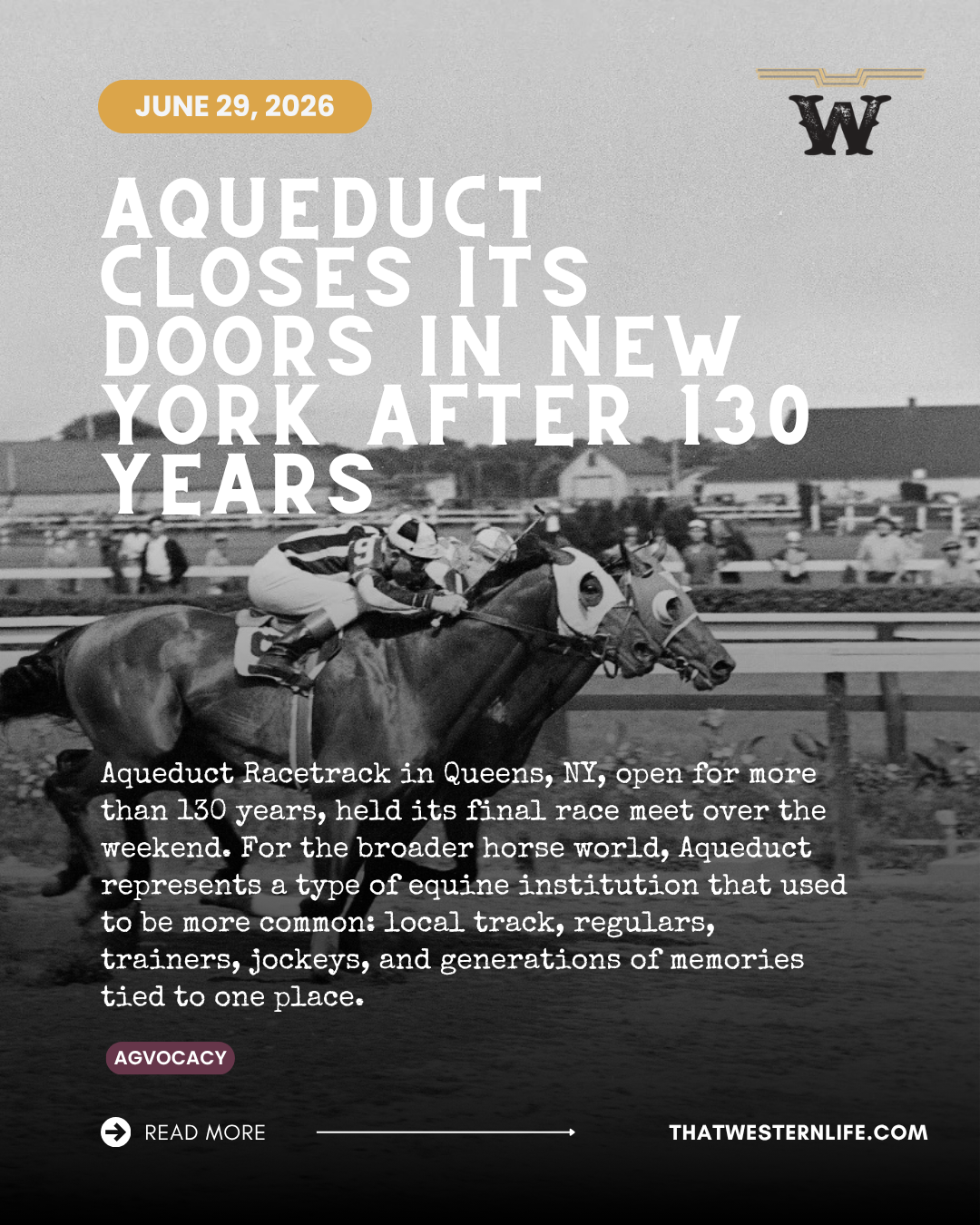
Aqueducts Final Races Are a Warning Sign for the Horse World
After more than 130 years, Aqueduct Racetrack is ending live racing. For the horse world, this is more than a New York story. It is a reminder that equine culture depends on physical places — and those places are getting harder to protect.
New York City’s last horse track is reaching the end of live racing.
Aqueduct Racetrack in Queens, open for more than 130 years, is holding its final live races this weekend. The track will remain open for simulcast wagering for a short period, but live racing is moving out as the New York Racing Association shifts attention toward a major renovation of Belmont Park.
For many people, this may look like a New York racing story. For the broader horse world, it is bigger than that.
Aqueduct represents a type of equine institution that used to be more common: a local track with history, regulars, trainers, jockeys, bettors, barn crews, and generations of memories tied to one place. It was not just a gambling venue. It was a horse community.
That kind of community is harder to sustain now.
Horse racing is competing with online betting, sports wagering, casino expansion, rising operating costs, urban land pressure, animal welfare scrutiny, and changing entertainment habits. The result is consolidation. Fewer venues are expected to carry more of the sport’s future, while older facilities either close, redevelop, or become absorbed into larger strategic plans.
There is a lesson here for more than horse racing.
Rodeo, horse shows, livestock events, county fairs, and western venues all depend on physical spaces. They need arenas, barns, parking, dirt, seating, livestock flow, safe animal handling, and enough community buy-in to justify the land and the cost. When those places disappear, a piece of culture disappears with them.
That does not mean every historic venue can or should stay open forever. Industries change. Facilities age. Audiences move. Business models evolve.
But the western world should pay attention when a place with more than a century of horse history ends live competition. It shows how quickly tradition can become vulnerable when economics change.
The future of equine sports will likely belong to venues that can do more than host events. They will need to educate, entertain, build community, answer animal welfare questions, and prove economic relevance year-round.
Aqueduct’s ending is not just nostalgia.
It is a reminder that horse culture needs infrastructure, investment, and a reason for the next generation to show up.
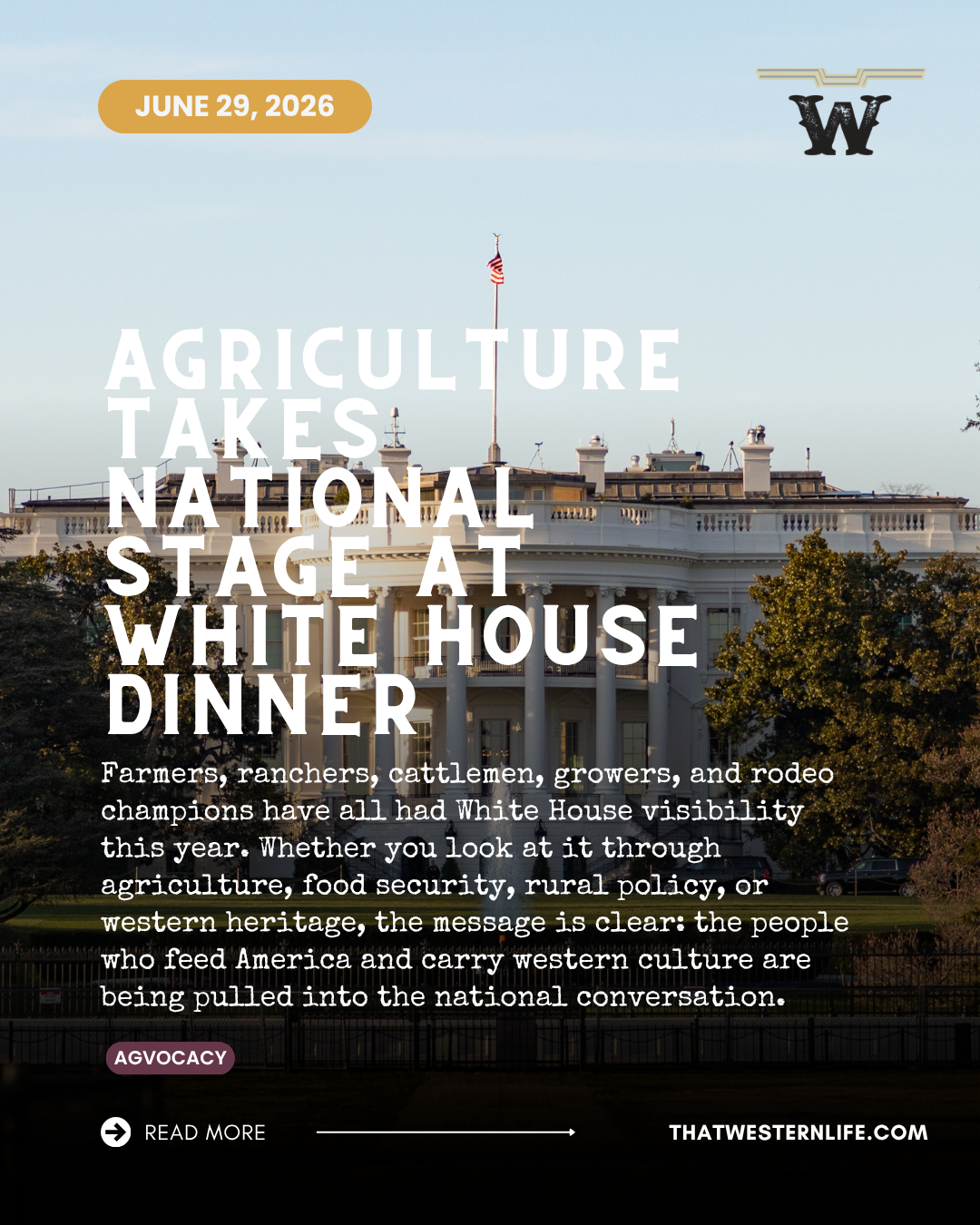
White House Puts Farmers, Ranchers, Cattlemen, and Rural America on Center Stage
Farmers, ranchers, cattlemen, growers, and rodeo champions have all had White House visibility this year. Whether you look at it through agriculture, food security, rural policy, or western heritage, the message is clear: the people who feed America and carry western culture are being pulled into the national conversation.
The White House put agriculture on a national stage on June 25, when President Donald Trump hosted a Rose Garden dinner with American farmers, ranchers, cattlemen, and growers from across the country.
The event was tied to the launch of the Great American State Fair, and came during a week when agriculture policy, rural America, regenerative agriculture, biofuels, and food-supply security were all part of the national conversation. Agri-Pulse reported the event included agricultural producers from at least 17 states, plus Agriculture Secretary Brooke Rollins, HHS Secretary Robert F. Kennedy, Treasury Secretary Scott Bessent, CMS Administrator Mehmet Oz, and Senators John Boozman, Roger Marshall, and Joni Ernst. The same week, Trump signed an executive order related to regenerative agriculture and food-supply security, while the USDA announced a final Regenerative Feedstock Rule.
For the Western world, this matters for a reason that goes beyond party politics.
Agriculture is often talked about as an industry, but it is also a culture. It includes the people feeding cattle before daylight, the families raising show livestock, the farmers watching input costs, the ranchers managing land through drought, and the young people building their future through FFA, 4-H, rodeo, and ag education.
When those people are brought into a national setting, it reinforces something the Western industry has always known: rural America is not a side story. It is foundational.
The rodeo connection is also worth noting. Earlier this year, PRCA and WPRA world champions were invited to the White House, placing professional rodeo athletes inside the same broader conversation about agriculture, western heritage, and American identity. That included names like Stetson Wright, Rociker Steiner, Tucker Allen, Andrew Ward, Jake Long, Cole Patterson, Statler Wright, Riley Webb, Kassie Mowry, and Taylor Munsell.
Rodeo is one of the most visible public-facing pieces of agriculture. It is where the livestock, horsemanship, athleticism, western dress, rural values, and entertainment meet in one arena.

Spring 2021 Advocate's to Follow Round Up
Join us for our spring 2021 advocate round up of those on social media that are doing an outstanding job of promoting and encouraging questions about ranching, farming, rodeo, and the western way of life! If you have a favorite, comment on this post to have them featured for our next season!
One of the most important components of being in the western lifestyle and subsequently having a social media following is to share the truths behind the western way of life. There are many advocates with both micro influencing accounts and macro influencing accounts that are changing the world and helping to showcase the lifestyle and our heartfelt passion for this industry.
If you don’t see your favorite agricultural, ranching or rodeo advocate, comment below their links and we will share them in our next feature of advocates!
Courtenay DeHoff aka The #FancyLadyCowgirl
You might remember Courtenay DeHoff from our episode 46 of the That Western Life podcast with hosts Katie Schrock and Rachel Owens-Sarno! Coining the phrase “Fancy Lady Cowgirl,” her entire life has taken off but it wasn’t an overnight success. Jumping deep into the nitty gritty of finding her way of loving media, broadcasting, rodeo and ranching, Courtenay is telling the tales of more than just “Cowgirl Problems” (aka the name of her podcast).
Girls Eat Beef Too aka Markie Hageman
When it comes to the perfect combination of humor, sass and fact - Girls Eat Beef Too is the page you want to make sure you’re following. Markie Hageman is a freelance agricultural writer and has worked with a variety of crops before finding her stride and passion in the beef industry. Promoting women as grillers, beef chefs and ranchers, Markie was featured on our podcast multiple times regarding Girls Eat Beef Too and co-commentating during the first ever National Finals Breakaway Roping.
Ashley Alderson
If you are looking to start a business, specifically a boutique, in the western industries than Ashley Alderson is your go-to! Not only is she knowledgeable about building an empire, scaling a boutique, and more, she’s also a ranch kid and rodeo mom. P.S. She’s also a former Miss Rodeo America featured in our “Way are they now” campaign!
Farm Wife Guru
Fueling Farmer
Hunters of Color
(Non Profit)
New York Farm Girls
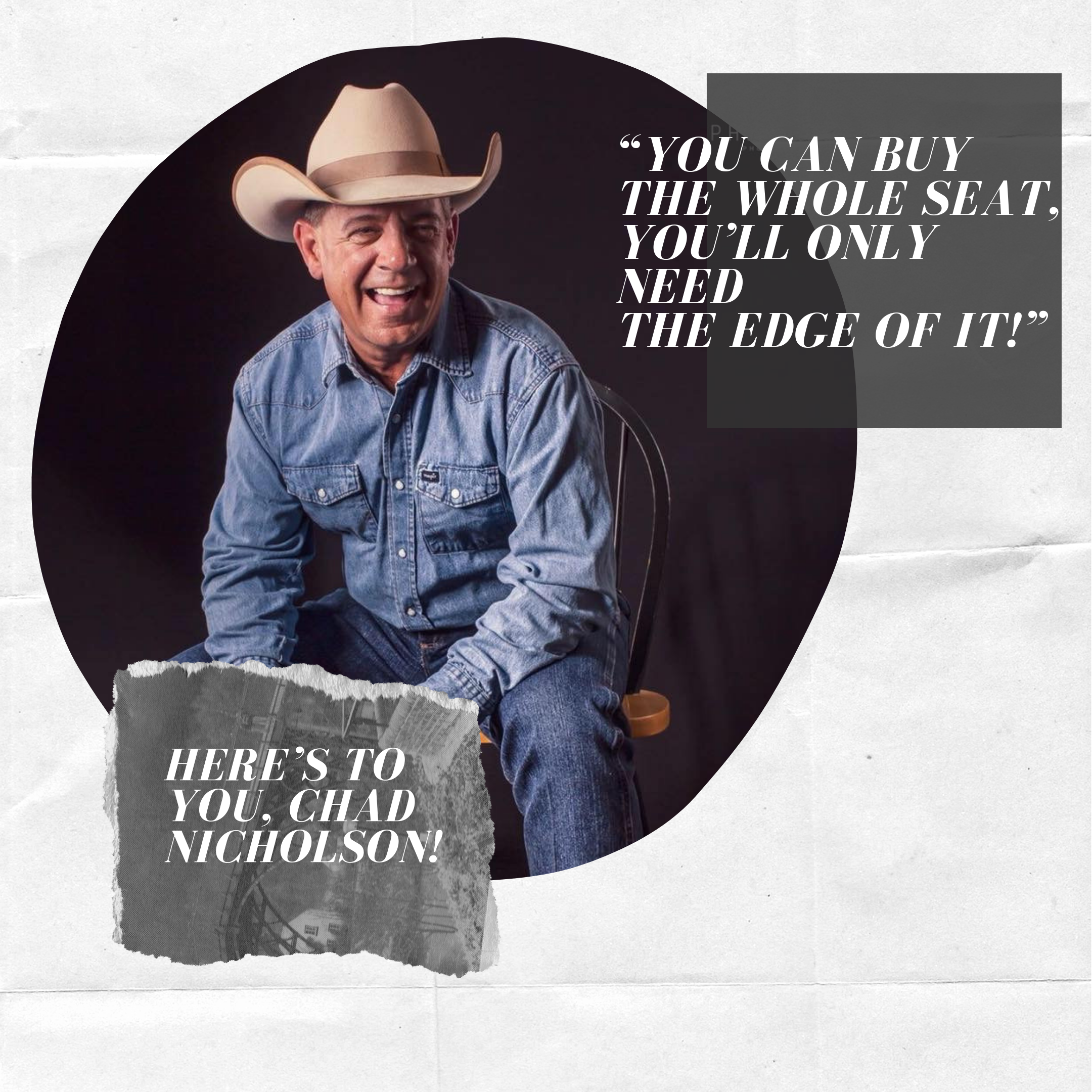
Chad Nicholson; Advocate, Mentor, & Friend
It is with heavy hearts that we mourn the passing of legendary rodeo announcer, mentor, educator and western lifestyle advocate Chad Nicholson. While we know his legacy will live on, we are very honored to be chosen by Zach Wells of Reach OutWest to share this interview that he recorded with Chad over a year ago but never released. Tears, love, and passion are all evident in this heartfelt episode number 10.
It is with heavy hearts that we mourn the passing of legendary rodeo announcer, mentor, educator and western lifestyle advocate Chad Nicholson. While we know his legacy will live on, we are very honored to be chosen by Zach Wells of Reach OutWest to share this interview that he recorded with Chad over a year ago but never released. Tears, love, and passion are all evident in this heartfelt episode number 10.
Season 1
Episode 10
In Loving Memory of Chad Nicholson

Much Anticipated, Farm Bill is Released (Dec. 2018)
The much anticipated Farm Bill was released on the evening of Monday, December 10, 2018. The plan passed by the narrowest of margins, receiving no Democrat votes. What does it mean? Here’s a breakdown of some of the best articles we’ve seen.
Tell us your thoughts in the comments below!
Washington, D.C. (December 11, 2018) - The much anticipated Farm Bill was released on the evening of Monday, December 10, 2018. The plan passed by the narrowest of margins, receiving no Democrat votes. What does it mean? Here’s a breakdown of some of the best articles we’ve seen. Tell us your thoughts in the comments below!
Quick Facts on the Farm Bill
Republicans and President Trump wanted stricter rules for SNAP but those changes are out.
The legislation will cost $867 billion over the next 10 years.
Industrial Hemp will be legalized.
Specific forest thinning projects ranging from 3,000 to 4,500 acres will be exempt from the public comment period - this topic was brought into light in due part by the recent devastating California wildfires.
There is hope the bill could be passed by this Friday. It passed in the Senate on Monday night 87-13.