
Screwworm Is Becoming a LIvestock Story the Western World Cannot Ignore
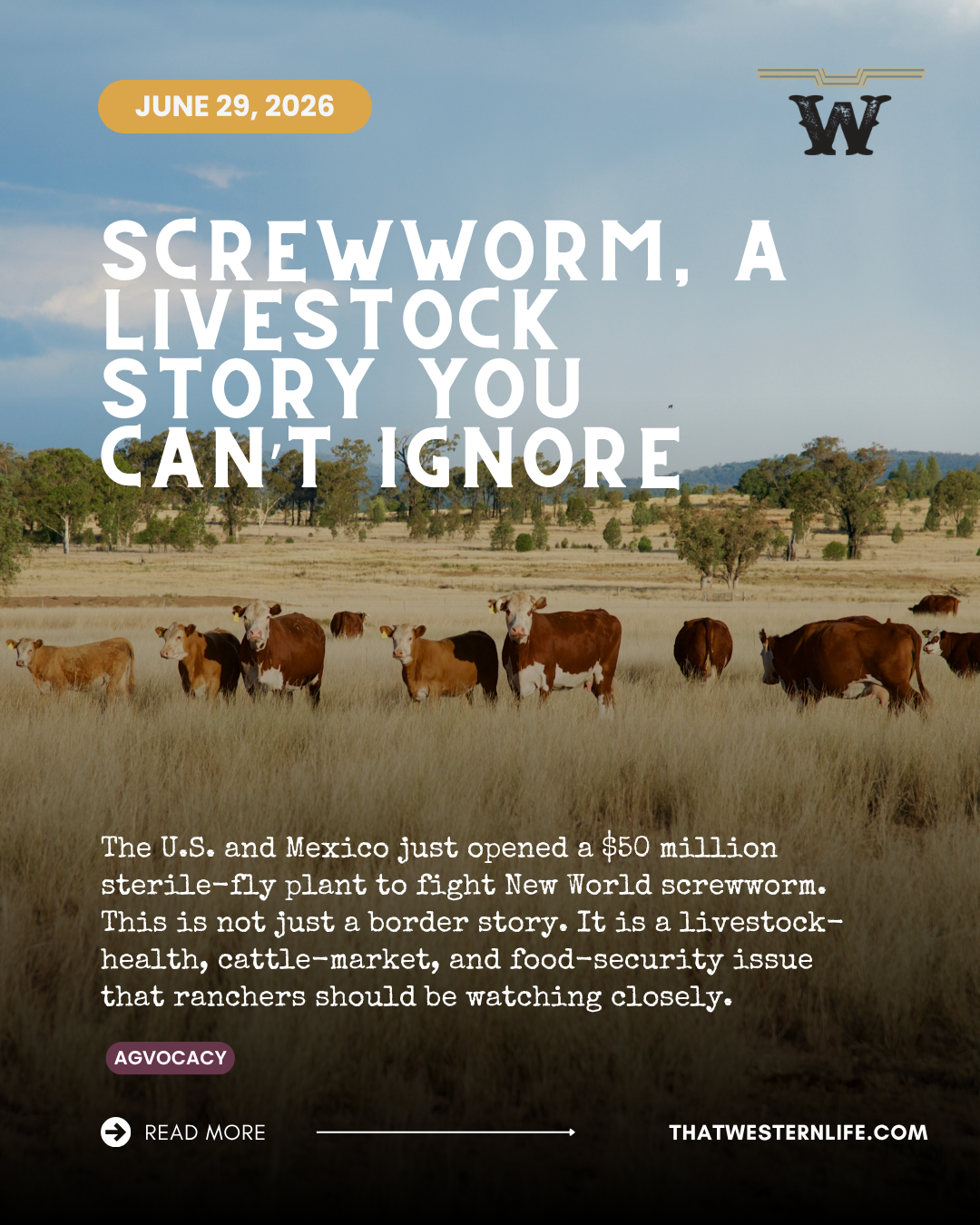
The U.S. and Mexico just opened a $50 million sterile-fly plant to fight New World screwworm. This is not just a border story. It is a livestock-health, cattle-market, and food-security issue that ranchers should be watching closely.
The U.S. and Mexico just opened a $50 million sterile-fly plant in Chiapas to fight New World screwworm, and this is one of the most important livestock stories for the western world right now.
Screwworm is not just another animal-health issue. It is a parasite that can burrow into living tissue and kill livestock if untreated. For cattle producers, horse owners, wildlife managers, and anyone connected to animal agriculture, that makes it serious fast.
The new plant is expected to produce up to 100 million sterile flies per week. The concept is simple but powerful: release sterile flies into affected regions so wild populations cannot reproduce effectively. It is one of the major tools used to suppress and eventually push back outbreaks.
For ranchers, the stakes are not theoretical. Historically, before eradication efforts in the mid-1900s, screwworm cost the U.S. livestock industry hundreds of millions of dollars annually in animal loss, treatment, and labor. Today, even a limited outbreak can trigger quarantines, mandatory inspections, and increased veterinary costs. Ranchers in affected regions may have to check cattle daily for wounds, treat infestations immediately, and absorb losses when calves, cows, or horses are weakened or killed. A single untreated case can spread quickly, and in severe situations, mortality rates can climb fast in young or injured animals.
That pressure also shows up in cattle movement and markets. When screwworm risk increases, border restrictions and transport inspections tighten. That slows down cattle shipments, adds cost to producers, and can disrupt supply chains from pasture to feedyard. For ranchers already operating on tight margins, added labor, medicine, and delayed sales can make a real financial difference.
The impact does not stop at the ranch gate. Screwworm also affects rodeo, especially events that rely on roping cattle like team roping and tie-down roping. These cattle are athletes in their own right, and they are handled frequently, hauled long distances, and occasionally sustain minor cuts or abrasions. Those small wounds are exactly what screwworm flies target.
Because of that, rodeo producers and contractors in risk areas have to increase animal checks, wound care, and biosecurity protocols. In some cases, cattle movement between regions can be restricted, which affects where stock contractors can source roping cattle. That can tighten supply, increase costs, and potentially impact the number of events or the quality of cattle available for competition.
There is also a welfare and perception component. Rodeo already operates under public scrutiny, and any animal-health issue raises the stakes. Preventing screwworm infestations is not just about protecting livestock—it is about maintaining trust that rodeo animals are being cared for at the highest level.
This is also an ag communication story. Most consumers do not know what New World screwworm is. They may only hear about cattle-import restrictions, beef prices, or animal-health warnings. Western media has an opportunity to explain the issue clearly before fear or misinformation fills the gap.
The important message is this: livestock health is food security.
The people managing this outbreak are not just protecting cattle. They are protecting ranch livelihoods, animal welfare, and the stability of the food system.
Aqueducts Final Races Are a Warning Sign for the Horse World
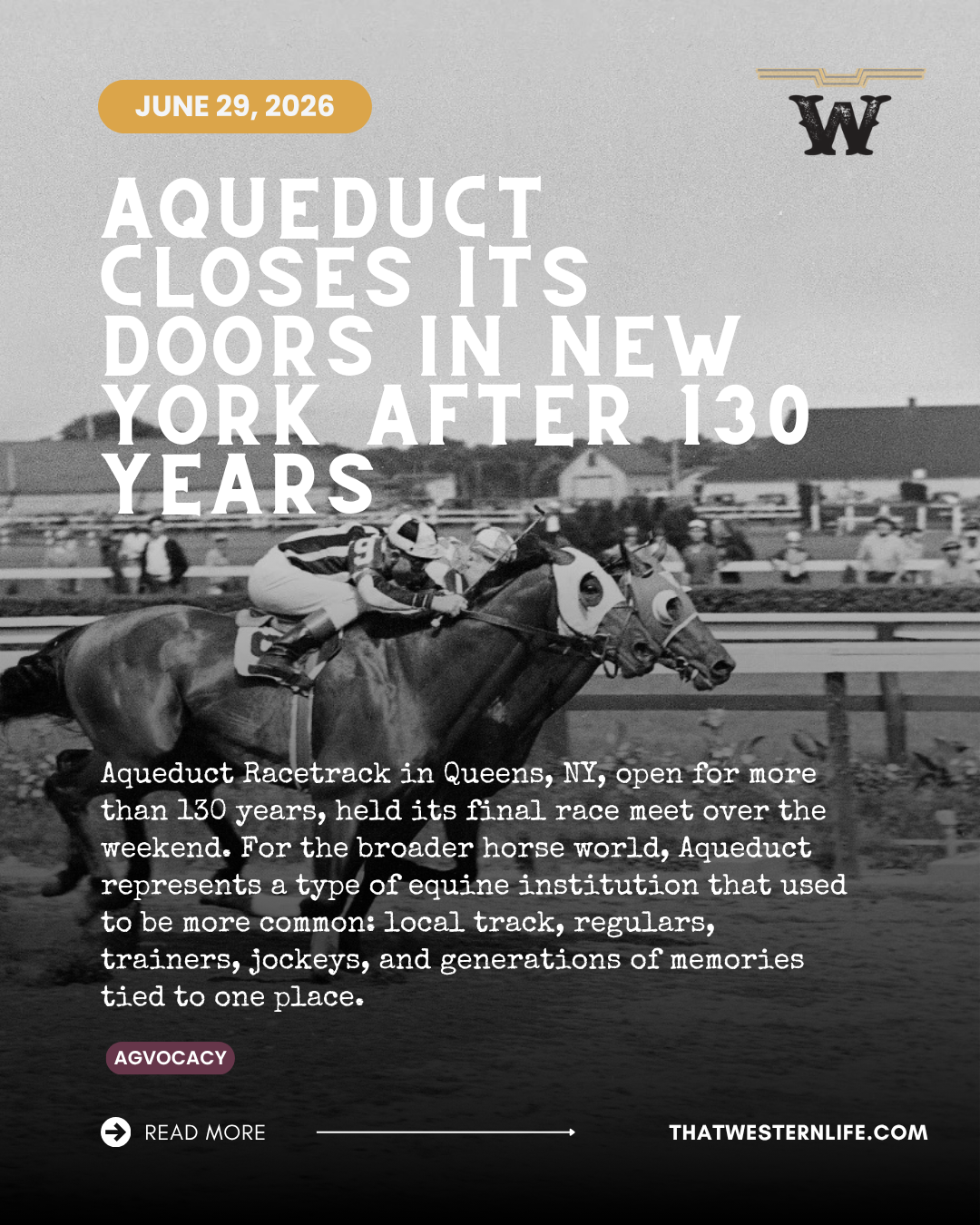
After more than 130 years, Aqueduct Racetrack is ending live racing. For the horse world, this is more than a New York story. It is a reminder that equine culture depends on physical places — and those places are getting harder to protect.
New York City’s last horse track is reaching the end of live racing.
Aqueduct Racetrack in Queens, open for more than 130 years, is holding its final live races this weekend. The track will remain open for simulcast wagering for a short period, but live racing is moving out as the New York Racing Association shifts attention toward a major renovation of Belmont Park.
For many people, this may look like a New York racing story. For the broader horse world, it is bigger than that.
Aqueduct represents a type of equine institution that used to be more common: a local track with history, regulars, trainers, jockeys, bettors, barn crews, and generations of memories tied to one place. It was not just a gambling venue. It was a horse community.
That kind of community is harder to sustain now.
Horse racing is competing with online betting, sports wagering, casino expansion, rising operating costs, urban land pressure, animal welfare scrutiny, and changing entertainment habits. The result is consolidation. Fewer venues are expected to carry more of the sport’s future, while older facilities either close, redevelop, or become absorbed into larger strategic plans.
There is a lesson here for more than horse racing.
Rodeo, horse shows, livestock events, county fairs, and western venues all depend on physical spaces. They need arenas, barns, parking, dirt, seating, livestock flow, safe animal handling, and enough community buy-in to justify the land and the cost. When those places disappear, a piece of culture disappears with them.
That does not mean every historic venue can or should stay open forever. Industries change. Facilities age. Audiences move. Business models evolve.
But the western world should pay attention when a place with more than a century of horse history ends live competition. It shows how quickly tradition can become vulnerable when economics change.
The future of equine sports will likely belong to venues that can do more than host events. They will need to educate, entertain, build community, answer animal welfare questions, and prove economic relevance year-round.
Aqueduct’s ending is not just nostalgia.
It is a reminder that horse culture needs infrastructure, investment, and a reason for the next generation to show up.
White House Puts Farmers, Ranchers, Cattlemen, and Rural America on Center Stage
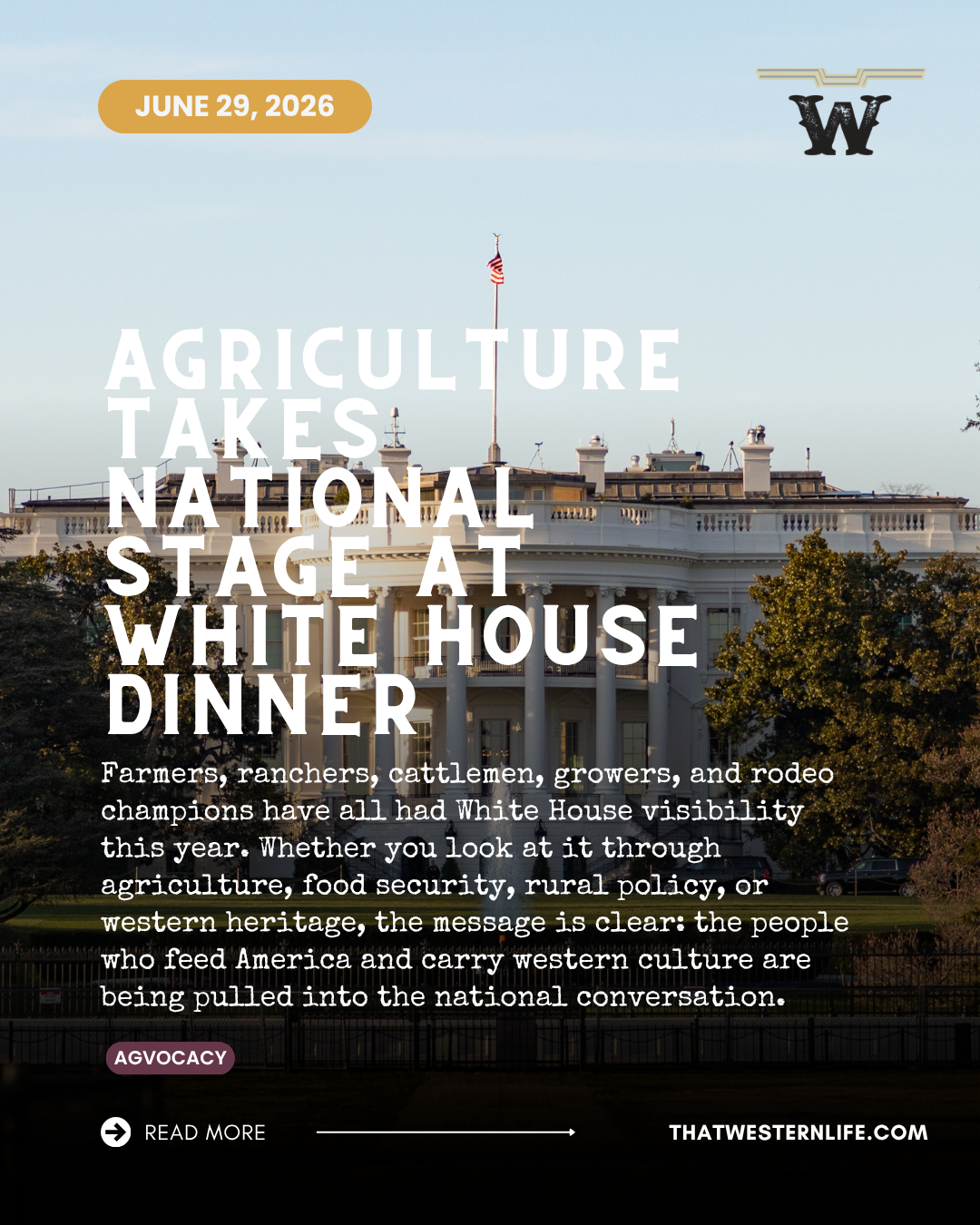
Farmers, ranchers, cattlemen, growers, and rodeo champions have all had White House visibility this year. Whether you look at it through agriculture, food security, rural policy, or western heritage, the message is clear: the people who feed America and carry western culture are being pulled into the national conversation.
The White House put agriculture on a national stage on June 25, when President Donald Trump hosted a Rose Garden dinner with American farmers, ranchers, cattlemen, and growers from across the country.
The event was tied to the launch of the Great American State Fair, and came during a week when agriculture policy, rural America, regenerative agriculture, biofuels, and food-supply security were all part of the national conversation. Agri-Pulse reported the event included agricultural producers from at least 17 states, plus Agriculture Secretary Brooke Rollins, HHS Secretary Robert F. Kennedy, Treasury Secretary Scott Bessent, CMS Administrator Mehmet Oz, and Senators John Boozman, Roger Marshall, and Joni Ernst. The same week, Trump signed an executive order related to regenerative agriculture and food-supply security, while the USDA announced a final Regenerative Feedstock Rule.
For the Western world, this matters for a reason that goes beyond party politics.
Agriculture is often talked about as an industry, but it is also a culture. It includes the people feeding cattle before daylight, the families raising show livestock, the farmers watching input costs, the ranchers managing land through drought, and the young people building their future through FFA, 4-H, rodeo, and ag education.
When those people are brought into a national setting, it reinforces something the Western industry has always known: rural America is not a side story. It is foundational.
The rodeo connection is also worth noting. Earlier this year, PRCA and WPRA world champions were invited to the White House, placing professional rodeo athletes inside the same broader conversation about agriculture, western heritage, and American identity. That included names like Stetson Wright, Rociker Steiner, Tucker Allen, Andrew Ward, Jake Long, Cole Patterson, Statler Wright, Riley Webb, Kassie Mowry, and Taylor Munsell.
Rodeo is one of the most visible public-facing pieces of agriculture. It is where the livestock, horsemanship, athleticism, western dress, rural values, and entertainment meet in one arena.
Chad Nicholson; Advocate, Mentor, & Friend
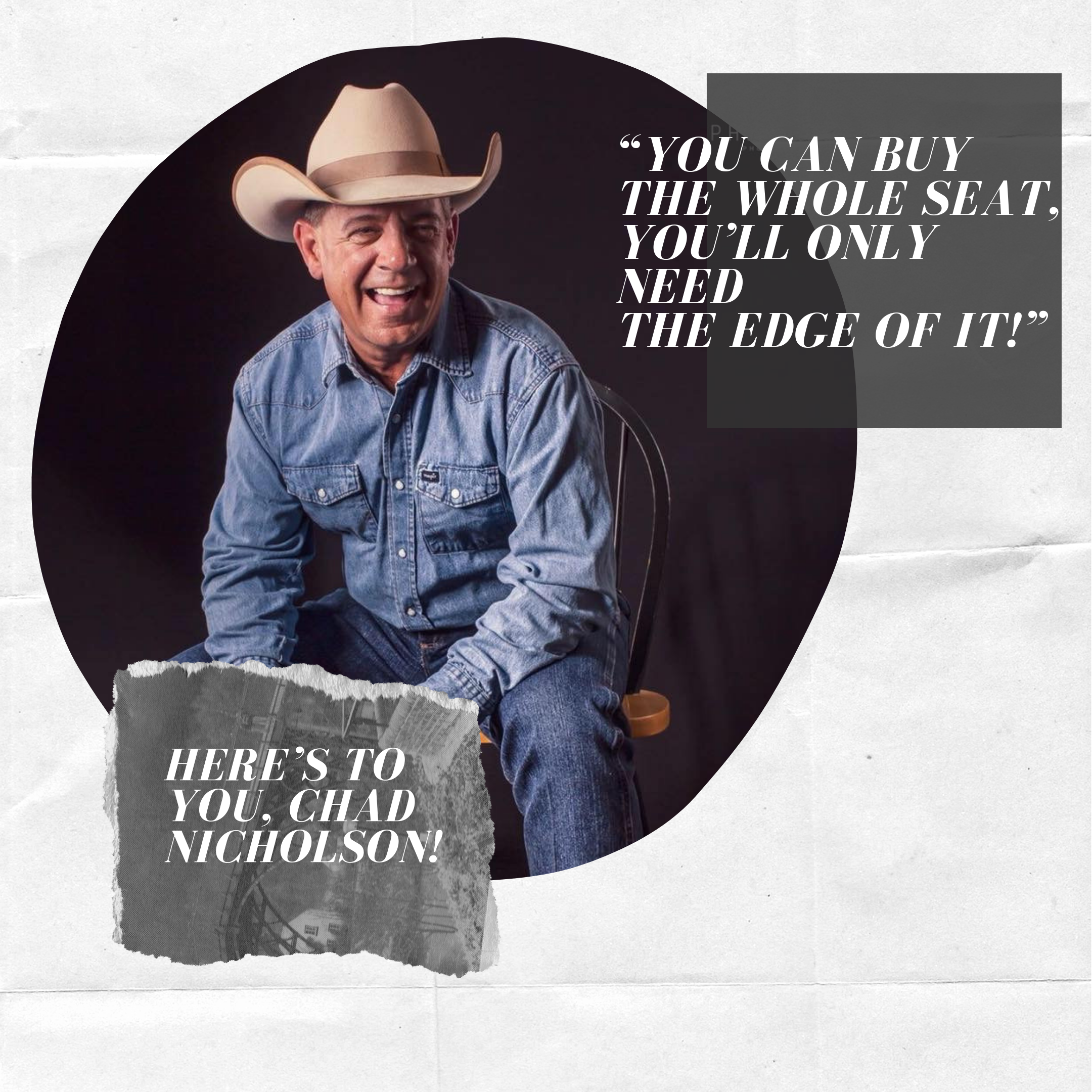
It is with heavy hearts that we mourn the passing of legendary rodeo announcer, mentor, educator and western lifestyle advocate Chad Nicholson. While we know his legacy will live on, we are very honored to be chosen by Zach Wells of Reach OutWest to share this interview that he recorded with Chad over a year ago but never released. Tears, love, and passion are all evident in this heartfelt episode number 10.
It is with heavy hearts that we mourn the passing of legendary rodeo announcer, mentor, educator and western lifestyle advocate Chad Nicholson. While we know his legacy will live on, we are very honored to be chosen by Zach Wells of Reach OutWest to share this interview that he recorded with Chad over a year ago but never released. Tears, love, and passion are all evident in this heartfelt episode number 10.
Season 1
Episode 10
In Loving Memory of Chad Nicholson