
DOJ Egg Price Case Raises Bigger Questions About Food System Trust
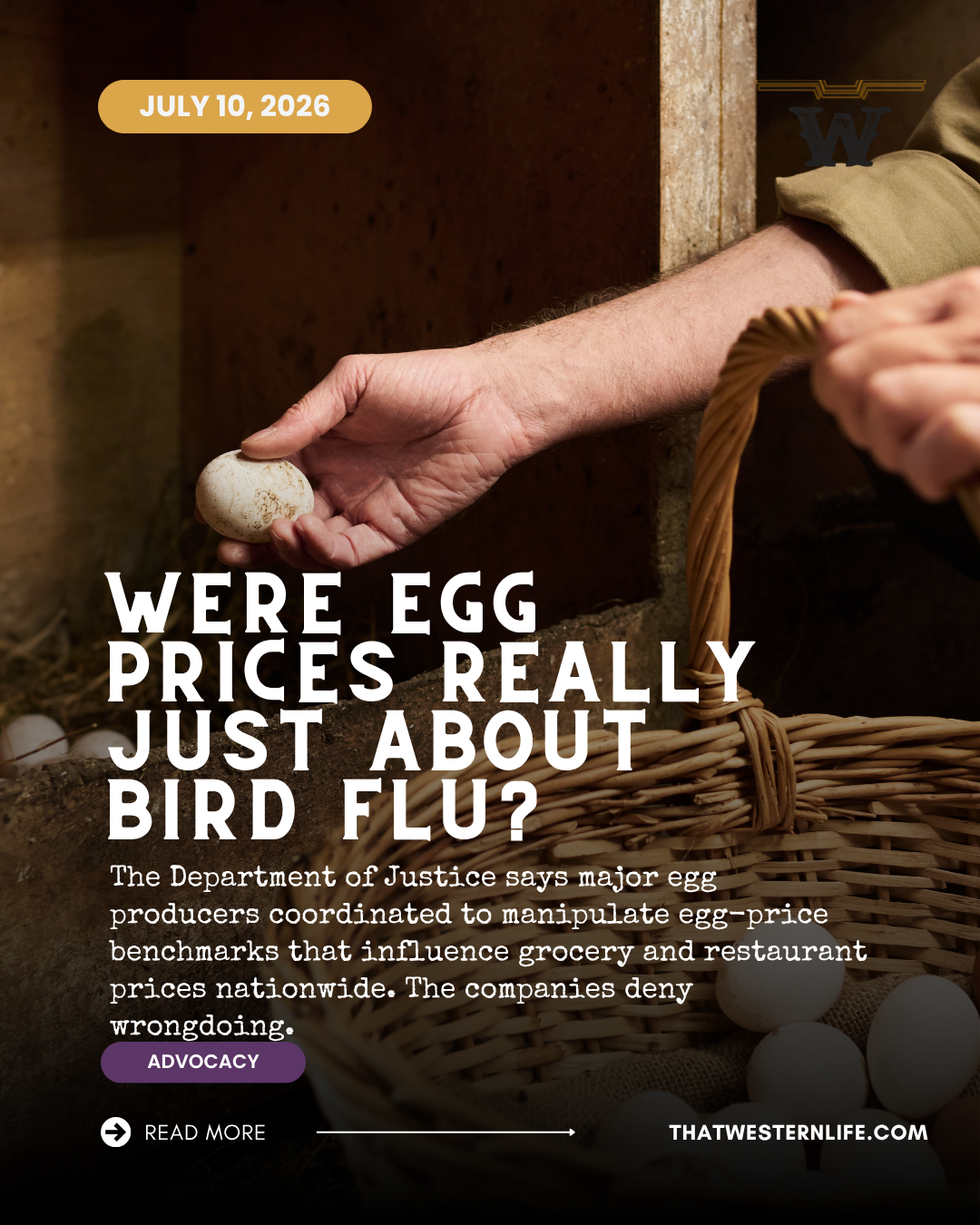
The DOJ says major egg producers coordinated to manipulate egg-price benchmarks that influence grocery and restaurant prices nationwide. The companies deny wrongdoing, but proposed settlements include $3.3 million in payments, 53 million eggs donated to food banks, and new antitrust compliance requirements. This is bigger than eggs. It is about food affordability, market concentration, and whether consumers can trust the pricing systems behind everyday groceries.
The Department of Justice’s egg-price case is one of the most important food-supply-chain stories to watch right now.
The DOJ and 17 state attorneys general filed a civil lawsuit against Cal-Maine Foods, Hickman’s Egg Ranch, and Versova, alleging the companies coordinated to manipulate egg-price benchmarks that influence what grocery stores, restaurants, and consumers pay across the country. At the same time, proposed settlements were filed that would require the companies to stop coordinated benchmark manipulation, adopt antitrust compliance programs, submit to oversight, pay $3.3 million, and donate 53 million eggs to food banks and nonprofit organizations.
The companies deny wrongdoing, and the settlement still requires court approval.
The core allegation is specific: DOJ says the companies coordinated bidding activity tied to Urner Barry Publications, a market reporting company whose egg-price quotations are used across the industry. According to DOJ, billions of eggs are sold each year using prices based on those quotations. The complaint alleges the companies submitted bids and trades in ways designed to signal stronger demand and inflate the benchmark.
That matters because eggs are one of the clearest grocery-store indicators of food affordability.
When egg prices spiked, consumers were told the story was mainly about avian flu, supply disruptions, and production costs. Those factors were real. Avian flu did disrupt poultry flocks, and supply pressure did affect prices. But DOJ’s case argues that alleged coordinated market behavior also contributed to inflated prices.
For agriculture, this is where the story gets uncomfortable.
Farmers and ranchers already face public skepticism when food prices rise, even when producers are not the ones capturing the largest margins. Cases like this make that trust problem harder. When a few major companies are accused of manipulating a benchmark price, the public may start questioning the entire food system — including producers who had nothing to do with the alleged conduct.
This is also a market-concentration story.
The more concentrated a food sector becomes, the more important transparency and enforcement become. Benchmark pricing only works if the market believes the data reflects legitimate supply and demand. If those numbers can be influenced by coordinated behavior, the ripple effects reach far beyond one company or one commodity.
The lesson is not that every high food price is fake.
The lesson is that when food markets are opaque, concentrated, and hard for consumers to understand, trust can collapse quickly.
And once trust is gone, the entire agriculture industry pays for it.