
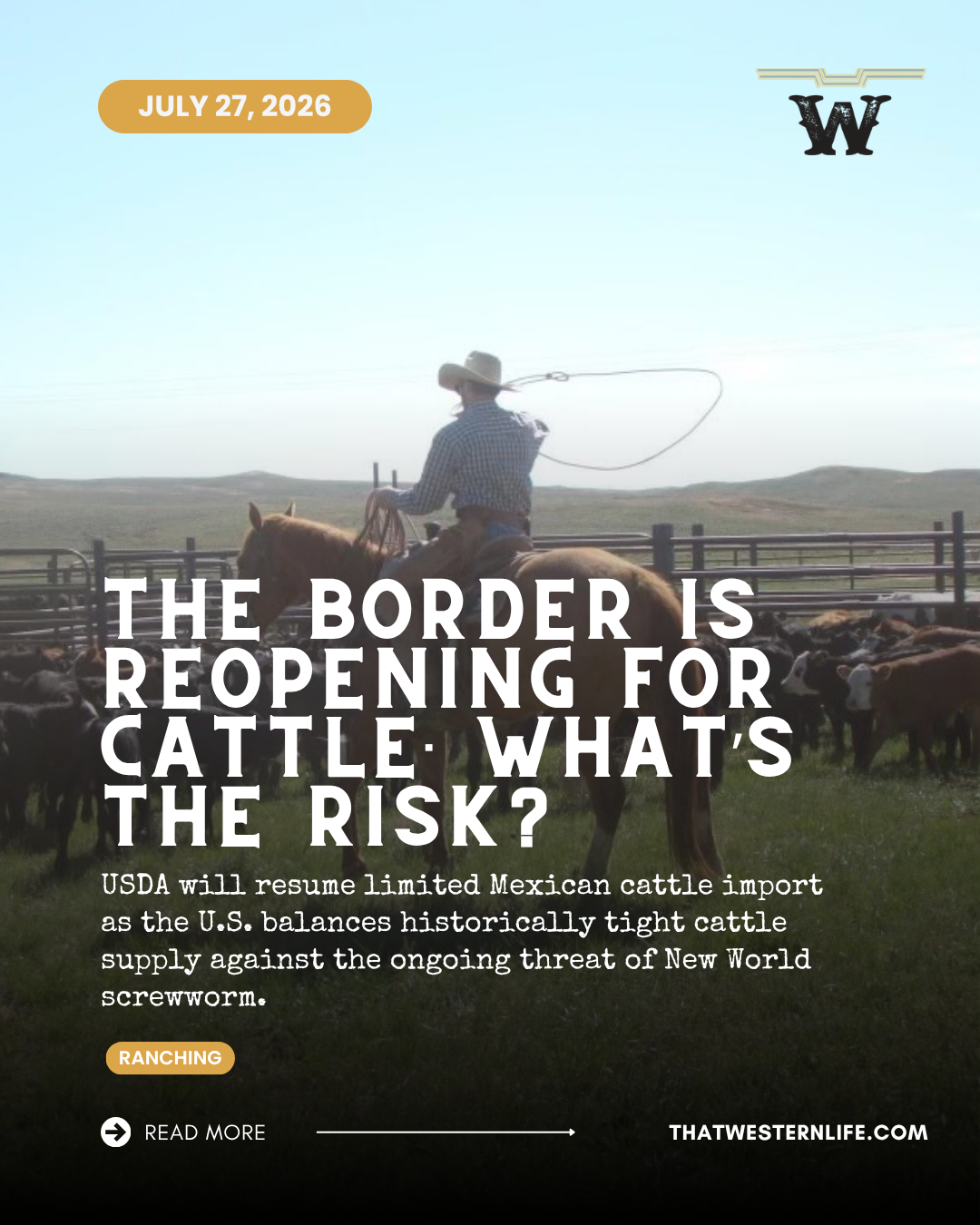
Reopening the Mexican Cattle Border Forces USDA to Balance Beef Supply Against Biological Risk
The United States needs more cattle—but it cannot afford to underestimate New World screwworm.
USDA plans to reopen the Douglas, Arizona, port to Mexican livestock on August 24, beginning a phased return to cross-border cattle trade. Feedlots and processors see additional cattle as welcome relief for a historically tight supply chain. Many domestic ranchers, however, are asking whether trade should resume while the parasite remains active on both sides of the border.
And this isn’t a simple ranchers-versus-regulators debate.
USDA’s decision to resume limited cattle imports from Mexico places two agricultural priorities into direct conflict. The United States needs more cattle moving through its feeding and processing system, but it also needs to prevent New World screwworm from becoming permanently reestablished across its livestock-producing regions.
Beginning August 24, 2026, USDA plans to reopen the port at Douglas, Arizona, to Mexican cattle. The agency will then consider reopening ports at Santa Teresa and Columbus, New Mexico, after evaluating the initial results and any change in biological risk. This is not a return-to-normal trade. It is a controlled test of whether cattle commerce can resume while a dangerous livestock parasite remains active in both Mexico and the United States.
What the USDA is proposing
The reopening is conditional on Mexico meeting milestones established under a bilateral Joint Action Plan. Every animal entering through an approved port will receive a USDA inspection for signs of New World screwworm. USDA says Sonora and Chihuahua are currently Mexico’s lowest-risk states because of their established animal-health infrastructure, inspection programs, and distance from the heaviest concentration of cases in southern Mexico.
The first port, Douglas, borders Sonora. When the USDA announced the plan on July 24, the closest active Mexican case was approximately 325 miles from the crossing. After reviewing the Douglas reopening, the Animal and Plant Health Inspection Service may authorize cattle, bison, and horses to enter through the two New Mexico ports. USDA has not committed to firm reopening dates for those crossings.
The agency also retains the authority to slow ro suspend the process if audits, surveillance, or new detections indicate that conditions have deteriorated.
“The closure of the Southern ports of entry for the last year has been a tough but necessary action,” Agriculture Secretary Brooke Rollins said while announcing the plan. USDA now believes the Douglas crossing can reopen safely, provided Mexico continues meeting the agreement’s requirements (read more).
The USDA is not declaring that the screwworm threat has been eliminated; it is arguing that the risk can now be managed.
Why the cattle supply matters
The economic argument for reopening begins with the size of the American cattle herd. As of January 1, 2026, the United States had 86.2 million cattle and calves, including 27.6 million beef cows. The estimated 2025 calf crop fell 2%, while cattle on feed declined 3% (USDA National Ag Statistics Service). Those figures reflect a contraction that began before the latest border closure. Drought, high production costs, poor pasture conditions, and years of herd liquidation all contributed to the shortage. It would therefore be too simplistic to blame record beef prices primarily on the interruption of Mexican cattle imports.
The border closure made an already tight market tighter, but it did not create the underlying cattle cycle.
Mexico traditionally supplies most of the live cattle imported into the United States. From 2020 through 2024, it accounted for approximately 62% of U.S. cattle imports. Nearly all were lighter-weight animals destined for American stocker and feeder operations, rather than cattle entering immediately for slaughter (USDA Economic Research Service). This is why Mexican cattle are strategically important, even though they remain a relatively small share of the total U.S. herd.
Feedlots need animals to fill pens. Packers need finished cattle to keep plants operating efficiently. When fewer feeder cattle are available, feedlots compete more aggressively for replacements. That pressure eventually reaches processors and then retailers.
By June 2026, the national average price of conventional ground beef had reached $6.83 per pound, approximately 11.5% higher than 2025. We covered this story as part of our 4th of July ranching article HERE.
Reopening the border could add animals to that constrained system. However, it will not quickly reverse retail beef inflation. These are feeder cattle, not boxed beef ready for a grocery case. They must be inspected, transported, fed to market weight, and processed. A limited reopening through one port also cannot replace several years of domestic herd contraction.
The most immediate effects are more likely to appear in feeder-cattle availability, feedlot occupancy, and processor procurement - not in a sudden reduction at the meat counter.
Feedlots and processors support reopening
The organizations most directly dependent on cattle throughput have generally welcomed the USDA’s decision. The Meat Institute, which represents meat and poultry processors, supports what President and CEO Julie Anna Potts called “a careful, phased reopening” that combines vigilance with confidence in the government’s response plan.
“Importing cattle from Mexico allows beef packers to better meet consumer demand given the tight supply of U.S. cattle,” Potts said for Reuters.
The Texas Cattle Feeders Association reached a similar conclusion. Its leadership argues that the closure gave USDA time to strengthen its surveillance, treatment, and response protocols, and that the science now supports limited trade. through lower-risk ports.
For feedlots, the economic reasoning is straightforward. Empty pen space earns nothing. More feeder cattle allow existing feeding and processing infrastructure to operate closer to capacity. That doesn’t necessarily mean every cattle producer benefits equally.
Ranchers do not have the same economic interest
The statement “the United States needs cattle” is broadly true, but it can conceal an important industry divide. Feedlots and processors benefit from having more cattle available. Cow-calf producers selling domestic calves have benefited from intense competition and historically strong prices. Mexican feeder cattle can relieve the supply shortage, but they also compete with U.S.-raised calves for feedlot placement.
That helps explain why reopening the border cannot simply be described as universally beneficial for “ranchers.”
The Texas & Southwestern Cattle Raisers Association supports the phased plan, but its endorsement is conditional. President Stephen Diebel said producers need both functioning commerce and assurance that “every reasonable safeguard” is being used.
The organization has also said it would urge USDA to close the ports immediately if scientific evidence indicates that the risk has changed (OK Farm Report). The National Cattlemen’s Beef Association (NCBA) also supports a gradual reopening. CEO Colin Woodall credited federal agencies and border-state producers with domestic readiness enough to begin restoring cattle movement.
These organizations are not arguing that screwworm is harmless, but that stronger surveillance, controlled entry points, inspection, and sterile-fly programs make limited trade an acceptable risk.
The opposition: inspection may not address the entire pathway
R-CALF, which represents independent cattle producers and frequently challenges policies it believes disadvantage domestic ranchers, is taking a more skeptical position. CEO Bill Bullard argues that reopening the border will encourage cattle to move north from parts of Mexico where the parasite is present.
“As long as the border is open, it will incentivize the northward movement of cattle,” Bullard told Reuters.
That criticism reaches beyond whether an individual animal appears healthy when inspected. The concern is that reopening trade changes cattle-movement patterns throughout Mexico. Animals may pass through multiple operations before reaching an approved export region. The relevant biosecurity system, therefore, begins long before cattle arrive at Douiglas, Sant Teresa, or Columbus.
An inspection at the border can detect visible wounds, larvae, or other clinical signs. It cannot, by itself, guarantee that every upstream movement was properly documented or that infected wildlife and flies are absent from the surrounding environment.
That is why USDA’s audits of Mexican surveillance and movement controls may ultimately matter as much as inspection at the port.
Why does screwworm produce such a different kind of risk
New World screwworm is not primarily a meat-safety issue. USDA has emphasized that the presence of the parasite does not mean the American food supply is unsafe. It is an animal health, wildlife, and production threat.
Female flies lay eggs on wounds or body openings of living, warm-blooded animals. The larvae then burrow into living tissue, causing severe and potentially fatal damage. Livestock, horses, pets, wildlife, and, in rare cases, people can be affected. A wound as small as a tick bite may attract a fly (USDA APHIS).
For ranchers, the list of potential entry points is extensive: newborn navels, calving injuries, castration, dehorning, branding, predator wounds, fencing cuts, and routine insect bites. The United States eradicated the parasite decades ago through surveillance and the mass release of sterile male flies. Because female screwworm flies generally mate only once, mating with a sterile male prevents viable offspring and helps collapse the population (USDA sterile-fly program).
That program remains central to the current response, but eradication requires sufficient fly production, timely distribution, rapid reporting, and the ability to control animal movement around new detections.
Mexico sees trade restoration and recognition of its control efforts
For Mexico, the closure imposed substantial costs on cattle producers who traditionally sell calves into the American feeding system. Mexican President Claudia Sheinbaum welcomed the reopening and directed state and local authorities to accelerate preparations for cattle exports. Her government presents the decision as evidence that cooperation, regional surveillance, and investment in screwworm control are producing results.
That perspective is economically understandable. The United States is Mexico’s natural and overwhelmingly important market for live cattle. A prolonged closure leaves export-quality animals inside Mexico, changes domestic cattle values, and interrupts business relationships built around cross-border production.
However, the USDA has drawn a distinction between Sonora and Chihuahua and the rest of Mexico. Its confidence rests partly on those two states’ stronger inspection and animal-movement programs - not on a conclusion that Mexico as a whole has contained the outbreak.
The question is not “open or closed”
The stronger way to evaluate this policy is not to treat border closure as perfectly safe or reopening as recklessly permissive. The border has been closed, yet the New World screwworm was still detected in the United States. As of July 24, federal reporting showed 42 confirmed U.S. cases, 41 of them in Texas and one in New Mexico. That doesn’t prove live cattle imports are safe. It does demonstrate that imported livestock are not the only possible pathway. Wildlife, flies, and unauthorized animal movement do not necessarily obey port restrictions (The Texas Tribune).
The policy question is therefore more difficult: Can regulated cattle movements through a small number of closely monitored ports be managed without materially accelerating a threat that is already present?
USDA says yes - conditionally.
Feedlots, processors, and several major cattle associations believe the new safeguards make phased trade defensible.
Independent-producer advocates warn that the reopening introduces additional movement and economic incentives before the parasite has been contained.
Mexico argues that its lower-risk northern states have earned the opportunity to resume trade.
Consumers may eventually benefit from additional cattle supplies, but they should not expect immediate relief at the grocery store.
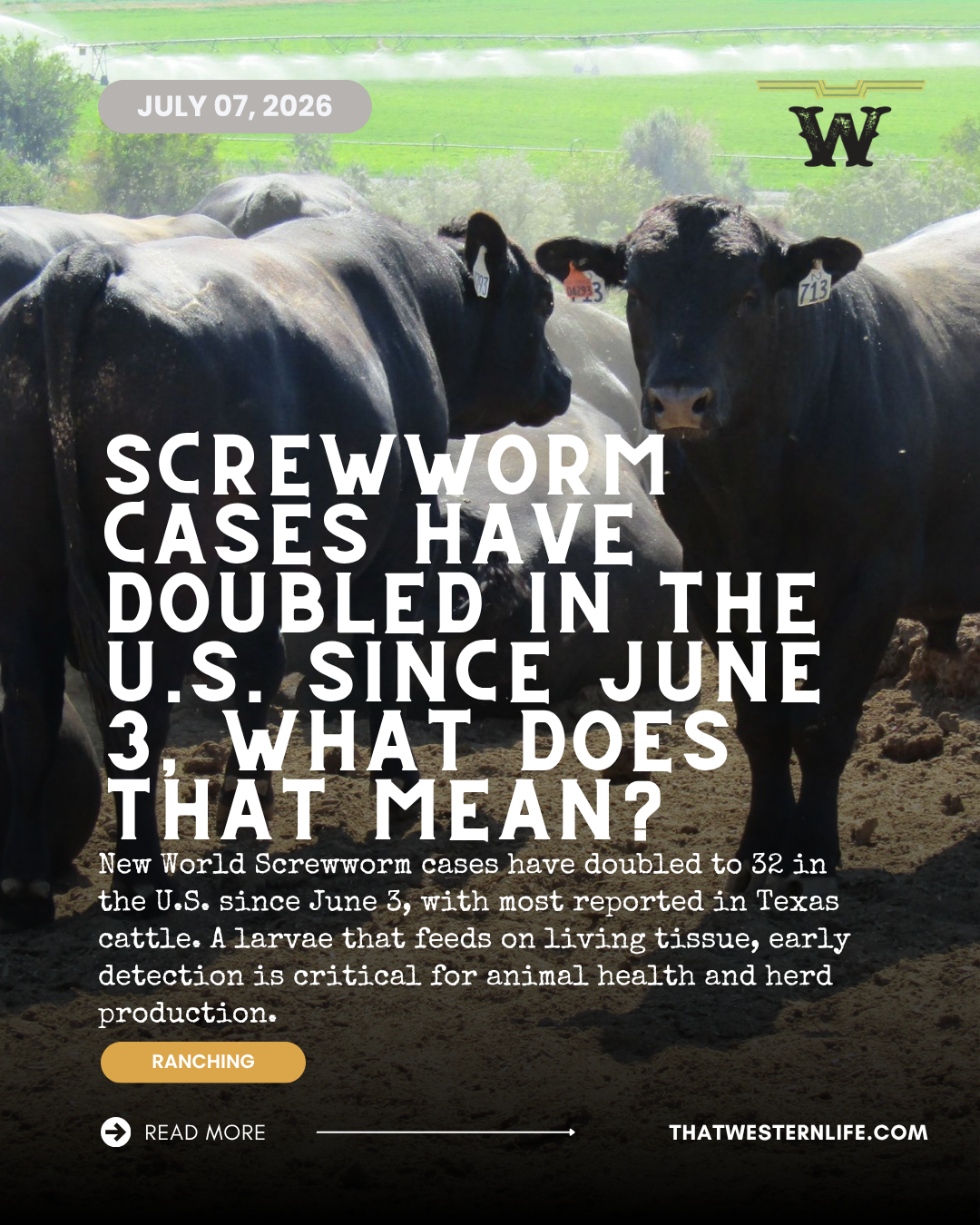
U.S. Screwworm Update: Cases Rise to 32 Since June 3 as Reports Increase Across Texas
New World screwworm cases have doubled to 32 in the U.S., with most reported in Texas cattle. These larvae feed on living tissue, making early detection critical for animal health and herd protection.
New World screwworm is no longer a distant livestock-health concern that we are protecting against; it is firmly here in the United States.
USDA has now documented 32 cases in the U.S. since June 3, with nearly all of them reported in Texas. Most of the cases have affected cattle, though infections have also been reported in sheep, goats, and dogs. Screwworm is not a routine parasite problem; it is a flesh-eating pest that can severely injure or kill livestock if it’s not caught and treated quickly.
What makes screwworm different from other parasites is how it attacks the animal
Adult flies are attracted to open wounds, even small ones like branding sites, castration cuts, tick bites, or navel areas on newborn calves. The female fly lays eggs in the wound, and within hours, those eggs hatch into larvae. Unlike typical maggots that feed on dead tissue, screwworm larvae feed on living flesh. They burrow deeper into the wound in a screw-like pattern, which is where the name comes from.
As the larvae feed, the wound becomes larger, wetter, and more painful. Ranchers may notice animals acting restless, isolating themselves, or showing signs of discomfort like tail switching, kicking at their sides, or refusing to eat. A strong, foul odor is often one of the first noticeable signs. In more advanced cases, the wound can appear deep and raw, with visible larvae moving inside it.
From an animal sciences standpoint, the damage goes beyond the surface.
The feeding activity causes tissue destruction, inflammation, and secondary bacterial infections. As the wound expands, it can lead to significant blood loss, toxemia, and systemic infection. In severe cases, especially in young, weak, or untreated animals, screwworm infestations can be fatal. Even when animals survive, weight loss, reduced performance, and long-term tissue damage can impact productivity.
The United States has faced this threat before, and the last major outbreak offers important context
Screwworm was once widespread across the southern U.S., costing the livestock industry millions of dollars each year. A coordinated eradication effort began in the 1950s using the sterile insect technique, where millions of sterilized male flies were released to disrupt reproduction. By the 1980s, the pest had been successfully eliminated from the U.S., with the exception of occasional reintroductions. One of the most notable recent incidents occurred in 2016 in the Florida Keys, where screwworm affected endangered Key deer and required an aggressive response to contain and eliminate the outbreak. That history shows both how serious the threat can become and how critical rapid response is to stopping the spread.
For ranchers, the timing is especially concerning.
The cattle industry is already dealing with tight supplies, high replacement costs, labor challenges, animal movement concerns, and elevated beef prices. A parasite outbreak adds another layer of risk. It requires more monitoring, faster treatment decisions, and stronger communication between ranchers, veterinarians, state animal-health officials, and the USDA.
This is also a labor story
During earlier eradication efforts, ranches often had more consistent labor available to check livestock closely. Today, many operations are covering more ground with fewer people. That makes surveillance harder, especially in rough country or large pastures where wounds, infestations, or wildlife exposure may not be spotted immediately.
The sterile-fly response is important, but capacity is part of the concern. The basic strategy is to release sterile flies so the wild population cannot reproduce effectively. That approach helped eliminate screwworm from the U.S. decades ago, but a modern outbreak raises questions about whether current production and response systems can move fast enough.
The takeaway is simple: livestock health is not separate from the Western economy. It is the foundation of it.
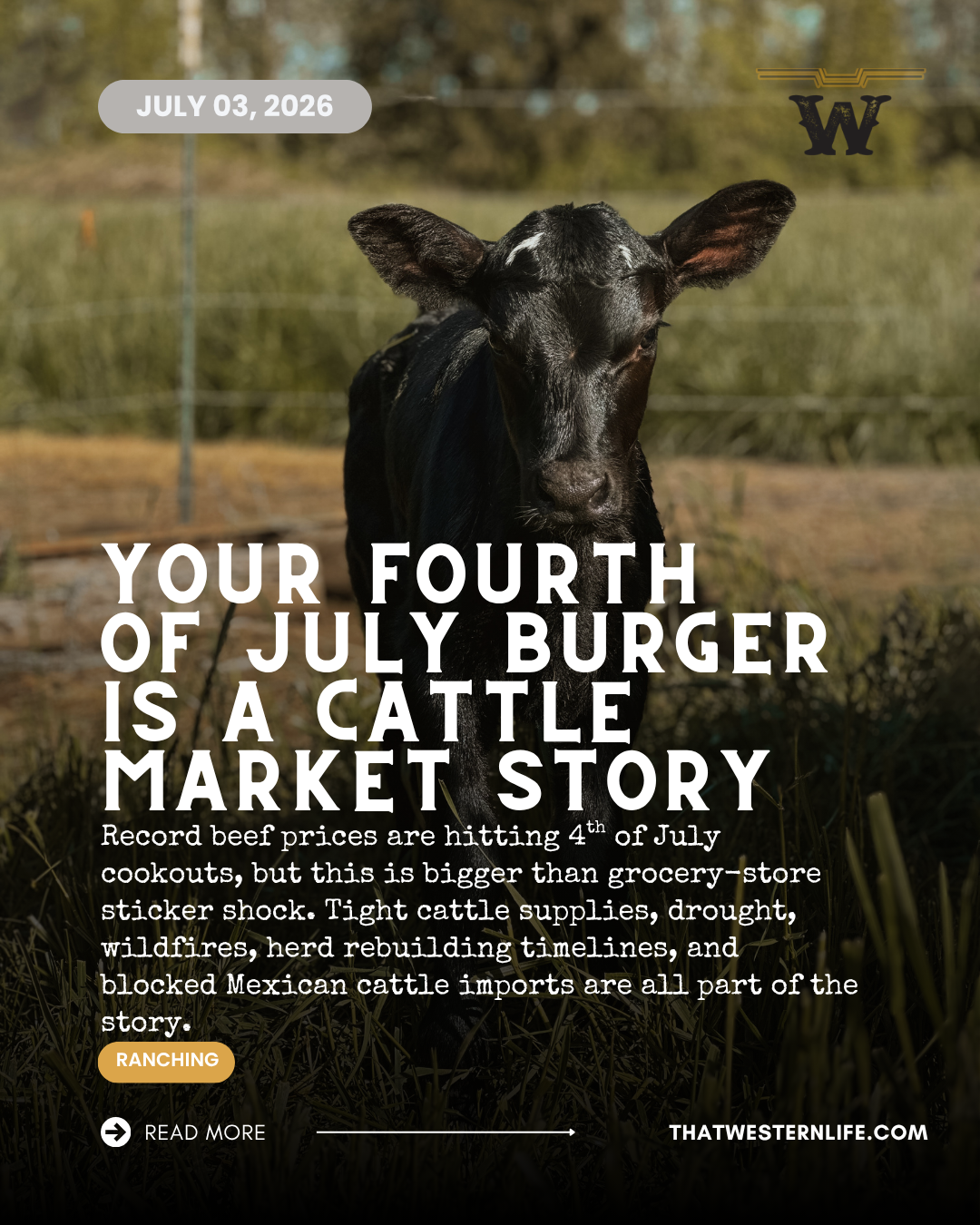
Record Beef Prices Are Turning the Fourth of July Into a Ranching Story
Record beef prices are hitting Fourth of July cookouts, but this is bigger than grocery-store sticker shock. Tight cattle supplies, drought, wildfires, herd rebuilding timelines, and blocked Mexican cattle imports are all part of the story.
This Fourth of July, the price of a hamburger is telling a much bigger story about the cattle industry.
Reuters reports that the average retail price for lean and extra-lean ground beef hit a record $8.62 per pound in May, up more than 12% from a year earlier. Wells Fargo also estimated that a barbeque for 10 people will cost $161 this year, up 2.4% from last year, with hamburger beef rising especially sharply.
For consumers, that shows up as a sticker shock.
For ranchers, it points to a deeper supply problem.
The U.S. cattle herd is still tight after years of drought, wildfire pressure, high feed costs, and difficult rebuilding conditions. When ranchers cull cows because pasture and hay are limited, the effects do not reverse quickly. Even when producers decide to retain heifers and rebuild, it takes years before those animals become part of the beef supply.
That timeline matters. Beef is not a product that can be increased overnight.
The story is also complicated by New World screwworm concerns and blocked Mexican cattle imports. When cross-border cattle movement is limited, the U.S. loses access to a supply channel that normally helps feedyards and processors. That adds pressure to an already tight domestic market.
Politically, this creates a difficult conversation. Consumers want lower beef prices. Ranchers want strong cattle prices after years of hard conditions. Policymakers may look at imports or meatpacker investigations. Producers worry that those solutions may not address the real structural issue: there are fewer cattle, and rebuilding takes time.
Elevated food prices are not just “greed” or “inflation” in a generic sense. They are tied to weather, biology, trade, disease control, land conditions, feed costs, and years of market pressure.
The Fourth of July grill is not separate from the ranch economy.
This year, it may be one of the clearest places consumers can feel the pressure the American rancher faces.
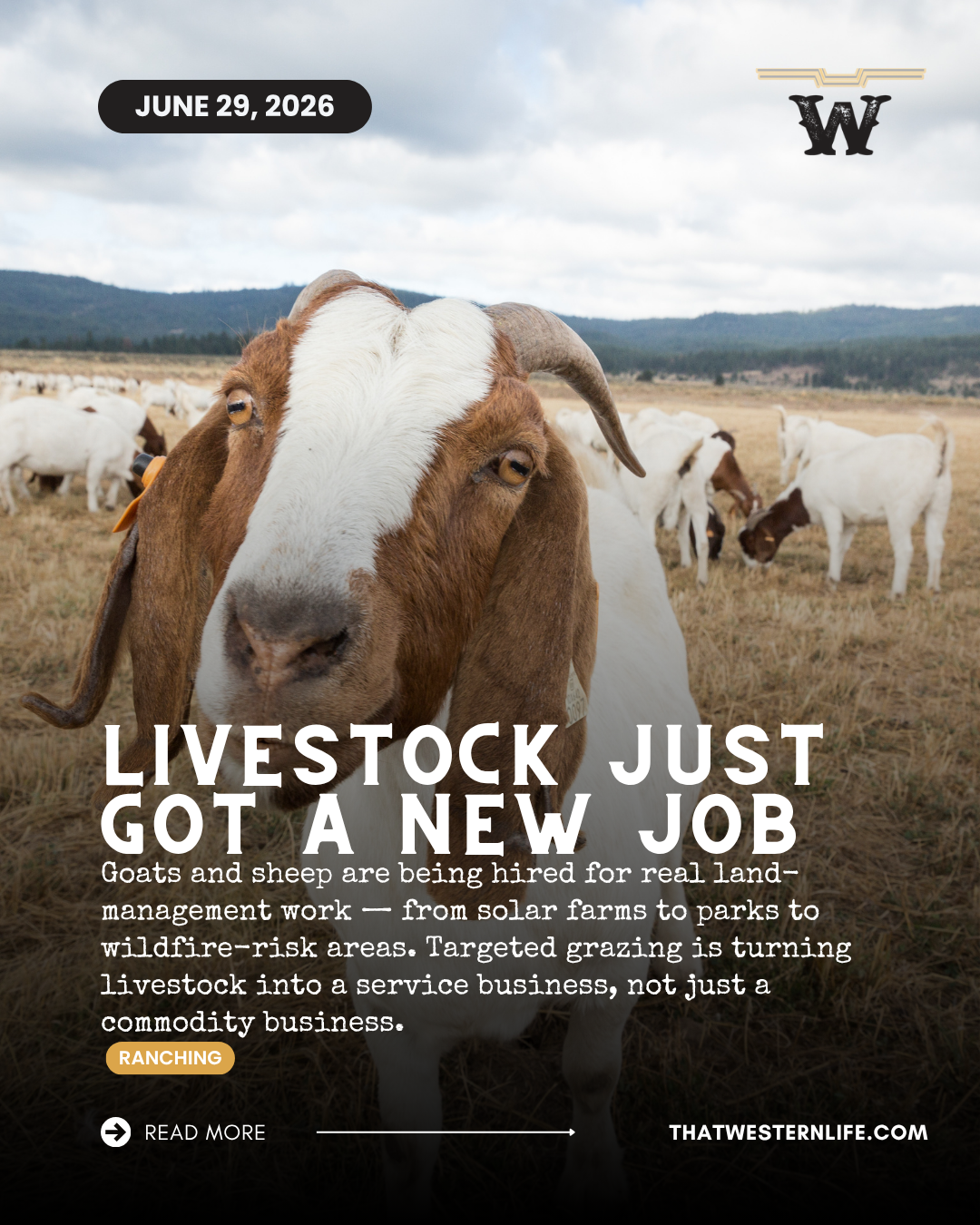
Goats & Sheep Are Becoming a Land Management Business
Goats and sheep are being hired for real land-management work — from solar farms to parks to wildfire-risk areas. Targeted grazing is turning livestock into a service business, not just a commodity business.
Across America, goats and sheep are getting a bnigger job across America.
A June 29 report highlighted the growth of targeted grazing, where livestock are used to manage vegetation in places where mowing, herbicides, or heavy equipment are expensive, impractical, or environmentally distruptive. Cities are using goats to clear overgrown parks and drainage areas. Vineyards are using sheep to manage weeds. Solar developers are using sheep to graze beneath panels. Federal and conservation lands are using grazing animals to supporess invasive plants.
For the western world, this story matters because it reframes livestock as more than a commodity.
Traditionally, sheep and goat producers earned income through emat, wool, breeding stock, or show animals. Targeted grazing adds another revenue stream: service. The animals are not only producing a product; they are performing a job.
That shift is important for younger producers, small-acerage operators, and livestock owners looking for creative ways to make animals cash flow without owning large amounts of land. A producer with the right herd, fencing, transport, guardian animals, insurance, and management skill can potentially build a business around vegetation control.
This also fits into larger conversations around fire prevention, solar development, soil health, and land stewardship. In wildifre-prone regions, goats can reduce brush and ladder fuels. On solar farms, sheep can help keep land in agricultural use while managign vegetation under panels. In parks and sensitive habitats, grazing can reduce herbicide reliance and avoid damage from heavy machinery.
It is not a simple or cute side hustle. Targeted grazing takes real management. Animals must be hauled, fenced, supervised, protected from predators, and matched to the right terrain and vegetation. But that is also what makes it a legitimate western business opportunity.
For That Western Life, this story fits ranching, agriculture technology, and western entrepreneurship. It is a modern example of using old tools in a new way.
The animals are doing what they have always done.
The business model is what changed.
#MEATIN Day - Rancher's Respond to Colorado Governor
(March 20, 2021) - Colorado Governor Jared Polis announced earlier this March a statewide “Meat Out” day, encouraging Coloradans to not buy or consume meat that day. A meat eater himself, Gov. Polis’ partner is a long-time vegan, and a state proclamation like this finds Colorado’s ranchers insulted and slapped in the face - especially when you consider the financial significance of the beef industry in the state.
(March 20, 2021) - Colorado Governor Jared Polis announced earlier this March a statewide “Meat Out” day, encouraging Coloradans to not buy or consume meat that day. A meat eater himself, Gov. Polis’ partner is a long-time vegan, and a state proclamation like this finds Colorado’s ranchers insulted and slapped in the face - especially when you consider the financial significance of the beef industry in the state.
Nearly Half of Colorado’s Counties Signed on to a #MeatIn and #BetterWithBeef Initiative
With 26 counties signed on to the narrative spread across many of the states in the U.S. regarding the outrage over Gov. Polis’ proclamation, the Colorado Cattlemen’s Association has even created a list of places that will be supporting #MeatIn. If you are in the Colorado area, we encourage you to check out the list here.
Nebraska Governor has proclaimed that March 20th be their #MeatOnTheMenu day as well.

Creative Vision Officer Trent Johnson of Greeley Hat Works
One of the most interesting people in the world of rodeo, ranching and western fashion, the always stylish Creative Vision Officer and owner of Greeley Hat Works never fails to disappoint. Join us as Trent Johnson tells us about his childhood, his joy in entrepreneurship and thinking outside of the box and how all of this helps him promote the western lifestyle in ranching, rodeo and western fashion!
One of the most interesting people in the world of rodeo, ranching and western fashion, the always stylish Creative Vision Officer and owner of Greeley Hat Works never fails to disappoint. Join us as Trent Johnson tells us about his childhood, his joy in entrepreneurship and thinking outside of the box and how all of this helps him promote the western lifestyle in ranching, rodeo and western fashion!
Entrepreneurship
How it All Began!
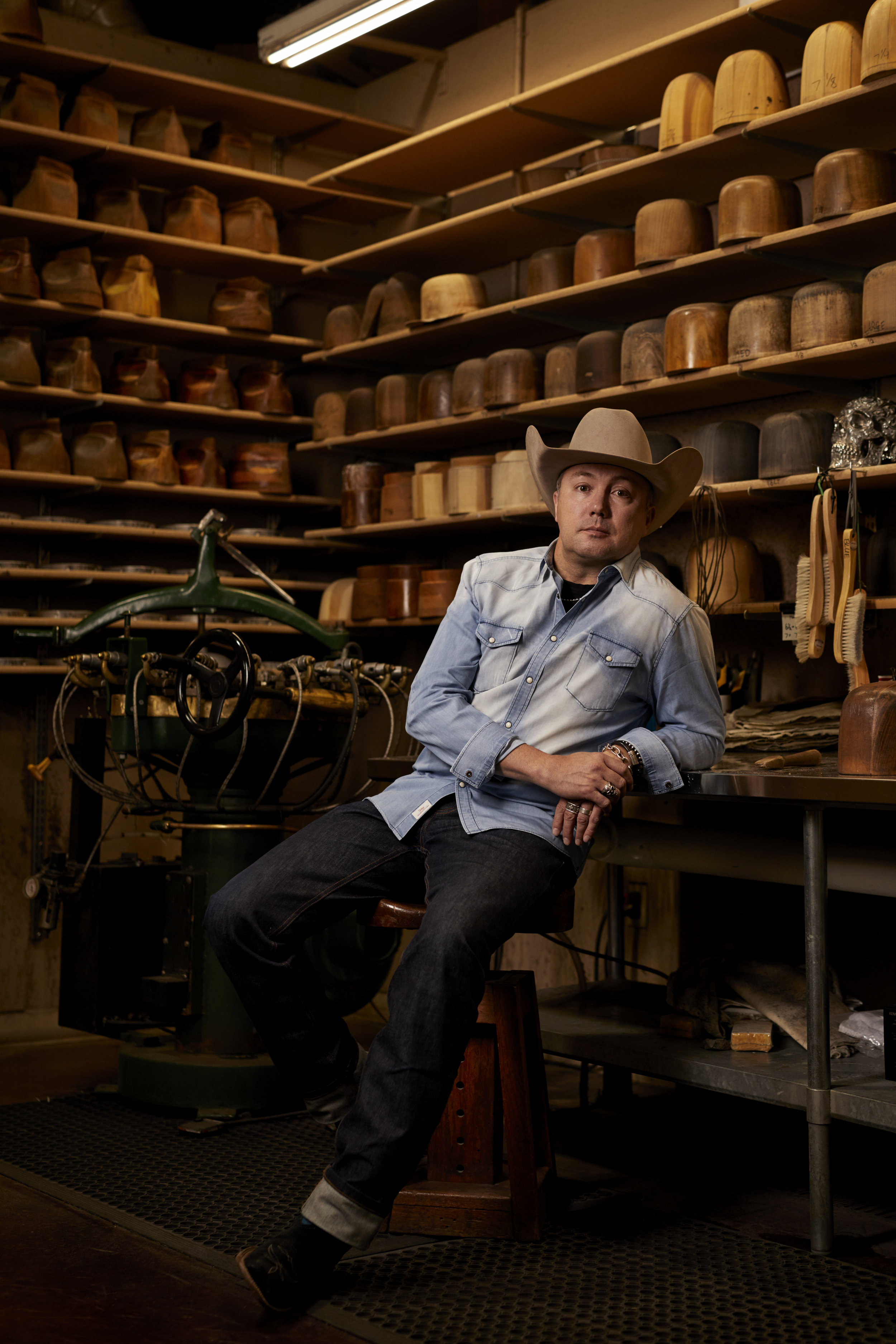
Trent Johnson at the shop in Greeley, Colorado.
Entrepreneurship was an early start for Trent, where he started his own lawn mowing business. Nothing was ever given to Trent, even starting at this young age. In fact, his own parents CHARGED him to lease the lawnmower that he used to make the money until he made enough money to buy his own. By the end of high school, he was sponsored by Bex Sunglasses AND he had hired some of his peers to work for him, trading them sunglasses for their work. Heading to college to be in business school, he sold the lawn mowing business to one of his younger peers.
Podcast Bonus Story: How his parents shaped his early entrepreneurship. “My parents are the most awesome jerks.”
Going to College
Elementary education with a minor in psychology was the route that Trent went after failing to get into business school. While he enjoyed working with the students, he had a hard time with the parents that were involved with the students.
“I had been taking my hats out to Greeley Hat Works to be shaped,” Trent explains as how he met the family behind Greeley Hat Works. He had always been obsessed with hats and he saved all his vacation money to buy all the hats in every country that he could go to.
“I am so not normal! I have had a hat fettish for forever!”
While at the ranch getting hats shaped, he said, “I know stuff but just enough to be dangerous. I don’t know anything but are you hiring?”
“If you don’t know anything, why would we hire you?” They asked.
“Hire me for a week and, if you don’t like me, tell me what you didn’t like so I can be better as a human, and I’ll leave,” Trent challenged. He got the job, lived in the ranch house and then ended up in a house on the west end of the ranch property until he didn’t after getting married.
Greeley Hat Works
Beauty Behind Being Unique
We have been able to keep up with style, trends and fashions because we don’t have set hats - they are all custom. Our hat brims change, degrees of stiffness, etc. are always changing as you realize what is going on around you and being able to compensate for those changes.
When we start to alienate certain brands out of a specific market place like rodeo, it’s only hurting the cowboys, the fans and professional rodeo as a whole. We need to make sure that we have those gates open to all sponsors for healthy sponsors.
Custom Is Cool
“We have about five stores around the U.S. that have our conformity tour,” Trent explains. Built in the 1900’s they have a head shaper that measures your head exactly to create the perfect hat. They work one on one with each individual through a series of questions, pictures and interactions so that they can get a fit as great as possible.
After the fitting process, it’s very important to Trent what you are using the hat for in your lifestyle. Is it a hat worn three times a month for fancy dinners? Everyday rodeo wear? This helps decide the quality standard that you want and then you get to go into the fun nitty gritty style of color, shape and accessories.
“The biggest thing to me is confidence when you are wearing your new creation,” Trent explains. It means that he doesn’t care about what “the rules” state, he wants you to have the hat that makes you happy and helps you carry yourself with confidence.
“The customer is key to helping me figure out what design or style is perfect for them.”
Selling the Experience
“We’re not that kind of a shop that says, ‘Oh that hat isn’t one of ours, we aren’t going to work on it.’ The customer experience is number one for us… if you have 15 … hats and you hate the way they fit then we are going to fit those hats for you.”
Podcast Bonus Story: Katie Schrock testimony on Greeley Hat Works. Selling an experience and you get a free hat!
Collaborations
DD Ranchwear
It didn’t matter if I was working with Aerosmith, a cowboy, a movie or a gal who wanted a fashion hat, they don’t just make one type of hats - he loves making hats period. The collaboration with DD Ranchwear team has helped create a women’s Ralph Lauren of the Western World that is iconic, edgy and classy. When they came to Trent about building hats it felt like a no brainer!

With any collaboration you have more than one opinion; combining their vision and what they wanted to build, they still had to build into a functional hat. The trick of a hat is it still has to fit and wear like a hat. There is a lot of history and “not changing things” in order to not change anything. Some of the stuff DD Ranch wanted to do in the beginning is be able to make it functional and still look the way that they wanted it to do. With a hat you see both the inside and the outside; both sides of the brim is the difference.
Staying Sane While Being an Involved Western Advocate

Learning how to let go of things that, even today with his amazing team, Trent still works on every day. He understands that his gifts are building hats and making personal connections is the most important. Trent then would find out “how many hats do I need to design to do…. Project A, B, C, etc.”
A large whiteboard in his office is his think board. He fills it with quotes, information and more top to bottom - then he takes a picture, saves it on his phone, and then wipes the slate clean to start on the next idea.
More on the podcast:
How Greeley Hat Works got involved with Miss Rodeo America.
The Greeley Hat Works ambassador program and how they select their ambassadors each year - how they support the average competitor or hat enthusiast.
“I don’t raise children, I raise adults who can give back to a community.”
Involvement in the ranching industry as the official hat of Texas Southwest Raisers Association, the National Cattlemen’s Beef Association and the National Collegiate Beef Ambassadors - Keeping beef relevant!
On the Rodeo Trail
You can follow along with Trent Johnson and Greeley Hat Works! Make sure to let them know that you heard them on the podcast and find them at one of their pop up stores!