
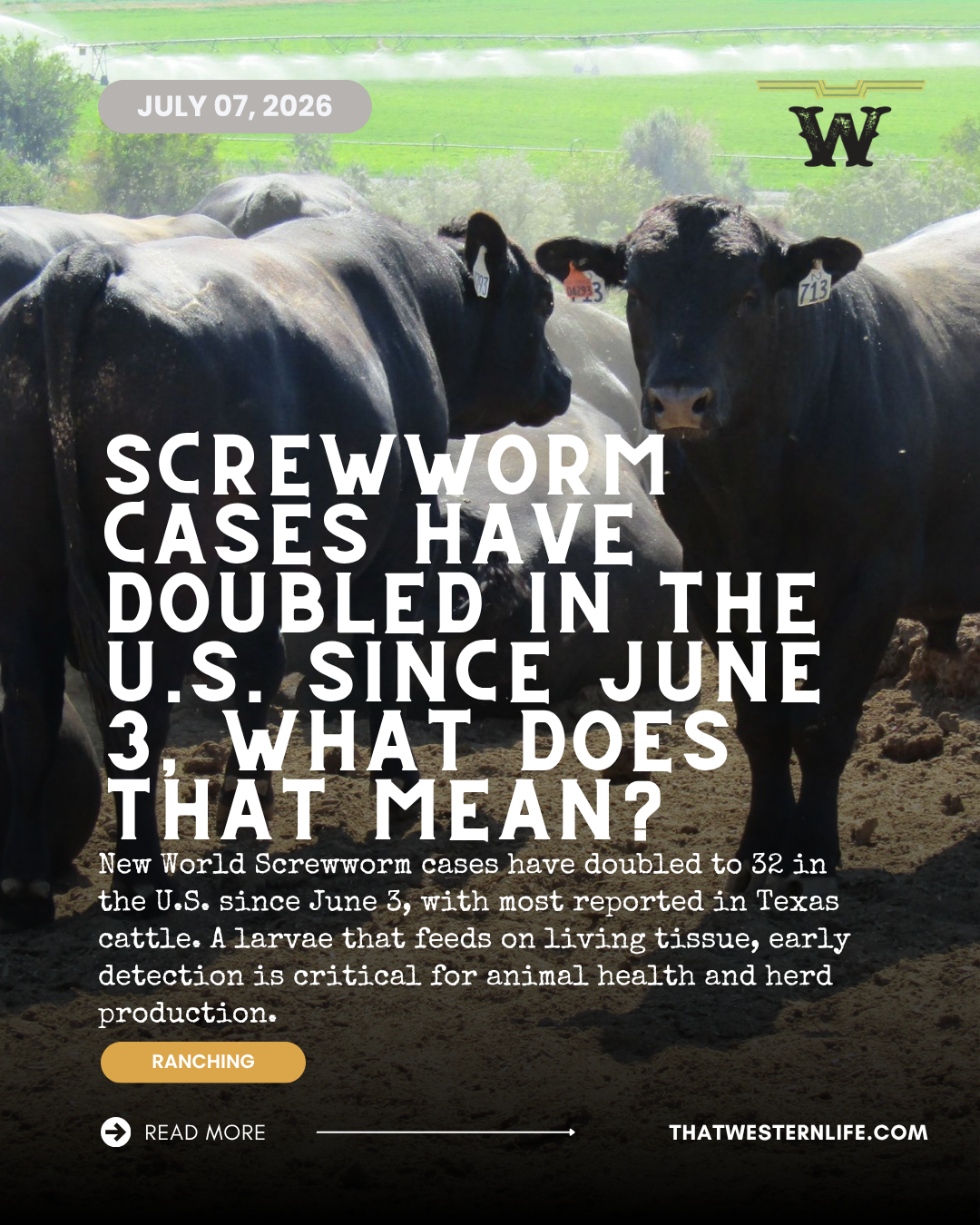
U.S. Screwworm Update: Cases Rise to 32 Since June 3 as Reports Increase Across Texas
New World screwworm cases have doubled to 32 in the U.S., with most reported in Texas cattle. These larvae feed on living tissue, making early detection critical for animal health and herd protection.
New World screwworm is no longer a distant livestock-health concern that we are protecting against; it is firmly here in the United States.
USDA has now documented 32 cases in the U.S. since June 3, with nearly all of them reported in Texas. Most of the cases have affected cattle, though infections have also been reported in sheep, goats, and dogs. Screwworm is not a routine parasite problem; it is a flesh-eating pest that can severely injure or kill livestock if it’s not caught and treated quickly.
What makes screwworm different from other parasites is how it attacks the animal
Adult flies are attracted to open wounds, even small ones like branding sites, castration cuts, tick bites, or navel areas on newborn calves. The female fly lays eggs in the wound, and within hours, those eggs hatch into larvae. Unlike typical maggots that feed on dead tissue, screwworm larvae feed on living flesh. They burrow deeper into the wound in a screw-like pattern, which is where the name comes from.
As the larvae feed, the wound becomes larger, wetter, and more painful. Ranchers may notice animals acting restless, isolating themselves, or showing signs of discomfort like tail switching, kicking at their sides, or refusing to eat. A strong, foul odor is often one of the first noticeable signs. In more advanced cases, the wound can appear deep and raw, with visible larvae moving inside it.
From an animal sciences standpoint, the damage goes beyond the surface.
The feeding activity causes tissue destruction, inflammation, and secondary bacterial infections. As the wound expands, it can lead to significant blood loss, toxemia, and systemic infection. In severe cases, especially in young, weak, or untreated animals, screwworm infestations can be fatal. Even when animals survive, weight loss, reduced performance, and long-term tissue damage can impact productivity.
The United States has faced this threat before, and the last major outbreak offers important context
Screwworm was once widespread across the southern U.S., costing the livestock industry millions of dollars each year. A coordinated eradication effort began in the 1950s using the sterile insect technique, where millions of sterilized male flies were released to disrupt reproduction. By the 1980s, the pest had been successfully eliminated from the U.S., with the exception of occasional reintroductions. One of the most notable recent incidents occurred in 2016 in the Florida Keys, where screwworm affected endangered Key deer and required an aggressive response to contain and eliminate the outbreak. That history shows both how serious the threat can become and how critical rapid response is to stopping the spread.
For ranchers, the timing is especially concerning.
The cattle industry is already dealing with tight supplies, high replacement costs, labor challenges, animal movement concerns, and elevated beef prices. A parasite outbreak adds another layer of risk. It requires more monitoring, faster treatment decisions, and stronger communication between ranchers, veterinarians, state animal-health officials, and the USDA.
This is also a labor story
During earlier eradication efforts, ranches often had more consistent labor available to check livestock closely. Today, many operations are covering more ground with fewer people. That makes surveillance harder, especially in rough country or large pastures where wounds, infestations, or wildlife exposure may not be spotted immediately.
The sterile-fly response is important, but capacity is part of the concern. The basic strategy is to release sterile flies so the wild population cannot reproduce effectively. That approach helped eliminate screwworm from the U.S. decades ago, but a modern outbreak raises questions about whether current production and response systems can move fast enough.
The takeaway is simple: livestock health is not separate from the Western economy. It is the foundation of it.
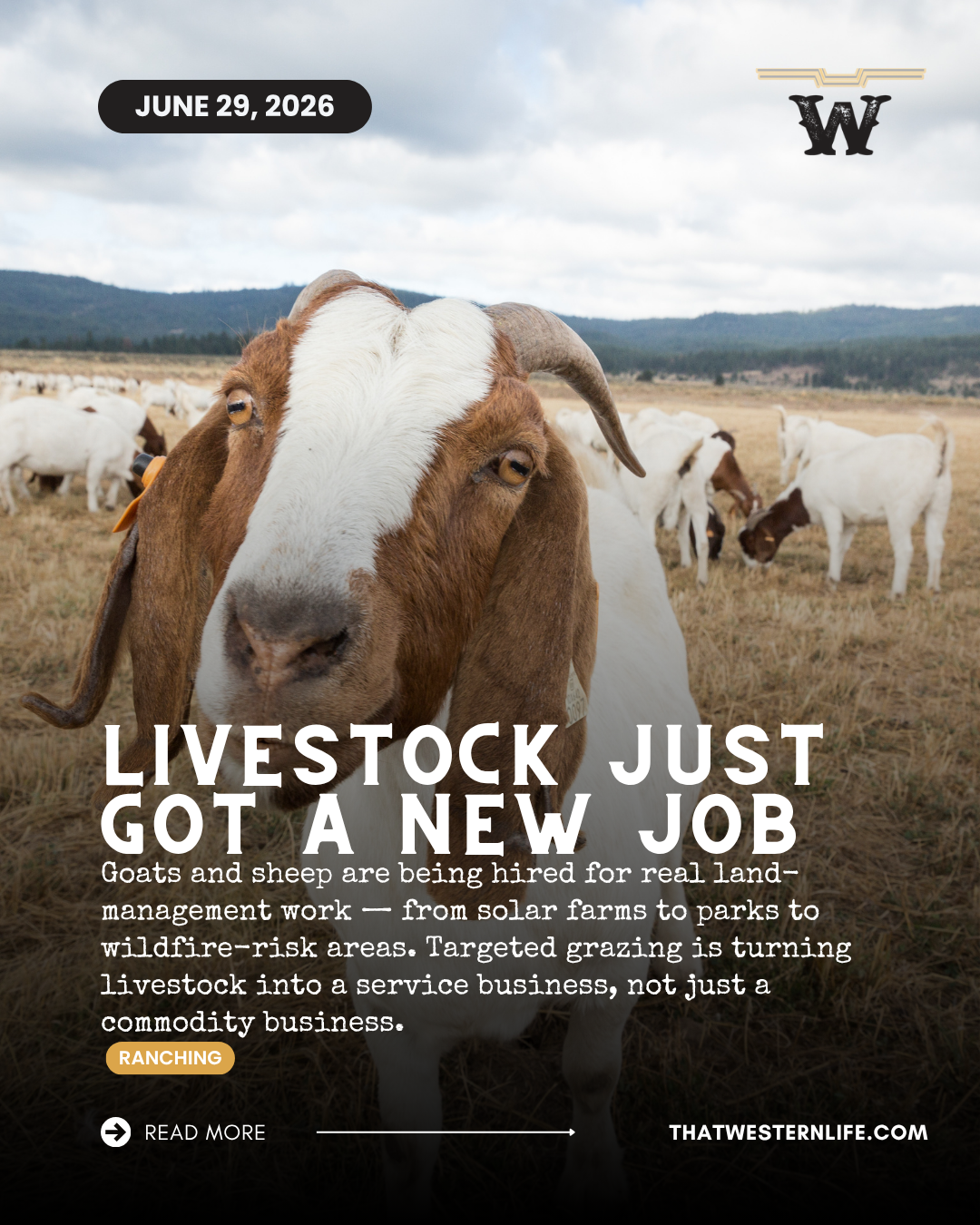
Goats & Sheep Are Becoming a Land Management Business
Goats and sheep are being hired for real land-management work — from solar farms to parks to wildfire-risk areas. Targeted grazing is turning livestock into a service business, not just a commodity business.
Across America, goats and sheep are getting a bnigger job across America.
A June 29 report highlighted the growth of targeted grazing, where livestock are used to manage vegetation in places where mowing, herbicides, or heavy equipment are expensive, impractical, or environmentally distruptive. Cities are using goats to clear overgrown parks and drainage areas. Vineyards are using sheep to manage weeds. Solar developers are using sheep to graze beneath panels. Federal and conservation lands are using grazing animals to supporess invasive plants.
For the western world, this story matters because it reframes livestock as more than a commodity.
Traditionally, sheep and goat producers earned income through emat, wool, breeding stock, or show animals. Targeted grazing adds another revenue stream: service. The animals are not only producing a product; they are performing a job.
That shift is important for younger producers, small-acerage operators, and livestock owners looking for creative ways to make animals cash flow without owning large amounts of land. A producer with the right herd, fencing, transport, guardian animals, insurance, and management skill can potentially build a business around vegetation control.
This also fits into larger conversations around fire prevention, solar development, soil health, and land stewardship. In wildifre-prone regions, goats can reduce brush and ladder fuels. On solar farms, sheep can help keep land in agricultural use while managign vegetation under panels. In parks and sensitive habitats, grazing can reduce herbicide reliance and avoid damage from heavy machinery.
It is not a simple or cute side hustle. Targeted grazing takes real management. Animals must be hauled, fenced, supervised, protected from predators, and matched to the right terrain and vegetation. But that is also what makes it a legitimate western business opportunity.
For That Western Life, this story fits ranching, agriculture technology, and western entrepreneurship. It is a modern example of using old tools in a new way.
The animals are doing what they have always done.
The business model is what changed.