
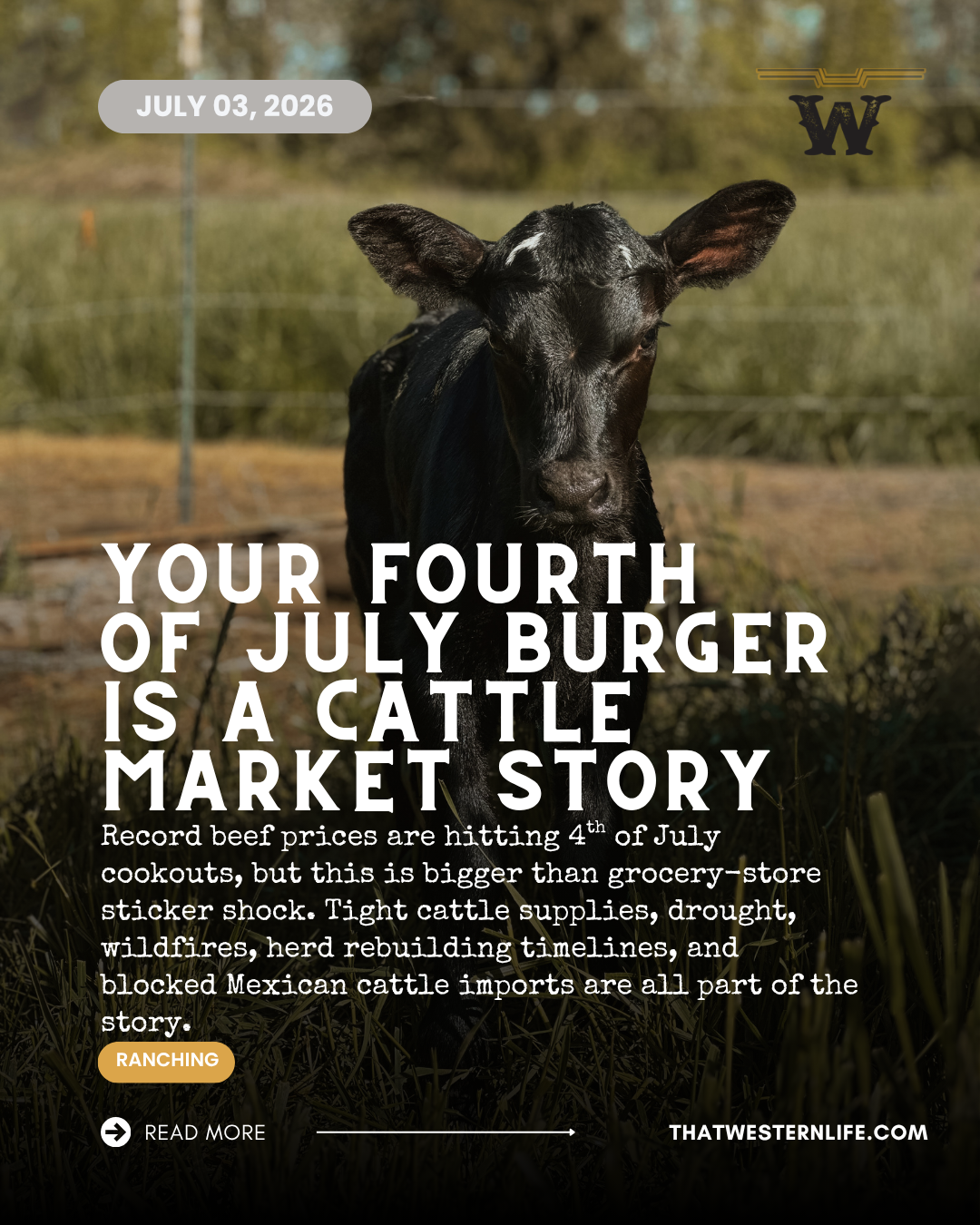
Record Beef Prices Are Turning the Fourth of July Into a Ranching Story
Record beef prices are hitting Fourth of July cookouts, but this is bigger than grocery-store sticker shock. Tight cattle supplies, drought, wildfires, herd rebuilding timelines, and blocked Mexican cattle imports are all part of the story.
This Fourth of July, the price of a hamburger is telling a much bigger story about the cattle industry.
Reuters reports that the average retail price for lean and extra-lean ground beef hit a record $8.62 per pound in May, up more than 12% from a year earlier. Wells Fargo also estimated that a barbeque for 10 people will cost $161 this year, up 2.4% from last year, with hamburger beef rising especially sharply.
For consumers, that shows up as a sticker shock.
For ranchers, it points to a deeper supply problem.
The U.S. cattle herd is still tight after years of drought, wildfire pressure, high feed costs, and difficult rebuilding conditions. When ranchers cull cows because pasture and hay are limited, the effects do not reverse quickly. Even when producers decide to retain heifers and rebuild, it takes years before those animals become part of the beef supply.
That timeline matters. Beef is not a product that can be increased overnight.
The story is also complicated by New World screwworm concerns and blocked Mexican cattle imports. When cross-border cattle movement is limited, the U.S. loses access to a supply channel that normally helps feedyards and processors. That adds pressure to an already tight domestic market.
Politically, this creates a difficult conversation. Consumers want lower beef prices. Ranchers want strong cattle prices after years of hard conditions. Policymakers may look at imports or meatpacker investigations. Producers worry that those solutions may not address the real structural issue: there are fewer cattle, and rebuilding takes time.
Elevated food prices are not just “greed” or “inflation” in a generic sense. They are tied to weather, biology, trade, disease control, land conditions, feed costs, and years of market pressure.
The Fourth of July grill is not separate from the ranch economy.
This year, it may be one of the clearest places consumers can feel the pressure the American rancher faces.
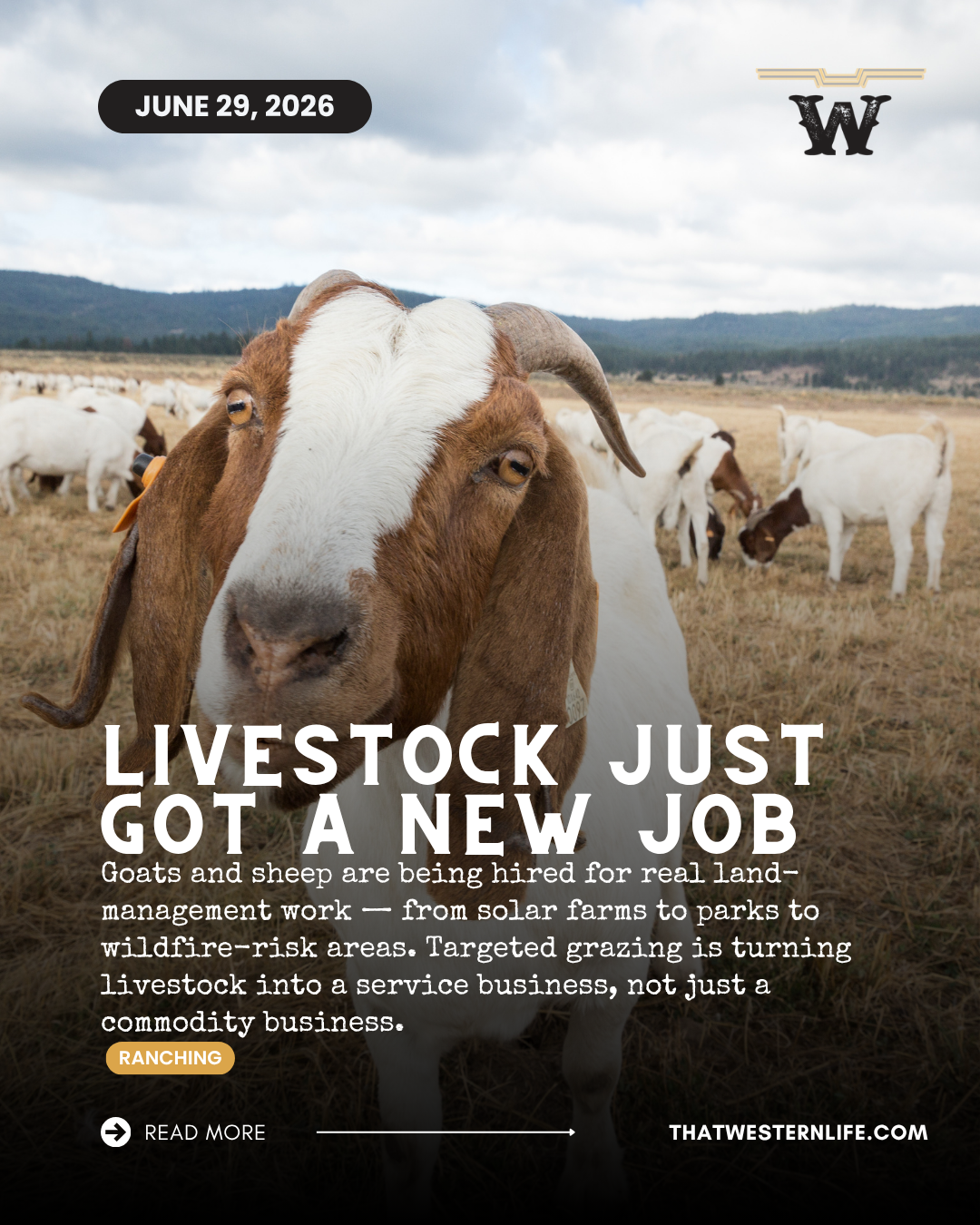
Goats & Sheep Are Becoming a Land Management Business
Goats and sheep are being hired for real land-management work — from solar farms to parks to wildfire-risk areas. Targeted grazing is turning livestock into a service business, not just a commodity business.
Across America, goats and sheep are getting a bnigger job across America.
A June 29 report highlighted the growth of targeted grazing, where livestock are used to manage vegetation in places where mowing, herbicides, or heavy equipment are expensive, impractical, or environmentally distruptive. Cities are using goats to clear overgrown parks and drainage areas. Vineyards are using sheep to manage weeds. Solar developers are using sheep to graze beneath panels. Federal and conservation lands are using grazing animals to supporess invasive plants.
For the western world, this story matters because it reframes livestock as more than a commodity.
Traditionally, sheep and goat producers earned income through emat, wool, breeding stock, or show animals. Targeted grazing adds another revenue stream: service. The animals are not only producing a product; they are performing a job.
That shift is important for younger producers, small-acerage operators, and livestock owners looking for creative ways to make animals cash flow without owning large amounts of land. A producer with the right herd, fencing, transport, guardian animals, insurance, and management skill can potentially build a business around vegetation control.
This also fits into larger conversations around fire prevention, solar development, soil health, and land stewardship. In wildifre-prone regions, goats can reduce brush and ladder fuels. On solar farms, sheep can help keep land in agricultural use while managign vegetation under panels. In parks and sensitive habitats, grazing can reduce herbicide reliance and avoid damage from heavy machinery.
It is not a simple or cute side hustle. Targeted grazing takes real management. Animals must be hauled, fenced, supervised, protected from predators, and matched to the right terrain and vegetation. But that is also what makes it a legitimate western business opportunity.
For That Western Life, this story fits ranching, agriculture technology, and western entrepreneurship. It is a modern example of using old tools in a new way.
The animals are doing what they have always done.
The business model is what changed.