

Creative Vision Officer Trent Johnson of Greeley Hat Works
One of the most interesting people in the world of rodeo, ranching and western fashion, the always stylish Creative Vision Officer and owner of Greeley Hat Works never fails to disappoint. Join us as Trent Johnson tells us about his childhood, his joy in entrepreneurship and thinking outside of the box and how all of this helps him promote the western lifestyle in ranching, rodeo and western fashion!
One of the most interesting people in the world of rodeo, ranching and western fashion, the always stylish Creative Vision Officer and owner of Greeley Hat Works never fails to disappoint. Join us as Trent Johnson tells us about his childhood, his joy in entrepreneurship and thinking outside of the box and how all of this helps him promote the western lifestyle in ranching, rodeo and western fashion!
Entrepreneurship
How it All Began!
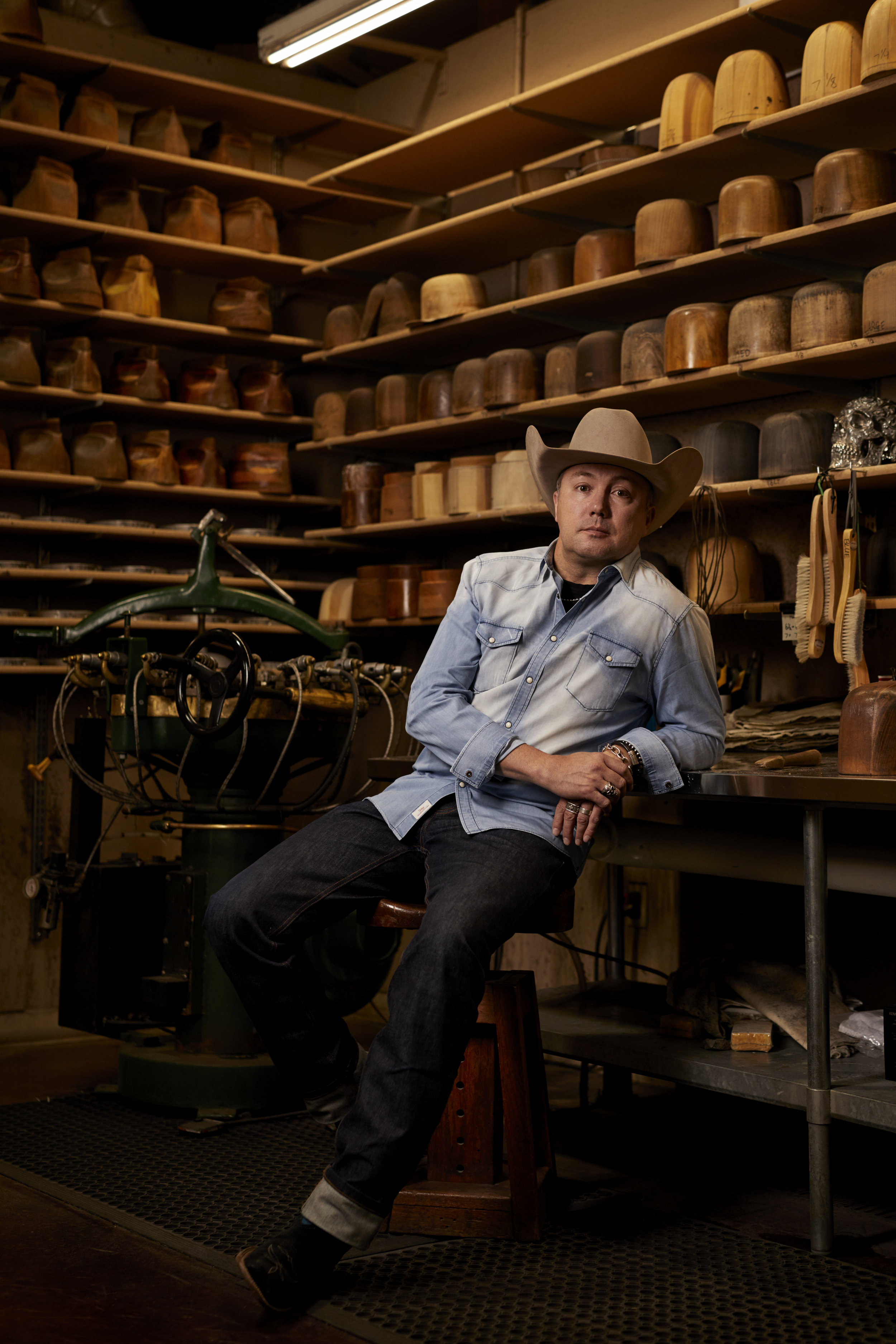
Trent Johnson at the shop in Greeley, Colorado.
Entrepreneurship was an early start for Trent, where he started his own lawn mowing business. Nothing was ever given to Trent, even starting at this young age. In fact, his own parents CHARGED him to lease the lawnmower that he used to make the money until he made enough money to buy his own. By the end of high school, he was sponsored by Bex Sunglasses AND he had hired some of his peers to work for him, trading them sunglasses for their work. Heading to college to be in business school, he sold the lawn mowing business to one of his younger peers.
Podcast Bonus Story: How his parents shaped his early entrepreneurship. “My parents are the most awesome jerks.”
Going to College
Elementary education with a minor in psychology was the route that Trent went after failing to get into business school. While he enjoyed working with the students, he had a hard time with the parents that were involved with the students.
“I had been taking my hats out to Greeley Hat Works to be shaped,” Trent explains as how he met the family behind Greeley Hat Works. He had always been obsessed with hats and he saved all his vacation money to buy all the hats in every country that he could go to.
“I am so not normal! I have had a hat fettish for forever!”
While at the ranch getting hats shaped, he said, “I know stuff but just enough to be dangerous. I don’t know anything but are you hiring?”
“If you don’t know anything, why would we hire you?” They asked.
“Hire me for a week and, if you don’t like me, tell me what you didn’t like so I can be better as a human, and I’ll leave,” Trent challenged. He got the job, lived in the ranch house and then ended up in a house on the west end of the ranch property until he didn’t after getting married.
Greeley Hat Works
Beauty Behind Being Unique
We have been able to keep up with style, trends and fashions because we don’t have set hats - they are all custom. Our hat brims change, degrees of stiffness, etc. are always changing as you realize what is going on around you and being able to compensate for those changes.
When we start to alienate certain brands out of a specific market place like rodeo, it’s only hurting the cowboys, the fans and professional rodeo as a whole. We need to make sure that we have those gates open to all sponsors for healthy sponsors.
Custom Is Cool
“We have about five stores around the U.S. that have our conformity tour,” Trent explains. Built in the 1900’s they have a head shaper that measures your head exactly to create the perfect hat. They work one on one with each individual through a series of questions, pictures and interactions so that they can get a fit as great as possible.
After the fitting process, it’s very important to Trent what you are using the hat for in your lifestyle. Is it a hat worn three times a month for fancy dinners? Everyday rodeo wear? This helps decide the quality standard that you want and then you get to go into the fun nitty gritty style of color, shape and accessories.
“The biggest thing to me is confidence when you are wearing your new creation,” Trent explains. It means that he doesn’t care about what “the rules” state, he wants you to have the hat that makes you happy and helps you carry yourself with confidence.
“The customer is key to helping me figure out what design or style is perfect for them.”
Selling the Experience
“We’re not that kind of a shop that says, ‘Oh that hat isn’t one of ours, we aren’t going to work on it.’ The customer experience is number one for us… if you have 15 … hats and you hate the way they fit then we are going to fit those hats for you.”
Podcast Bonus Story: Katie Schrock testimony on Greeley Hat Works. Selling an experience and you get a free hat!
Collaborations
DD Ranchwear
It didn’t matter if I was working with Aerosmith, a cowboy, a movie or a gal who wanted a fashion hat, they don’t just make one type of hats - he loves making hats period. The collaboration with DD Ranchwear team has helped create a women’s Ralph Lauren of the Western World that is iconic, edgy and classy. When they came to Trent about building hats it felt like a no brainer!

With any collaboration you have more than one opinion; combining their vision and what they wanted to build, they still had to build into a functional hat. The trick of a hat is it still has to fit and wear like a hat. There is a lot of history and “not changing things” in order to not change anything. Some of the stuff DD Ranch wanted to do in the beginning is be able to make it functional and still look the way that they wanted it to do. With a hat you see both the inside and the outside; both sides of the brim is the difference.
Staying Sane While Being an Involved Western Advocate

Learning how to let go of things that, even today with his amazing team, Trent still works on every day. He understands that his gifts are building hats and making personal connections is the most important. Trent then would find out “how many hats do I need to design to do…. Project A, B, C, etc.”
A large whiteboard in his office is his think board. He fills it with quotes, information and more top to bottom - then he takes a picture, saves it on his phone, and then wipes the slate clean to start on the next idea.
More on the podcast:
How Greeley Hat Works got involved with Miss Rodeo America.
The Greeley Hat Works ambassador program and how they select their ambassadors each year - how they support the average competitor or hat enthusiast.
“I don’t raise children, I raise adults who can give back to a community.”
Involvement in the ranching industry as the official hat of Texas Southwest Raisers Association, the National Cattlemen’s Beef Association and the National Collegiate Beef Ambassadors - Keeping beef relevant!
On the Rodeo Trail
You can follow along with Trent Johnson and Greeley Hat Works! Make sure to let them know that you heard them on the podcast and find them at one of their pop up stores!

Breaking Records: Schaff Angus Valley Bull Sells for $1.51 Million
In 2018, the production sale proved to be something special as Elation sold for an unprecedented $800,000. Rights to sell his semen were purchased by ranchers in Missouri and Oklahoma. This record was set to be SHATTERED in 2019, when Schaff Angus Valley’s SAV America 8018 was sold to Herbster Angus for $1.51 million!
February 9, 2019 (North Dakota) - February 9th, 2019, will go down in history for the unprecedented sale of SAV America 8018 for $1,510,000 at their annual production sale in North Dakota. When Tom Burke from the Angus Hall of Fame, says your bull has “the best genetics in the Angus world,” you know you have something special. Burke was specifically talking about the Schaff Angus Valley bull SAV Elation 7899, or Elation, who sold in their 2018 sale. The Schaff Angus Valley bull sale isn’t an overnight success, the Schaff family is in its fifth generation on a ranch they originally homesteaded in North Dakota in 1902.
The Schaff’s first registry of Angus cattle in 1942 makes them one of the oldest on-going Angus herds in North America. Through these five generations, Schaff Angus Valley has evolved into one of the largest, most recognized seedstock nurseries in the world, hosting over 115 Angus production sales to date.
In 2018, the production sale proved to be something special as Elation sold for an unprecedented $800,000. Rights to sell his semen were purchased by ranchers in Missouri and Oklahoma. This record was set to be SHATTERED in 2019, when Schaff Angus Valley’s SAV America 8018 was sold to Herbster Angus for $1.51 million!
An investment for the American rancher in the growing cattle economics, if you consider the contributions that SAV seedstock could provide financially to your business is insurmountable.
“Seedstock from Schaff Angus Valley have enjoyed much success in breeding programs, bull test stations, major A.I. studs and cattle shows across the country. Most importantly, they have worked well for the commercial cowman, who provides the real testing ground for any program. Schaff Angus Valley offers full customer support and service to insure customer satisfaction and success.” (Courtesy of Schaff Angus Valley website circa 2018.)
For more information on the 2019 Schaff Angus Valley Production sale, stay tuned to their website. Their annual production sale is typically in the beginning of February, attracting regional, national and international buyers.

Start to Finish Breeding Services for the Beef Industry
No matter the size of the operation, the chance to boost reproductive efficiency is an opportunity any ranch can capitalize on. Thanks to start-to-finish breeding services, such as Genex and All West/Select Sires, and their professionally trained teams, ranchers are using Artificial Insemination practices and supplementation nutritional programs to take the cattle industry into the future.
Originally published in the Summer 2018 Issue of the Cattle Mag.
The ever changing impacts of today’s growing population and decreasing ranch lands has increased the pressure on ranchers to provide more product with less animals.
No matter the size of the operation, the chance to boost reproductive efficiency is an opportunity any ranch can capitalize on. Thanks to start-to-finish breeding services, such as Genex and All West/Select Sires, and their professionally trained teams, ranchers are using Artificial Insemination practices and supplementation nutritional programs to take the cattle industry into the future.
A study by the University of Georgia Extension noted that “reproductive efficiency has long been recognized as the most important aspect of commercial beef production. If only 50 percent of the cows wean a calf, crossbreeding, superior genetics and sound management become insignificant.”
The variation in a calf-crop can be the difference between profit and loss for a rancher, according to Genex’s website, a start to service breeding service business focused on member and customer profit. Not just that, but most ranchers find themselves required to send almost the entirety of their calf-crop to market in order to make their bill payments for the year. This results in a smaller number of replacement heifers kept back and slows the growth of the operation.
These breeding service operations focus on a successful re-breeding program by providing strategic supplementation to the programs that are already used on ranches.
Prices depend upon variables such as the body conditioning of cows and heifers at the time of calving, the nutrition levels of cows and heifers, and strategic breeding through the versatile bull services that AI provides.
Erin Bronson, area marketing manager of Genex Beef, explains that “inadequate nutrition will result in delayed breeding, later calving dates, and a decreased calf crop percentage. Body conditioning of a pre-calving cow will influence her post-calving feed needs, as well as her rebreeding performance.”
These services also provide an opportunity to work with a veterinarian and nutritionist to formulate a successful plan and to check the breeding-soundness of the herd bull, if you are not ready to move to a 100 percent AI program.
Breeding services operations can do as much or as little as you require of them. The amount of labor that a ranch provides during the breeding service is also up to the rancher. These businesses provide all of their own chutes, breeding barns (mobile trailers), synchronization of heifers and cows, AI arm service and more.
Ranchers can bring their own laborers to work with the breeding services team, or those hired hands can continue with their day-to-day activities. This provides the rancher with the economic benefit of not pulling labor out of other tasks, and outsourcing to professionals who are joined by a professionally trained team, proper and safe equipment, and high goals for the success of the breeding operation.
Breeding services provide an opportunity for obtaining the best genetics for your program through a catalog of national bulls to give the rancher a upper hand at refining their end goal. The desire to move to AI for many producers is that the catalog and online bulls are tested and purchased throughout the year on the best progeny that are available.
Through Genex’s online catalog, you can enter a breed or a name, and subsequently pull up a list of bulls whose genetics you can introduce into your herd based on their Expected Progeny Difference (EPD). If EPD’s are a foreign subject, a representative from one of these companies can meet to provide consultation and recommendations for the ranch.
One of the main benefits of capitalizing on a breeding service opportunity in your area, is that for the commercial producer, they are going to see a smaller calving season window that will provide a uniform weight in the cattle at market time.
Cutting down on manpower becomes an opportunity when the ranch is seeing a two week calving window versus a two to three month calving season. When it is time to go to market, these uniform calves are going to provide more weight on the truck heading to the sale yard with a smaller number of calves, allowing the ranch the luxury of holding back a larger number of replacement heifers (see infographic).
These are not free pounds, but it gives a more unified calf-crop and, if trying to fill truckloads of cattle to get to market, it’ll actually put fewer calves on the truck while still attaining the same amount of pounds.
In some scenarios, you can go from a two-axle to enough calves and pounds to put together a three-axle trailer. That weight difference is 45,000/48,000 to 63,000 (depending on location); a large gap that made up for by just getting your cows to calve at the first part of the calving season.
Breeding service companies do warn that the implementation of reproductive efficiency and AI does take a number of years before the desired goals are seen.
“If you commit to it [nutritional program, synchronization, sire selection, and AI] for a half-decade, the number of heifers and cows bred in the first week will increase as cows are consistently being bred earlier,” explained Clint Sexson of All West/Select Sires.
There are a variety of added benefits to using a breeding service that might not initially come to mind. Specifically in the northwest United States, due to the nature of the regions’ ranching systems with the combination of Forest Service permits, BLM permits, and common lands (where neighbors share permits), ranchers have an increasing importance to not take bulls out onto their permits.
If the ranchers can synchronize cows and AI early, they can have somewhere between 50 to 60 days before they have to move the herd to the permits where they are grazing in common without the bulls.
From a health and reproductive management perspective, this lowers the risk for reproductive diseases, as well as lowers the amount of labor it takes to bring in bulls from out of the country during intense heat. With cows and heifers calving earlier, this also provides larger calves to travel to the permits. For example, a calf that is 45-days-old-when turned out onto range will be a lot better off than one that is 21-days-old.
The costs of breeding AI can be substantially cheaper, not only when looking at labor and cost during breeding season, but in the cost of day-to-day owning a bull. A premiere bull sold at a bull sale could go as high as $750,000 for the top genetics.
AI provides a more affordable cost at roughly $45 to $55 per synchronized female which includes synchronization drugs, semen, and arm service, with the biggest variable being the cost of the semen straw.
Costs depends on the ranchers’ background in AI, but the more that the ranchers learn, either from workshops or the breeding service team, the more they can do themselves. Genex puts on periodic AI training classes that can also help cut down on future costs. Discounts for bulk and other deals can be managed by working with the business’ local representative.
As ranchers find themselves with more rigorous demands, the opportunities for growing their ranching operation and increasing profits are all available by using modern technology and proven programs available to attain a successful and lucrative efficiency.


Chico Rancher Loses Cow to Wolf Attack
December of 2011 was a trying time for ranchers in California as the infamous wolf OR-7 meandered from northeastern Oregon all the way to the border between California and Oregon. This marked the first time a wolf has been in California in 90 years. Washington and Oregon ranchers have long dealt with issues of wolf attacks on cattle and it seemed almost inevitable that it would reach Californian ranchers. On October 26th, 2017, a Lassen County rancher reported losing at least one cow to wolf attacks.
October 28, 2017 (Chico, California) - December of 2011 was a trying time for ranchers in California as the infamous wolf OR-7 meandered from northeastern Oregon all the way to the border between California and Oregon. This marked the first time a wolf has been in California in 90 years. Washington and Oregon ranchers have long dealt with issues of wolf attacks on cattle and it seemed almost inevitable that it would reach Californian ranchers. On October 26th, 2017, a Lassen County rancher reported losing at least one cow to wolf attacks.
Wally Roney of the Roney Land Cattle Co. has reported losing at least five cows to wolves but, according to the California Department of Fish and Wildlife, only one attack on October 13th has been confirmed. Roney's believes that warnings from CDFW of a GPS collared female wolf in the area of his cattle prior to the five attacks is confirmation enough.
In an e-mailed statement, CDFW Deputy Director Jordan Traverso said, “We went to great lengths to communicate with the rancher and with others in the community nearby about the presence of wolves. With this producer, we made it clear that the wolves were frequenting the site where his cows were. We offered the producer non-lethal assistance/tools. The producer declined."
The argument Roney provided against the non-lethal tools was that they would have stampeded his cattle. It seems that the only alternative that Roney can take is to move his cattle out of Lassen County; nearly 1,000 head will have to be displaced.
Ranchers in Oregon have long faced this turmoil with the Oregon Cattlemen's Association placing a 60-Day Intent to Sue against the United States Fish & Wildlife Services for their mismanagement of this predator. Washington has had similar issues with lethal takes on entire packs required such as the Smack Out Pack.
It seems that the issue has traveled from Washington to California with no sign of better management practices or a harmonious relationship between State Fish and Wildlife Services and private ranchers. One can only hope that a decision for better wolf management practices can be made quickly before the situation gets uglier than it already is.
Cover photo courtesy of National Park Services.
###
That Western Life is a news media company focused on bringing the latest news in the rodeo, ranching, agriculture, agvocacy and western lifestyle to those interested. Join our mailing list today to be updated and follow us on all social media platforms. The opinions expressed on this site are that of the authors alone and do not represent That Western Life or Western Insights Media.

Bovine Photo Fun
That Western Life decided to create a little bit of fun for those of you on social media that are bovine lovers with a simple "Drop a photo in the comments" campaign on Facebook and Twitter.
We truly enjoyed the input that came back and thought we would share some of the fun with all of our subscribers!
(October 3, 2017) - That Western Life decided to create a little bit of fun for those of you on social media that are bovine lovers with a simple "Drop a photo in the comments" campaign on Facebook and Twitter.
We truly enjoyed the input that came back and thought we would share some of the fun with all of our subscribers!


Rebecca
Showing bulls the first time
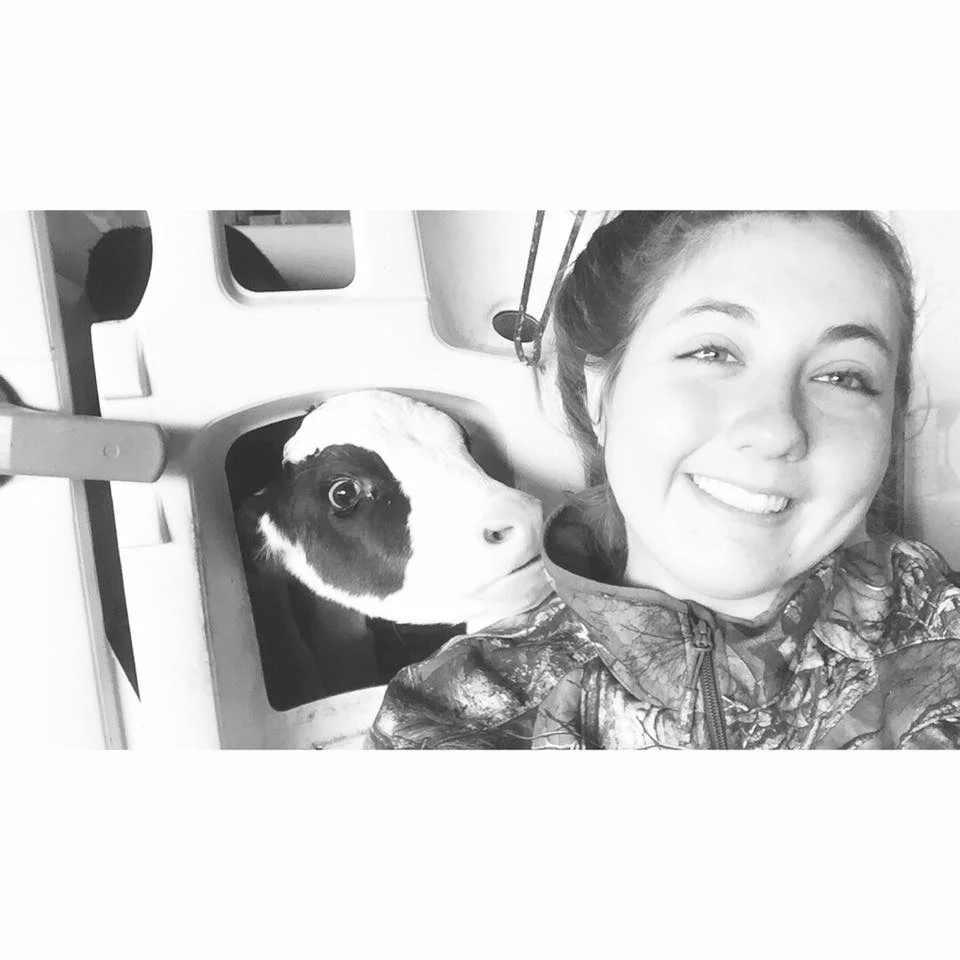
Cassie VanDuser
The original photo was share 14 times with over 2,500 posts on it after one week! We love sharing the ranching lifestyle and look forward to more ways for all of our followers to share a little bit about themselves and their heritage to a larger audience!
###
That Western Life and Western Media Insights is about promoting stories of the agriculture, ranching, agvocacy, and western lifestyle with a larger audience.