
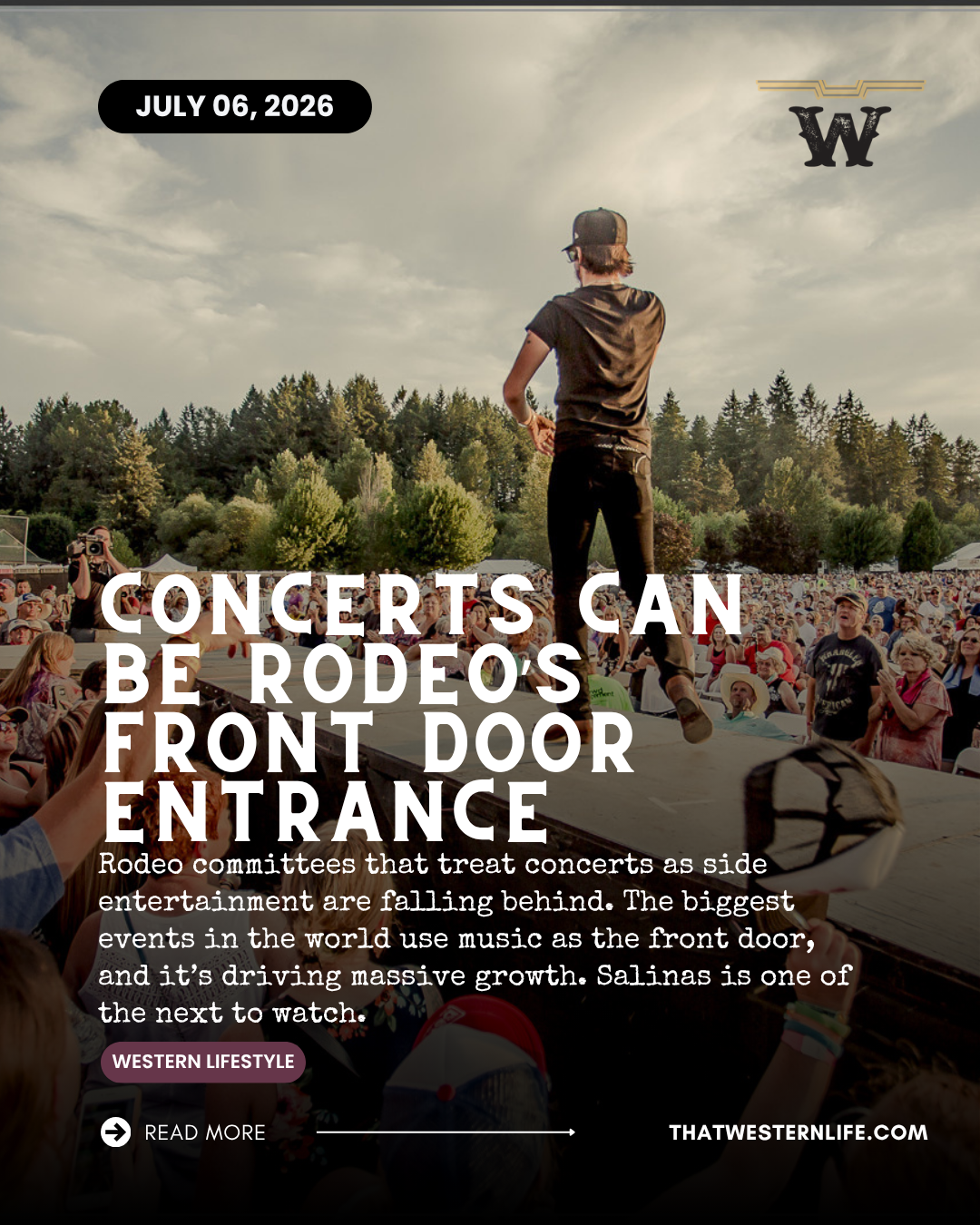
How Rodeo Committees Should Be Using Concerts to Build Bigger Events
Rodeo committees that treat concerts as side entertainment are falling behind. The biggest events in the world use music as the front door—and it’s driving massive growth. Salinas is one of the next to watch.
Rodeo committees that still treat concerts as side entertainment are missing one of the biggest growth opportunities in the western industry.
The most successful rodeos in North America have already figured it out: concerts are not an add-on. The are a core piece of the business model.
For years, concerts were scheduled as bonus entertainment - something to keep fans around after the rodeo ended. Today, the strongest events use concerts as a front door. They bring people in with music, the introduce them to the full western experience.
And the numbers back that strategy up.
The Houston Livestock Show & Rodeo generates more than $200 million annually for the local economy and draws over 2.5 million attendees. A major driver of that scale is its concert lineup, which consistently sells out NRG Stadium and attracts fans who may not initially come for the rodeo.
Calgary Stampede reports an economic impact exceeding $500 million for Alberta, with attendance often surpassing 1.2 million. Its concert programming - from Nashville North to major headliners - is not secondary. It is central to the event’s identity.
Cheyenne Frontier Days contributes roughly $40 million to the local economy each year, with its Frontier Nights concert series acting as one of the biggest attendance drivers and visibility boosters.
Those events are not guesses. They are building around a proven formula.
Concerts create entry points.
A fan might buy a ticket for a country artist, but once they are on the grounds, they engage with rodeo, vendors, sponsors, western fashion, food, and livestock culture. That crossover is where growth happens - through ticket sales, concessions, merchandise, sponsorship activation, and extended time spent at the event.
For rodeo committees, the takeaway is simple: concerts should be designed as part of the overall experience, not scheduled as an afterthought.
That means aligning artists with the western audience, promoting concerts as kickoff moments, building full-day experiences around them, and using music to expand reach beyond traditional rodeo fans.
California Rodeo Salinas is one of the next big examples to watch.
The Big Week Kick Off Concert on July 11 at the Salinas Sports Complex, featuring Miranda Lambert, Dylan Scott, and Ashley Cooke, is being positioned as the opening moment of the entire event. That is exactly how concerts should be used: to set the tone, drive early attendance at the start of the week, and create momentum heading into the rodeo performances.
Salinas already has deep rodeo roots. By leaning into a strong concert strategy, it is expanding its audience and strengthening its overall footprint.
This is the direction the industry is moving.
Rodeo is no longer competing only as a sport. It is competing as a full entertainment experience, one that includes music, culture, community and lifestyle.
The committees that understand that will grow. The ones that don’t will fall behind.
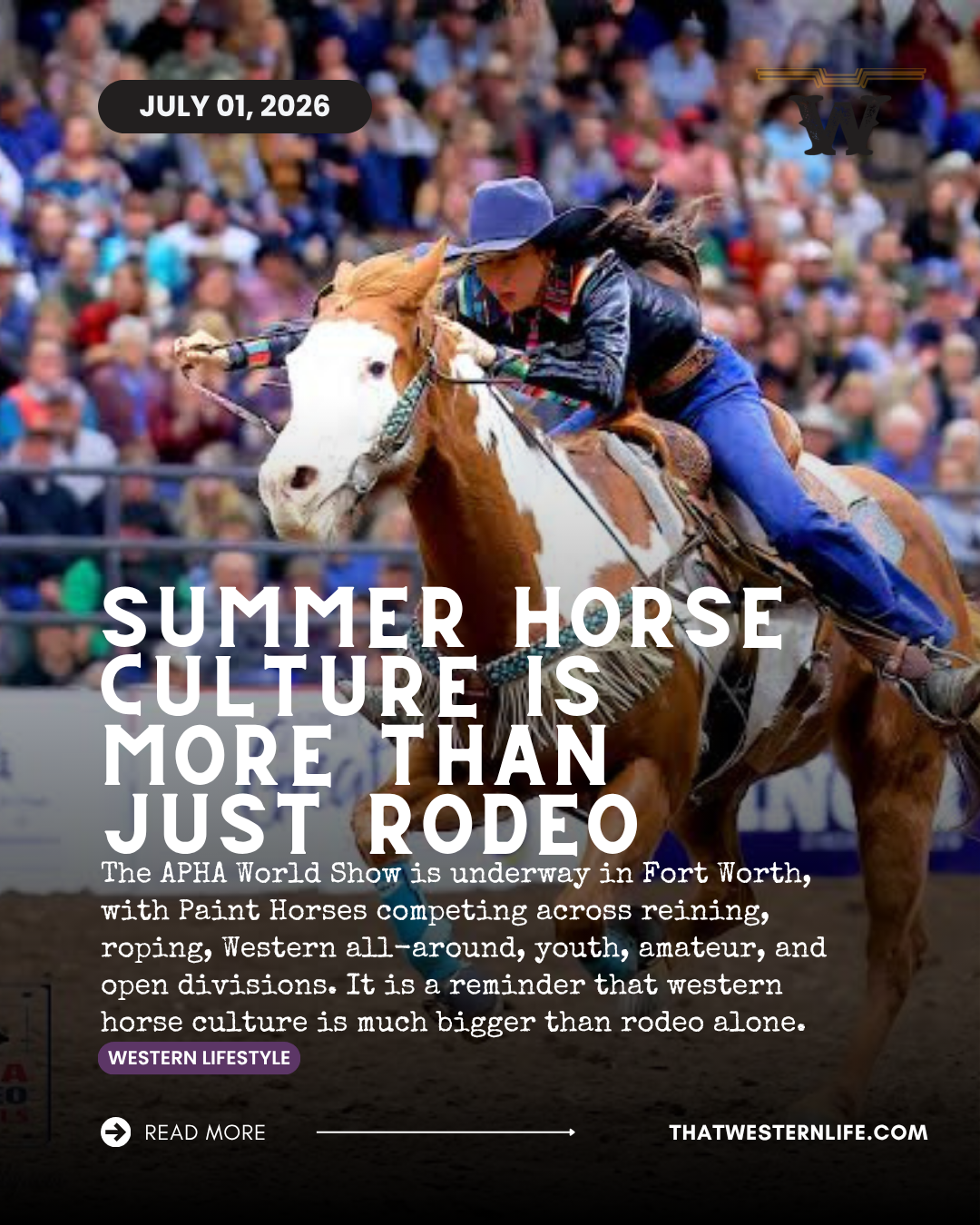
The APHA World Show is a Reminder That Western Horse Culture is Bigger Than Rodeo
The APHA World Show is underway in Fort Worth, with Paint Horses competing across reining, roping, Western all-around, youth, amateur, and open divisions. It is a reminder that western horse culture is much bigger than rodeo alone.
The APHA World Championship Show is underway in Fort Worth, and it deserves attention from the broader western world.
Running June 19 through July 4 at the Will Rogers Memorial Center, the show brings together Open, Amateur, and Youth competitors across a wide range of classes, including reining, roping, hunt-seat, Western all-around events, and more. APHA says the event pays out more than $1.5 million in awards and money each year.
That makes it more than a horse show.
It is a major western industry event.
Rodeo often gets the loudest summer headlines because it is fast, public-facing and easy for fans to understand. But western performance horse shows are part of the same cultural and economic ecosystem. They support breeders, trainers, farriers, veterinarians, haulers, photographers, videographers, tack makers, apparel companies, feed brands, supplement companies, stallion programs, youth organizations, and facility owners.
They also build the next generation of horsemen and horsewomen.
Youth and amateur exhibitors are not just competing for ribbons. They are learning how to handle pressure, care for animals, understand judging systems, manage long show days, and represent themsevles professionally. Those are the same skills that show up later in rodeo, ranching, breeding, business, and leadership.
The Paint Horse world also has a unique role in western culture because it blends performance, color, identity, and marketability. A good Paint Horse can be competitive, practical, and visually memorable. That combination matters in a media-driven western industry where horses are not only atheltes, but also part of the story people connect with.
For That Western Life, the APHA World Show is a horse-industry story because it widens the lens. Western life is not only rodeo arenas and ranch gates, it’s also show pens, youth barns, late-night grooming sessions, hauling schedules, pattern books, warm-up arenas, and families investing in a horse dream.
Rodeo may own the fireworks this week.
But the horse industry is building its own kind of momentum in Fort Worth.