
What Rodeo Job Titles Actually Mean ... And How Many Exist Across the Industry
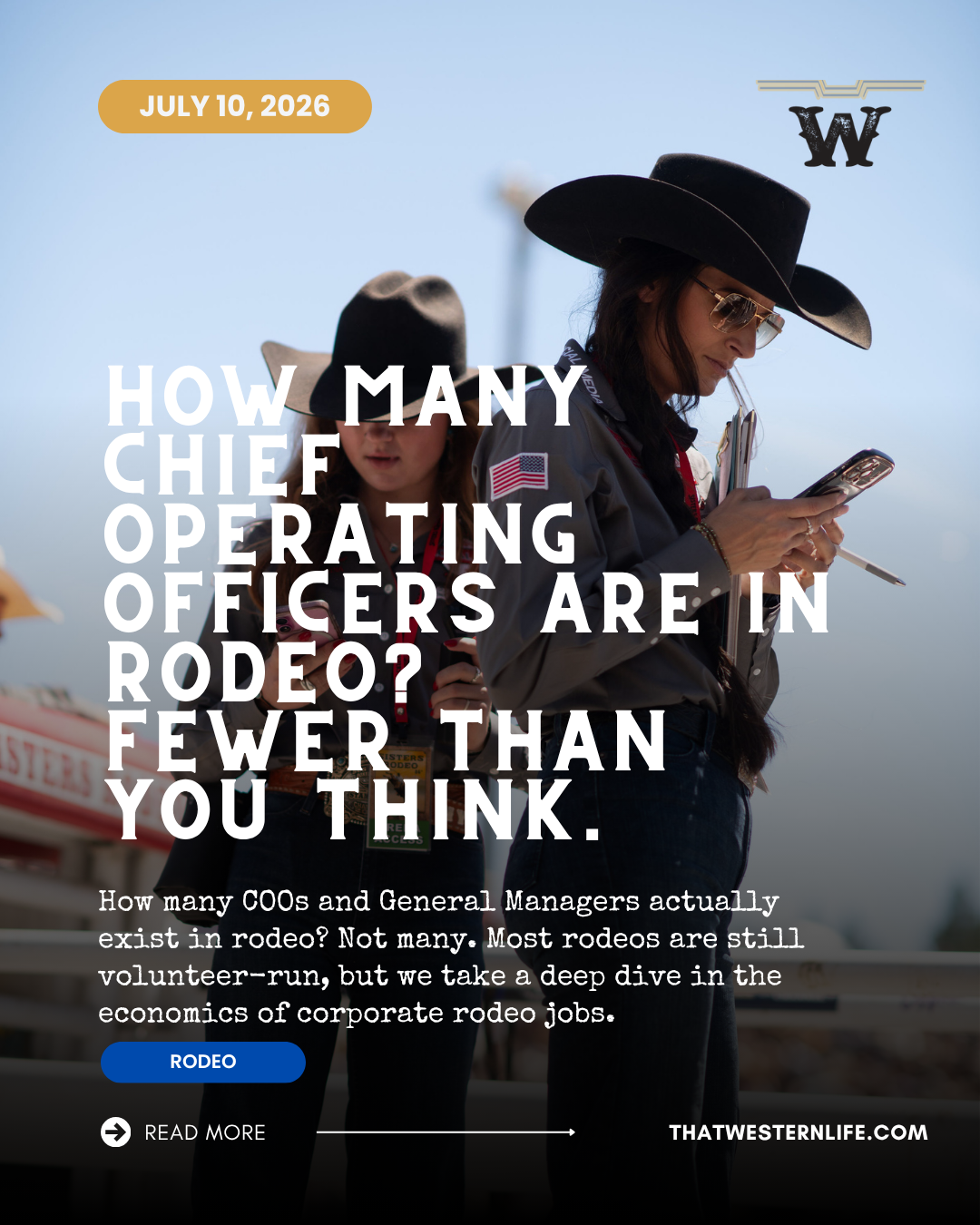
How many COOs and General Managers actually exist in rodeo? Not many. Most rodeos are still volunteer-run, but the biggest events are starting to look more like full-scale businesses. Here’s a breakdown of what these titles mean and how common they really are across the country.
The Houston LIvestock Show & Rodeo creating a Chief Operating Officer/ General Manager role is a big signal, but it also raises a bigger question: What do these titles actually mean in rodeo, and how common are they across the country?
How Rodeo Leadership Is Structured
Unlike traditional corporations, professional rodeo is not one unified company. It is a mix of:
Nonprofit rodeo committees
Fair & livestock show organizations
City or county-run events
Private stock contractor businesses
Sanctioning bodies like the PRCA
Because of that, job titles vary widely depending on the size and structure of the rodeo leadership roles tyupically break down.
Executive director/ceo
This is the most common top leadership role in rodeo.
Oversees the entire organization
Reports to a board of directors
Responsible for long-term strategy, finances, and mission
Common in nonprofit rodeos and livestock shows
Examples: Houston Rodeo (CEO), San Antonio Rodeo (CEO), Fort Worth Stock Show (President/GM Hybrid)
Estimated across the U.S.: Roughly 150-250 rodeos and livestock shows have a full-time Executive Director or CEO-type role.
General Manager (GM)
This role focuses more on operations and execution.
Runs day-to-day event logistics
Oversees staff, vendors, and production
Often reports to the CEO or board
Common in mid-size to large rodeos
In some organizations, the GM is the top leader. In others, they are second-in-command.
Estimated across the U.S.: Approximately 75-100 rodeos have a formal General Manager role.
chief operating officer (CO)
This is still relatively rare in rodeo.
Oversees operations across multiple departments
Aligns logistics, production, and execution
Usually exists only in very large, complex organizations
Often paired with a CEO or President
Houston creating a COO role is notable because it reflects a more corporate-style structure.
Estimated across the U.S.: Likely fewer than 10-20 rodeos have a true COO position.
Combined coo / general manager roles
Some large rodeos combine these responsibilities into one position, like Houston just did.
Oversees both the strategy execution and daily operations
Acts as the bridge between leadership vision and event delivery
Requires experience in sponsorship, ticketing, operations, and production
Estimated across the U.S.: Probably fewer than 10 organizations operate with this combined structure.
Why Most Rodeos Do Not Have These Roles
Tha majority of rodeos in the U.S. are smaller, volunteer-driven events.
Many rely on committees instead of full-time executives
Leadership is often part-time or seasonal
Budgets do not support multiple C-level positions
Out of the 600+ PRCA-sanctioned rodeos and hundreds more independent events:
Only a small percentage operate like full-scale businesses
Even fewer have corporate-style leadership structures
What’s Houston’s Recent Move Really Signals
Houston is not the norm - it’s top tier.
Events like Houston, San Antonio, Fort Worth, Denver, and Calgary operate more like major entertainment companies than traditional rodeos. They manage:
Multi-week events
Millions of attendees
Large sponsorship portfolios
Concert series
Year-round programming
At that scale, having a COO or GM is not optional - it is necessary.
The Big Picture
Across the entire professional rodeo lanscape in the United States:
Executive Director / CEO Roles: ~ 150-250
General Manager roles: ~ 75-150
COO roles: ~10-20
Combined COO/GM roles: fewer than 10
That means true corporate-style leadership exists in only a small fraction of rodeo organizations.
The Significance of These Numbers
Rodeo is evolving.
The biggest events are becoming complex business operations that require leadership with experience in:
Spnosorship and partnerships
Ticketing and revenue strategy
Event production
Guest experience
Operations management
Houston’s new role is not just about one hire, though. It signifies that the top end of rodeo is moving toward a more structured, professional business model, while the majority of rodeos still operate on tradition, volunteers, and community leadership.
Both models matter.
But understanding the difference is key to understanding where the industry is headed.
Houston Rodeo's $300 Million Ag Complex is Bigger Than a Building Project
Houston Rodeo just announced a $300 million agricultural complex, and this is more than a facilities upgrade. It is a major reminder that rodeo’s future is tied to livestock, youth programs, ag education, and year-round western impact. The arena matters. But the roots matter just as much.
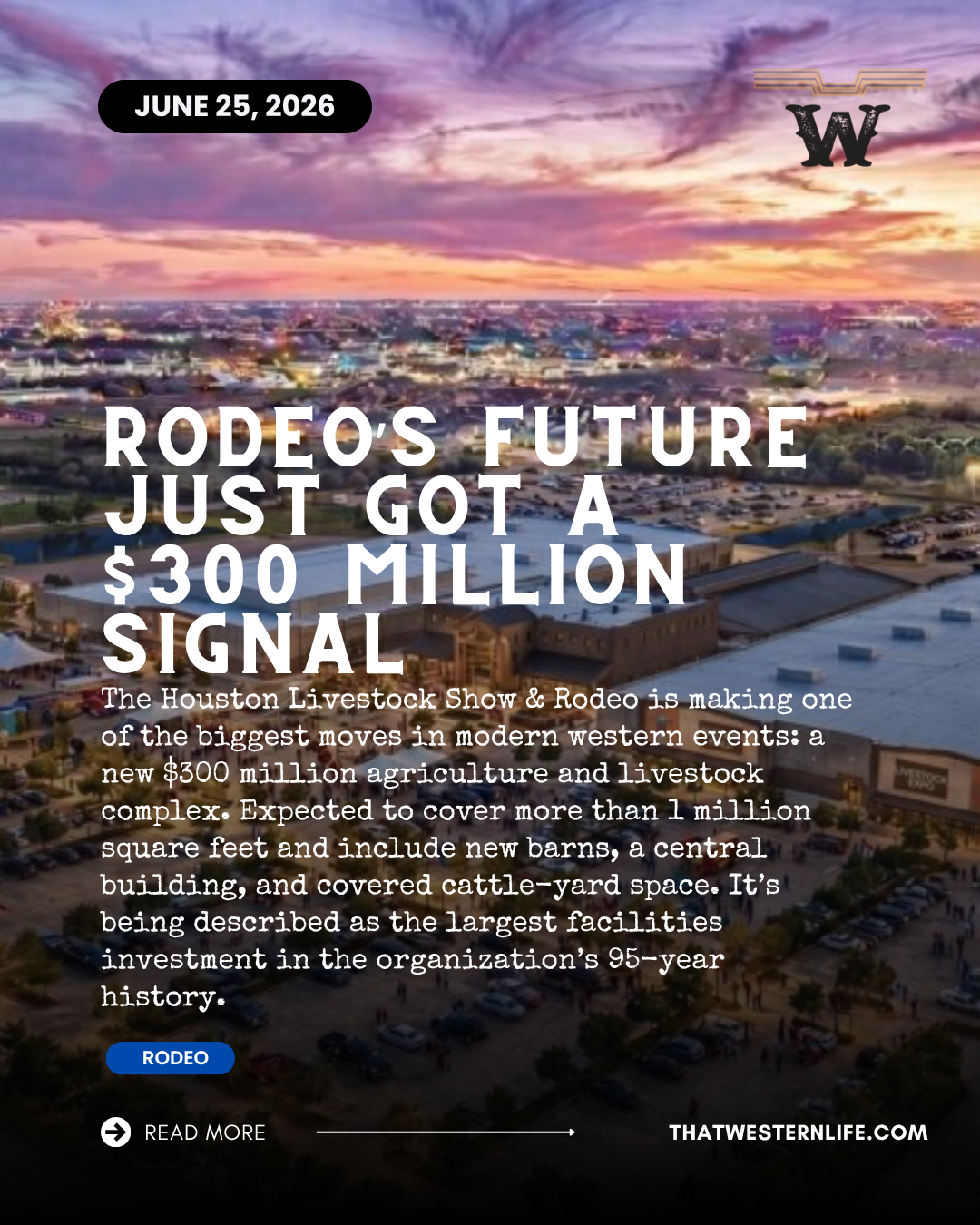
The Houston Livestock Show and Rodeo is making one of the biggest moves in modern western events: a new $300 million agricultural and livestock complex.
The project is expected to cover more than 1 million square feet and include new barns, a central building, and covered cattle-yard space. It is being described as the largest facilities investment in the organization’s 95-year history, with a target opening ahead of the 2029 rodeo season.
But this story is bigger than square footage.
For the western world, Houston’s investment is a clear signal that rodeo’s future is not only in the arena. It is in livestock education, youth programs, horse shows, auctions, ag events, and year-round community use. The biggest rodeo organizations in the country are no longer treating agriculture as a side piece of the event. They are building infrastructure around it.
That matters because the livestock and agriculture side of rodeo is often what gives the sport its deepest roots. The concerts may bring in casual fans. The rodeo performances may sell the tickets. But livestock shows, FFA and 4-H participation, scholarships, breeding programs, youth exhibitors, and agricultural education are what connect rodeo to the next generation.
This new complex also points to a bigger trend across western events: rodeos are becoming full-scale western lifestyle platforms. The strongest events are not just producing one week of entertainment. They are creating economic engines, educational hubs, tourism drivers, and community gathering places.
For Houston, this investment strengthens its position as one of the most influential western events in the country. For the rest of the industry, it raises the bar.
Not every rodeo can build a $300 million complex. Most cannot. But every rodeo can look at this move and ask the same strategic question: are we only selling tickets, or are we building something that serves agriculture, youth, sponsors, and western culture year-round?
That is the real takeaway.
Houston is not just expanding facilities. It is reinforcing the idea that rodeo’s future depends on keeping agriculture visible, valuable, and central to the story.