
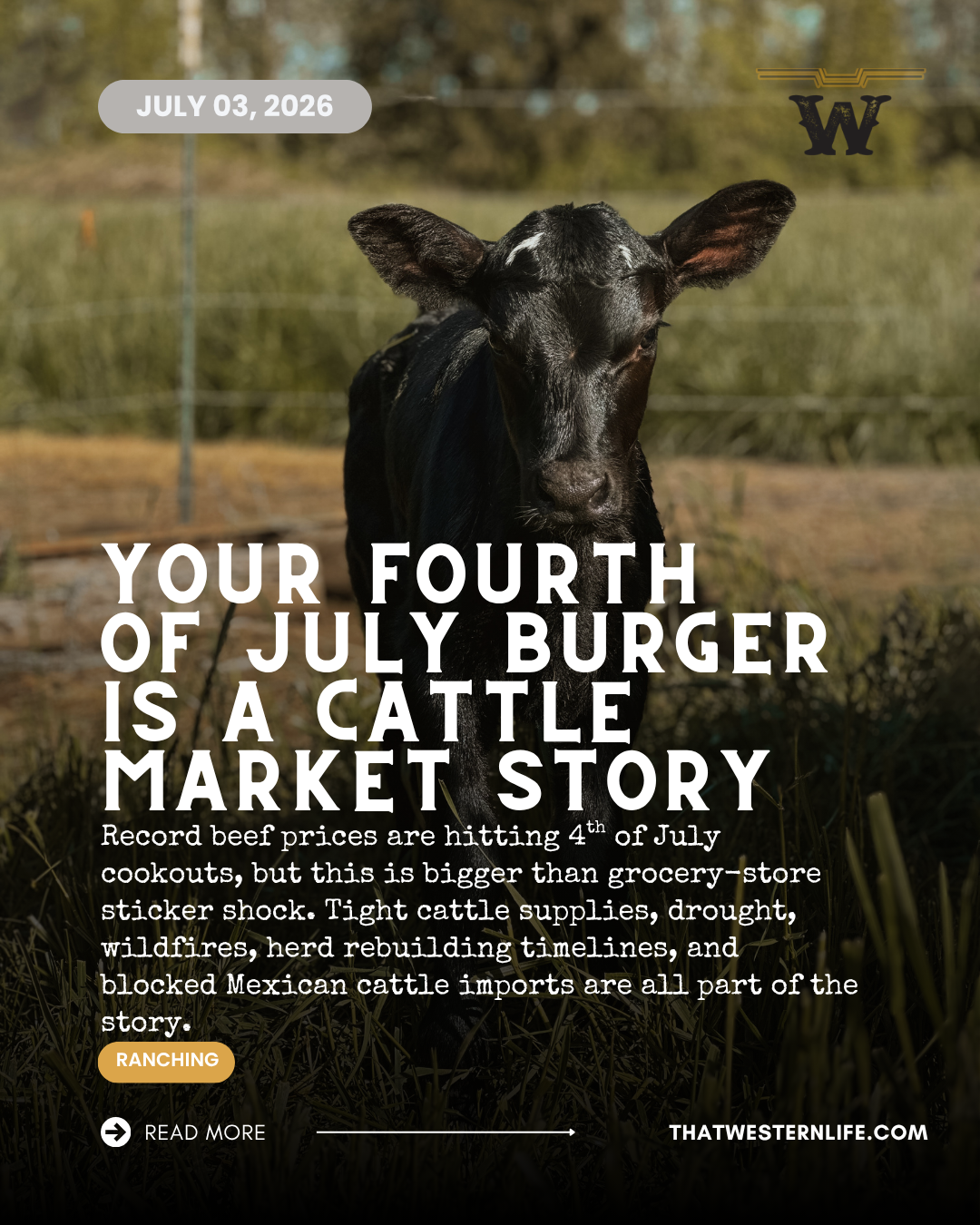
Record Beef Prices Are Turning the Fourth of July Into a Ranching Story
Record beef prices are hitting Fourth of July cookouts, but this is bigger than grocery-store sticker shock. Tight cattle supplies, drought, wildfires, herd rebuilding timelines, and blocked Mexican cattle imports are all part of the story.
This Fourth of July, the price of a hamburger is telling a much bigger story about the cattle industry.
Reuters reports that the average retail price for lean and extra-lean ground beef hit a record $8.62 per pound in May, up more than 12% from a year earlier. Wells Fargo also estimated that a barbeque for 10 people will cost $161 this year, up 2.4% from last year, with hamburger beef rising especially sharply.
For consumers, that shows up as a sticker shock.
For ranchers, it points to a deeper supply problem.
The U.S. cattle herd is still tight after years of drought, wildfire pressure, high feed costs, and difficult rebuilding conditions. When ranchers cull cows because pasture and hay are limited, the effects do not reverse quickly. Even when producers decide to retain heifers and rebuild, it takes years before those animals become part of the beef supply.
That timeline matters. Beef is not a product that can be increased overnight.
The story is also complicated by New World screwworm concerns and blocked Mexican cattle imports. When cross-border cattle movement is limited, the U.S. loses access to a supply channel that normally helps feedyards and processors. That adds pressure to an already tight domestic market.
Politically, this creates a difficult conversation. Consumers want lower beef prices. Ranchers want strong cattle prices after years of hard conditions. Policymakers may look at imports or meatpacker investigations. Producers worry that those solutions may not address the real structural issue: there are fewer cattle, and rebuilding takes time.
Elevated food prices are not just “greed” or “inflation” in a generic sense. They are tied to weather, biology, trade, disease control, land conditions, feed costs, and years of market pressure.
The Fourth of July grill is not separate from the ranch economy.
This year, it may be one of the clearest places consumers can feel the pressure the American rancher faces.