
Eight Ag Startups Where Farm Technology Is Actually Headed
Eight emerging ag startups are showing where farm technology may be headed next: toward practical tools that solve specific, costly problems for producers. From autonomous weed-control tractors and edge-of-field solar systems to microwave soil treatment, satellite-based nitrogen recommendations, slow-release fertilizers, hemp genetics, and bio-based rubber research, these innovations are less about flashy disruption and more about real operational value. For agriculture, the next big shift may not come from one all-in-one machine, but from a collection of targeted technologies that reduce labor pressure, protect productive acreage, improve nutrient efficiency, and create new revenue opportunities.
The most useful agricultural innovations are often not the most futurisitc.
They are the technologies that solve specific, expensive problem without requiring a producer to rebuild an entire operation around them.
A July 13 Farm Progress report identified eight startups working on challenges including farm labor, herbicide resistance, energey generation, nutrient efficiency, soil pests and new revenue opportunities. Together, the companies provide a useful snapshot of where practical agricultural techniology is heading.
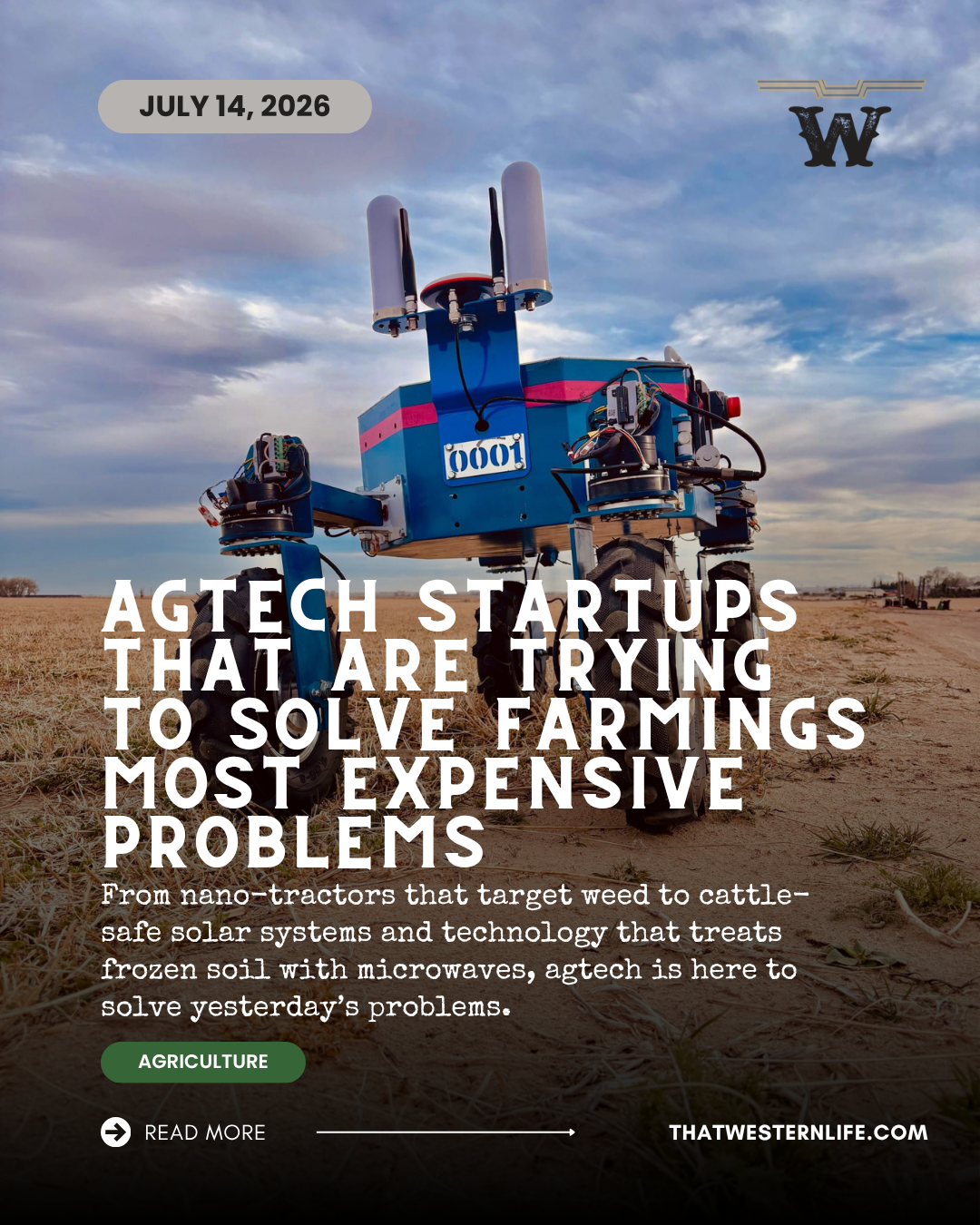
Barn Owl Precision Agriculture, for example, has developed an autonomous nanotractor designed to travel between crop rows and target weeds. The machine is leased seasonally rather than sold outright, with mapping and programming support included. That model could lower the barrir to testing automation while reducing the need for producer to purchase another major piece of machinery.
Helical Solar addresses a different land-use conflict. Its systems are designed for field edges and feedlot corners rather than removing large blocks of agricultural ground from production. The structures can withstand high winds, generate more power than conventional fixed panels and provide catle shade while being engineered for livestock environments.
For northern producers, WinterLeap is testing microwave technology that treats frozen soil during winter. The process is intended to attack weed-seed banks, nematodes, and soil-boarne pests while biological activity is dormant. After testing in Norway, the company is expanding trials into the United States and Canada.
Other companies are targeting fertilzier and crop value.
Sentinel Ag uses satelite imagery and agronomic data to help producers make nitrogen decisions without installing additional field hardware. Reform Bio is developing a slow-release nitrogen fertilizer using biochar, while Prospect Growth is testing nano-fertilizer intended to improve how long nutrients remain available to plants.
New West Genetics is developing industrial-hemp varieties for grain and biomass production, and Edison Rubber is researching whether sunflower leaves can become an additional source of bio-based rubber without reducing seed production.
Innovation isn’t just a buzzword, it’s an operating tool. Producers don’t necessarily need more dashbaords, they need technologies that reduce passes across a field, preserve productive acerage, create another income stream, lower fertilizer loss, increase animal stewardship, or accomplish work when labor is unavailable.
Many of these products remain in testing or early commercial stages, so cost, reliability, repair access and return on investment will determine whether they earn widespread adoption. The next major agricultural technology may not be one machine that transforms every farm. It may be a collection of narrowly designed tools that each eliminate one costly, persistent problem.